“A forgiving, high-launching utility for its era where the whole face plays hot. A fine budget long-iron replacement; just expect a slightly larger, older-looking head.”
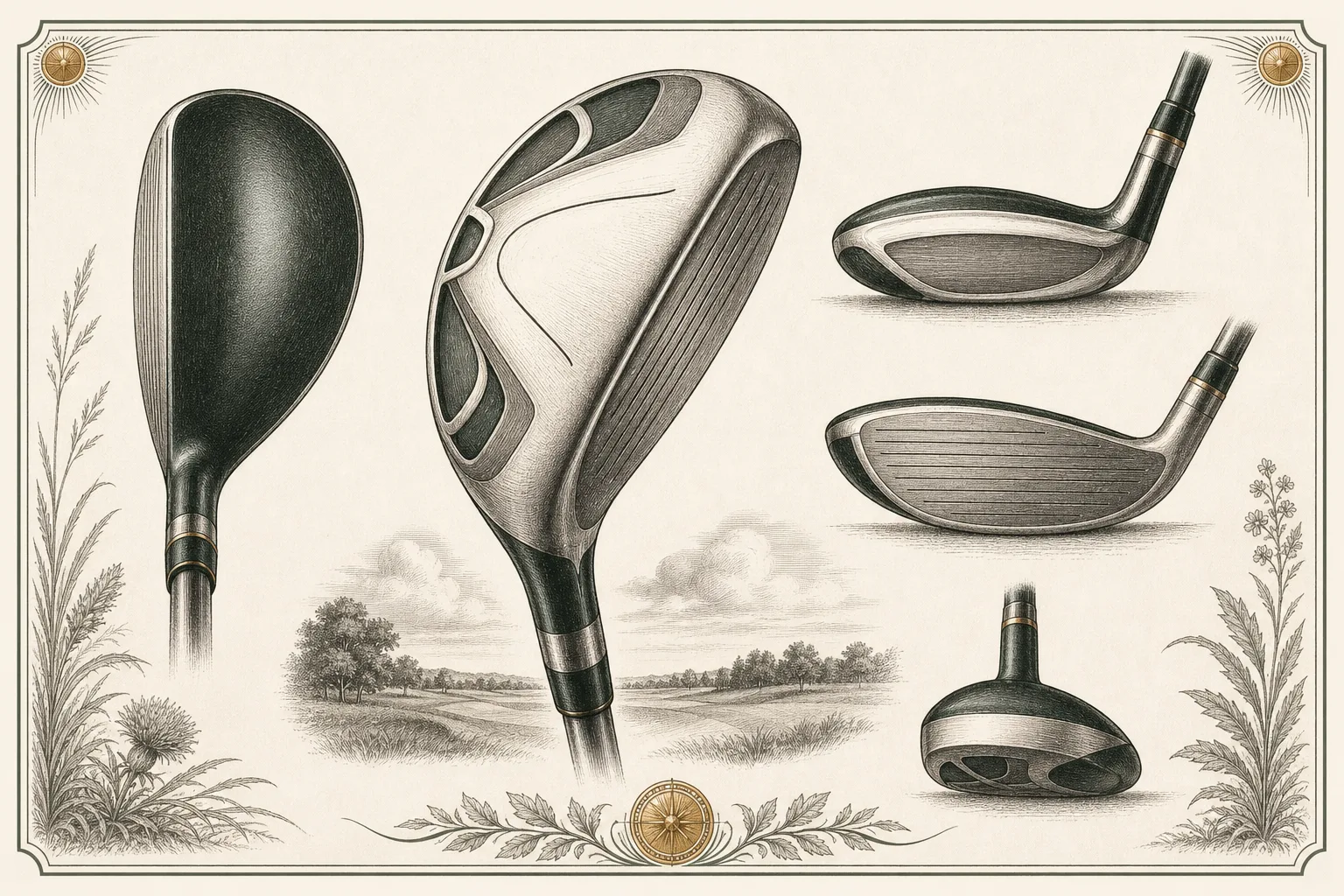
The MacTec NVG2 utility hybrid used MacGregor's 360-degree Cup Face construction -- a face welded around its full perimeter rather than just at the edges, intended to turn the entire face into usable hitting area rather than concentrating flex at the center -- paired with two tungsten weights set into the sole to pull the center of gravity low and help square the clubhead through impact. It shipped with an exclusive Fujikura Triple Action graphite shaft tuned specifically for the head to add clubhead speed. Reviewers described a heavily rounded sole that let it slide through rough and thin lies more easily than a standard iron, at the cost of a slightly tinny impact sound and a narrower, less confidence-inspiring profile than the biggest hybrid makers' offerings of the same years.
It earned real, specific period trade-press coverage (Today's Golfer, Golf Monthly) rather than being ignored, and user reviews ran notably positive -- but MacGregor's own hybrid line never built lasting brand loyalty or resale demand the way Adams' or TaylorMade's contemporaneous rescue clubs did, and it disappeared from the lineup within a few product cycles without leaving a lasting mark on the category.
Mid-to-high handicappers wanting an affordable long-iron replacement that performs from rough and awkward lies; some reviewers specifically noted handicap drops of several shots after swapping long irons for this hybrid. Better players wanting a more confidence-inspiring look or a more substantial sound at impact should look at the larger hybrid brands of the same era instead.
Released into the mid-2000s hybrid boom alongside Adams' Idea and TaylorMade's Rescue lines, competing on specific, reviewable technology (Cup Face, tungsten sole weighting, a proprietary Fujikura shaft) rather than on MacGregor's own tour history, at a time when MacGregor itself was working through a churn of ownership changes that limited its marketing reach against the bigger hybrid brands.
The twin tungsten sole weights and low, deep CG make this a genuinely easy club to launch from poor lies and rough, and the 360-degree cup face keeps ball speed reasonably consistent across the face -- exactly what a mid-2000s utility hybrid was built to do. The trade-off, per contemporary reviews, is a narrower head shape that looks less confidence-inspiring at address than rival hybrids, and a notably "tinny" sound at impact rather than a solid, powerful one.
Calibrated across the whole catalog — a tour blade scores low here on purpose; it means control, not ease.
Individual used hybrids commonly sell for roughly $25-65 on eBay today, occasionally more for boxed or unused examples, with 2-hybrid combo sets (e.g. 3 and 4) trading around $50-65 -- typical pricing for a mid-2000s off-brand hybrid rather than anything holding special value.
Reading is one thing — hitting is another. Book a bay and see the numbers for yourself before you buy anywhere.
“A forgiving, high-launching utility for its era where the whole face plays hot. A fine budget long-iron replacement; just expect a slightly larger, older-looking head.”
The MacTec NVG2 utility hybrid used MacGregor's 360-degree Cup Face construction -- a face welded around its full perimeter rather than just at the edges, intended to turn the entire face into usable hitting area rather than concentrating flex at the center -- paired with two tungsten weights set into the sole to pull the center of gravity low and help square the clubhead through impact. It shipped with an exclusive Fujikura Triple Action graphite shaft tuned specifically for the head to add clubhead speed. Reviewers described a heavily rounded sole that let it slide through rough and thin lies more easily than a standard iron, at the cost of a slightly tinny impact sound and a narrower, less confidence-inspiring profile than the biggest hybrid makers' offerings of the same years.
It earned real, specific period trade-press coverage (Today's Golfer, Golf Monthly) rather than being ignored, and user reviews ran notably positive -- but MacGregor's own hybrid line never built lasting brand loyalty or resale demand the way Adams' or TaylorMade's contemporaneous rescue clubs did, and it disappeared from the lineup within a few product cycles without leaving a lasting mark on the category.
Mid-to-high handicappers wanting an affordable long-iron replacement that performs from rough and awkward lies; some reviewers specifically noted handicap drops of several shots after swapping long irons for this hybrid. Better players wanting a more confidence-inspiring look or a more substantial sound at impact should look at the larger hybrid brands of the same era instead.
Released into the mid-2000s hybrid boom alongside Adams' Idea and TaylorMade's Rescue lines, competing on specific, reviewable technology (Cup Face, tungsten sole weighting, a proprietary Fujikura shaft) rather than on MacGregor's own tour history, at a time when MacGregor itself was working through a churn of ownership changes that limited its marketing reach against the bigger hybrid brands.
The twin tungsten sole weights and low, deep CG make this a genuinely easy club to launch from poor lies and rough, and the 360-degree cup face keeps ball speed reasonably consistent across the face -- exactly what a mid-2000s utility hybrid was built to do. The trade-off, per contemporary reviews, is a narrower head shape that looks less confidence-inspiring at address than rival hybrids, and a notably "tinny" sound at impact rather than a solid, powerful one.
Calibrated across the whole catalog — a tour blade scores low here on purpose; it means control, not ease.
Individual used hybrids commonly sell for roughly $25-65 on eBay today, occasionally more for boxed or unused examples, with 2-hybrid combo sets (e.g. 3 and 4) trading around $50-65 -- typical pricing for a mid-2000s off-brand hybrid rather than anything holding special value.
Reading is one thing — hitting is another. Book a bay and see the numbers for yourself before you buy anywhere.