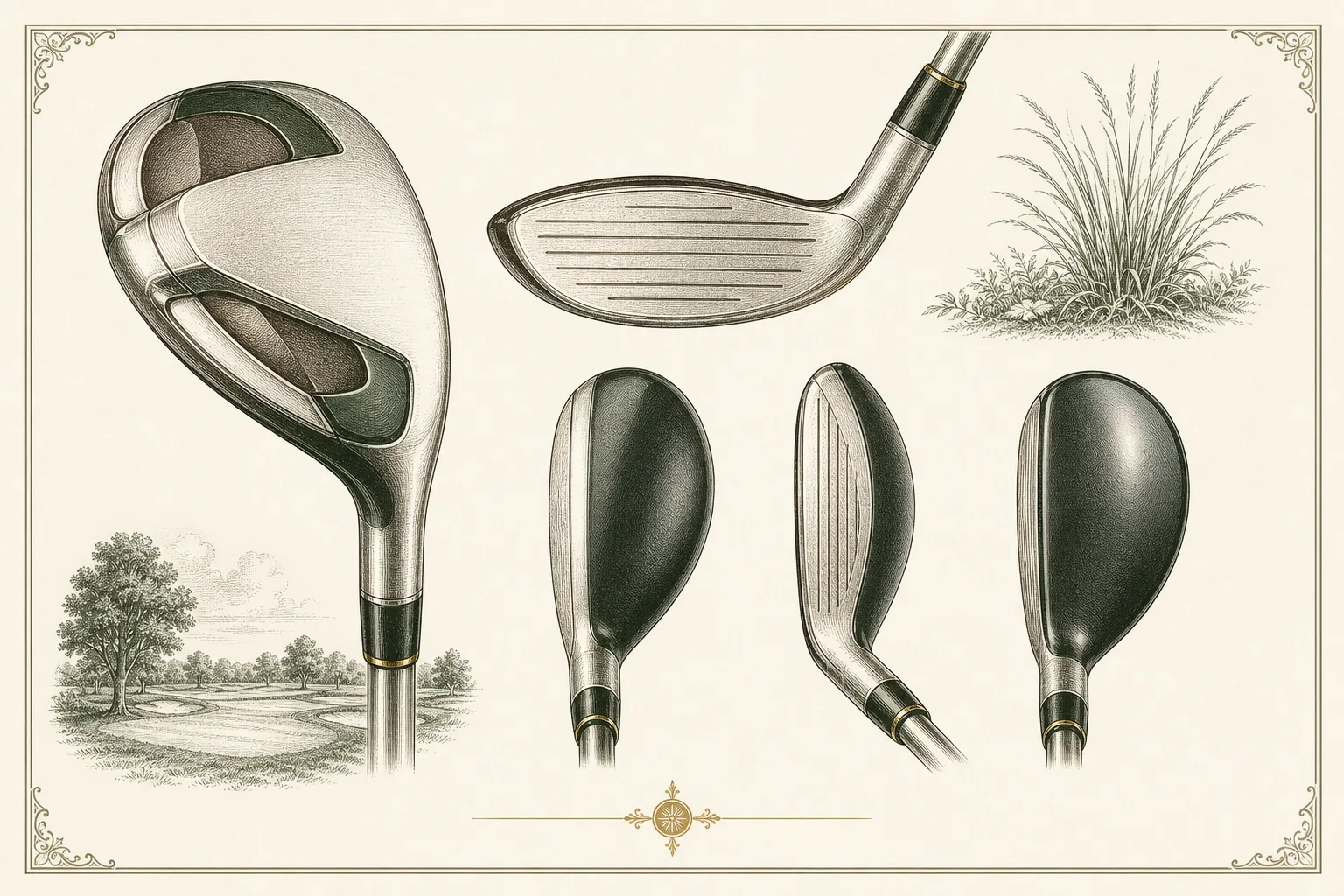
Cleveland brought the inverted-crown 'HiBore' concept that made its 2005 driver a talking point in golf equipment circles down into a hybrid, pushing the crown low and pushing weight to the perimeter to build what the company called the highest-MOI hybrid it had developed at the time — a 7% jump over its own well-regarded HALO hybrids. A 10% larger face area and a parabolic leading edge that tapers into effective bounce were meant to prevent digging and widen the sweet spot, aiming the club squarely at mid-to-high handicappers who wanted the HiBore driver's forgiveness reputation in a rescue club.
The HiBore Hybrid rode the coattails of a genuinely notable piece of Cleveland's history — the original 2005 HiBore driver's unusual inverted-crown look and MOI claims were widely covered equipment stories of the mid-2000s — but the hybrid itself was a solid, well-reviewed follow-on product rather than an object of its own lasting pursuit.
Best for mid-to-high handicappers who want an easy-launching, forgiving long-iron replacement; not a fit for better players seeking low, penetrating trajectories or shot control, and by 2026 it is meaningfully outdated technology.
Followed Cleveland's award-winning HALO hybrids and shared its inverted-crown, thin-crown-technology DNA with the 2005 HiBore driver; superseded by the HiBore XLS hybrid in 2008. A modern equivalent is Cleveland's Launcher XL Halo hybrid.
Built explicitly to maximize forgiveness: Cleveland's own claim of 7% higher MOI than its HALO hybrids, plus a 10% larger face and perimeter weighting, targets an easy, high launch and stable off-center performance over any shot-shaping ability.
Calibrated across the whole catalog — a tour blade scores low here on purpose; it means control, not ease.
Realistic private-party value by 2026 is roughly $15-30; 2nd Swing's graded used listings for the HiBore line run $42-60, which is store-condition pricing, not what these nearly 20-year-old hybrids fetch peer-to-peer.
Reading is one thing — hitting is another. Book a bay and see the numbers for yourself before you buy anywhere.
Cleveland brought the inverted-crown 'HiBore' concept that made its 2005 driver a talking point in golf equipment circles down into a hybrid, pushing the crown low and pushing weight to the perimeter to build what the company called the highest-MOI hybrid it had developed at the time — a 7% jump over its own well-regarded HALO hybrids. A 10% larger face area and a parabolic leading edge that tapers into effective bounce were meant to prevent digging and widen the sweet spot, aiming the club squarely at mid-to-high handicappers who wanted the HiBore driver's forgiveness reputation in a rescue club.
The HiBore Hybrid rode the coattails of a genuinely notable piece of Cleveland's history — the original 2005 HiBore driver's unusual inverted-crown look and MOI claims were widely covered equipment stories of the mid-2000s — but the hybrid itself was a solid, well-reviewed follow-on product rather than an object of its own lasting pursuit.
Best for mid-to-high handicappers who want an easy-launching, forgiving long-iron replacement; not a fit for better players seeking low, penetrating trajectories or shot control, and by 2026 it is meaningfully outdated technology.
Followed Cleveland's award-winning HALO hybrids and shared its inverted-crown, thin-crown-technology DNA with the 2005 HiBore driver; superseded by the HiBore XLS hybrid in 2008. A modern equivalent is Cleveland's Launcher XL Halo hybrid.
Built explicitly to maximize forgiveness: Cleveland's own claim of 7% higher MOI than its HALO hybrids, plus a 10% larger face and perimeter weighting, targets an easy, high launch and stable off-center performance over any shot-shaping ability.
Calibrated across the whole catalog — a tour blade scores low here on purpose; it means control, not ease.
Realistic private-party value by 2026 is roughly $15-30; 2nd Swing's graded used listings for the HiBore line run $42-60, which is store-condition pricing, not what these nearly 20-year-old hybrids fetch peer-to-peer.
Reading is one thing — hitting is another. Book a bay and see the numbers for yourself before you buy anywhere.