“Extra-wide sole and multi-material build maximize launch and turf glide for slower swings and steep diggers. About as forgiving as 2000s irons get; a genuine help set for a struggling higher handicap.”
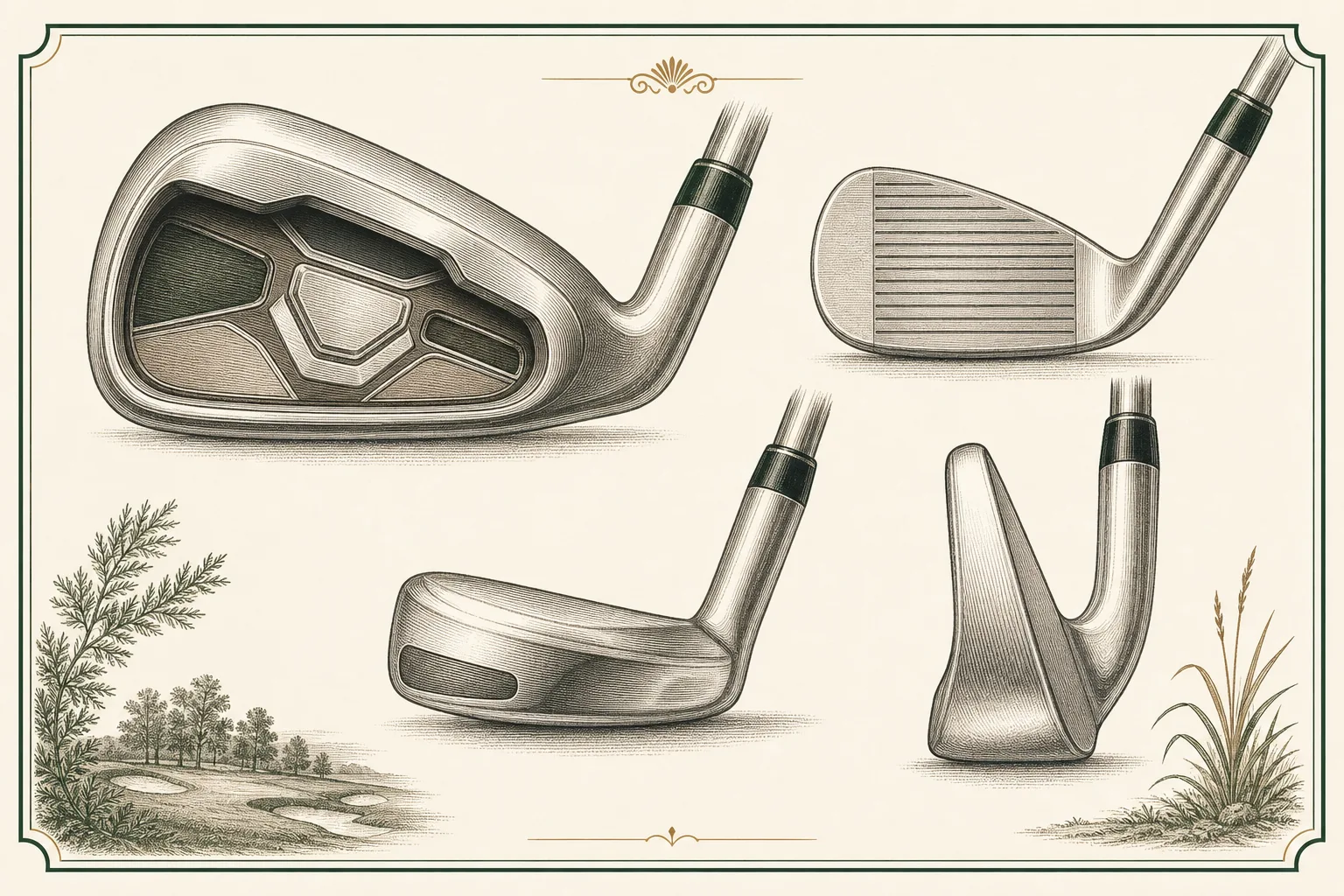
The Fusion Wide Sole took Callaway's Fusion multi-material idea into a super-game-improvement iron: a 6-4 titanium body roughly 25% larger than the standard Fusion iron head, paired with a dense 'Tunite' sole insert to drag the center of gravity low and a TPU (thermoplastic urethane) face insert to soften vibration and feel. Callaway said 77% of the head's mass sat at the perimeter for maximum MOI, and the extra-wide sole was shaped to glide through turf rather than dig on a steep or heavy strike. It was marketed as 'revolutionary weight-shifting technology' for the segment, and reviewers agreed it delivered exactly what a maximum-forgiveness iron should: easy height and a wide margin for error, at the cost of a chunky look at address.
Its multi-material construction (titanium body, Tunite sole insert, TPU face damper) was a genuinely distinctive engineering combination that Callaway's own launch materials called 'revolutionary,' and period reviews independently confirmed it stood out even within the crowded super-game-improvement category — but it built no lasting cult following and was quietly replaced within a couple of years like every other GI iron of its era.
High handicappers, slower swing speeds, and players who struggle to get the ball airborne or who take steep, digging divots — this is squarely a help set for that golfer. Anyone with a functional, centered strike or wanting workability/shot-shaping should look elsewhere; the size and offset that make it forgiving also make it unworkable and chunky-looking at address.
Released in 2006–2007 as Callaway's top-of-the-line super-game-improvement iron, sitting above the standard Fusion iron and competing with TaylorMade's Burner and Ping's G5/i5 in the widest-sole, most-forgiving tier of the mid-2000s iron market.
About as forgiving as mid-2000s iron technology got: an oversized titanium head, a wide sole tuned specifically to resist digging, 77%-perimeter weight distribution, and a low CG from the Tunite sole insert all stack toward maximum error tolerance. This sits near the top of the forgiveness scale for the whole era — genuinely aimed at struggling, slower-swing, or steep-attack-angle players rather than a stylized 'game improvement' label with modest real benefit.
Calibrated across the whole catalog — a tour blade scores low here on purpose; it means control, not ease.
Complete used sets commonly sell for roughly $180–$380 on SidelineSwap and similar marketplaces in 2026, a wide range driven by shaft type (steel vs. graphite), flex, and how many irons are included — reasonable value retention for a nearly 20-year-old super-game-improvement set given how specifically it still serves its target golfer.
Reading is one thing — hitting is another. Book a bay and see the numbers for yourself before you buy anywhere.
“Extra-wide sole and multi-material build maximize launch and turf glide for slower swings and steep diggers. About as forgiving as 2000s irons get; a genuine help set for a struggling higher handicap.”
The Fusion Wide Sole took Callaway's Fusion multi-material idea into a super-game-improvement iron: a 6-4 titanium body roughly 25% larger than the standard Fusion iron head, paired with a dense 'Tunite' sole insert to drag the center of gravity low and a TPU (thermoplastic urethane) face insert to soften vibration and feel. Callaway said 77% of the head's mass sat at the perimeter for maximum MOI, and the extra-wide sole was shaped to glide through turf rather than dig on a steep or heavy strike. It was marketed as 'revolutionary weight-shifting technology' for the segment, and reviewers agreed it delivered exactly what a maximum-forgiveness iron should: easy height and a wide margin for error, at the cost of a chunky look at address.
Its multi-material construction (titanium body, Tunite sole insert, TPU face damper) was a genuinely distinctive engineering combination that Callaway's own launch materials called 'revolutionary,' and period reviews independently confirmed it stood out even within the crowded super-game-improvement category — but it built no lasting cult following and was quietly replaced within a couple of years like every other GI iron of its era.
High handicappers, slower swing speeds, and players who struggle to get the ball airborne or who take steep, digging divots — this is squarely a help set for that golfer. Anyone with a functional, centered strike or wanting workability/shot-shaping should look elsewhere; the size and offset that make it forgiving also make it unworkable and chunky-looking at address.
Released in 2006–2007 as Callaway's top-of-the-line super-game-improvement iron, sitting above the standard Fusion iron and competing with TaylorMade's Burner and Ping's G5/i5 in the widest-sole, most-forgiving tier of the mid-2000s iron market.
About as forgiving as mid-2000s iron technology got: an oversized titanium head, a wide sole tuned specifically to resist digging, 77%-perimeter weight distribution, and a low CG from the Tunite sole insert all stack toward maximum error tolerance. This sits near the top of the forgiveness scale for the whole era — genuinely aimed at struggling, slower-swing, or steep-attack-angle players rather than a stylized 'game improvement' label with modest real benefit.
Calibrated across the whole catalog — a tour blade scores low here on purpose; it means control, not ease.
Complete used sets commonly sell for roughly $180–$380 on SidelineSwap and similar marketplaces in 2026, a wide range driven by shaft type (steel vs. graphite), flex, and how many irons are included — reasonable value retention for a nearly 20-year-old super-game-improvement set given how specifically it still serves its target golfer.
Reading is one thing — hitting is another. Book a bay and see the numbers for yourself before you buy anywhere.