“A standard, versatile hybrid - rung-2 neutral flight for a repeating swing and a solid gap-filler between driver and irons. In stores Feb 2016 as the follow-up to the G30; buy on price, not hype.”
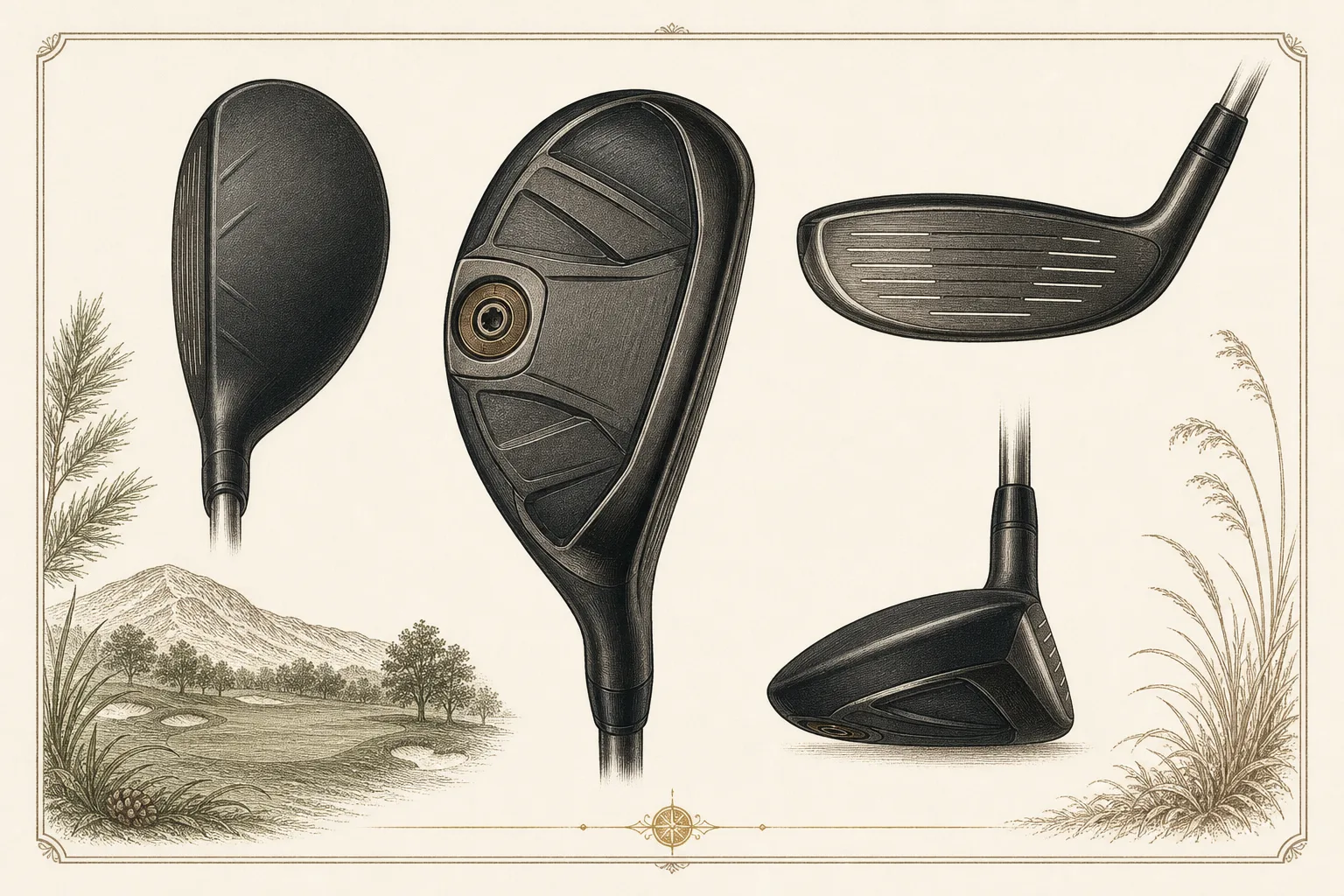
Ping's 2016 G Hybrid took the already highly-regarded G30 hybrid and pushed it further, aiming at forgiveness and distance rather than shape change — same broad silhouette, but with Turbulators borrowed from the driver/fairway line and a top line finished entirely matte black instead of the G30's dark-grey band. A thinned-out crown moved weight into the perimeter for MOI, while a new Carpenter steel face and tiered sole aimed to optimize flex across the face. Reviewers reported several extra mph ball speed and 4-5 more yards of carry over the G30, with only about 7 yards of carry drop-off between center and off-center strikes — a small gap reviewers called among the most forgiving hybrids on the market. It quietly did its job and was replaced on Ping's normal cycle two years later.
No cult following, but a genuinely well-regarded, award-cycle-relevant club: MyGolfSpy and multiple UK/US equipment outlets rated it among the most forgiving hybrids of its generation, and it is remembered (mildly) as one of the stronger entries in Ping's 2016 G-series relaunch. That reputation is functional, not collectible — nobody hunts down a used G Hybrid for its name.
A strong fit for mid-handicap and moderate-swing-speed players who need reliable launch and forgiveness from a hybrid off the tee, fairway, or rough, without caring about shot-shaping. A better player wanting to work the ball or a lower, more penetrating flight would have looked instead at Ping's lower-spin G Crossover, sold the same year for exactly that purpose.
Released alongside the 2016 G driver, G Fairway and G Crossover, competing with TaylorMade's M2 Rescue, Callaway's XR hybrid and Titleist's 816H2 in the same window. Its direct predecessor was the widely-praised G30 hybrid; its successor was the G400 Hybrid two years later, which added a forged, thinner Ultra-Thin Wall Titanium-Carbon-Steel-Head style face construction as hybrid tech matured quickly through the era.
Legitimately near the top of its class for forgiveness: independent testing found only about 7 yards of carry loss between pured and mis-hit strikes, a tight number that reviewers explicitly flagged as best-in-class for a 2016 hybrid. The thinned crown, tiered sole and Carpenter steel face all target exactly this — getting the ball airborne easily from tee or turf and holding distance on off-center contact.
Calibrated across the whole catalog — a tour blade scores low here on purpose; it means control, not ease.
Realistic 2026 private-party value runs about $50-$100 depending on loft, shaft and condition — a decade-old, high-volume commodity hybrid with no scarcity premium. Reconditioned-retail listings from 2nd Swing/Golf Avenue sit modestly higher due to grading and warranty, not rarity.
Reading is one thing — hitting is another. Book a bay and see the numbers for yourself before you buy anywhere.
“A standard, versatile hybrid - rung-2 neutral flight for a repeating swing and a solid gap-filler between driver and irons. In stores Feb 2016 as the follow-up to the G30; buy on price, not hype.”
Ping's 2016 G Hybrid took the already highly-regarded G30 hybrid and pushed it further, aiming at forgiveness and distance rather than shape change — same broad silhouette, but with Turbulators borrowed from the driver/fairway line and a top line finished entirely matte black instead of the G30's dark-grey band. A thinned-out crown moved weight into the perimeter for MOI, while a new Carpenter steel face and tiered sole aimed to optimize flex across the face. Reviewers reported several extra mph ball speed and 4-5 more yards of carry over the G30, with only about 7 yards of carry drop-off between center and off-center strikes — a small gap reviewers called among the most forgiving hybrids on the market. It quietly did its job and was replaced on Ping's normal cycle two years later.
No cult following, but a genuinely well-regarded, award-cycle-relevant club: MyGolfSpy and multiple UK/US equipment outlets rated it among the most forgiving hybrids of its generation, and it is remembered (mildly) as one of the stronger entries in Ping's 2016 G-series relaunch. That reputation is functional, not collectible — nobody hunts down a used G Hybrid for its name.
A strong fit for mid-handicap and moderate-swing-speed players who need reliable launch and forgiveness from a hybrid off the tee, fairway, or rough, without caring about shot-shaping. A better player wanting to work the ball or a lower, more penetrating flight would have looked instead at Ping's lower-spin G Crossover, sold the same year for exactly that purpose.
Released alongside the 2016 G driver, G Fairway and G Crossover, competing with TaylorMade's M2 Rescue, Callaway's XR hybrid and Titleist's 816H2 in the same window. Its direct predecessor was the widely-praised G30 hybrid; its successor was the G400 Hybrid two years later, which added a forged, thinner Ultra-Thin Wall Titanium-Carbon-Steel-Head style face construction as hybrid tech matured quickly through the era.
Legitimately near the top of its class for forgiveness: independent testing found only about 7 yards of carry loss between pured and mis-hit strikes, a tight number that reviewers explicitly flagged as best-in-class for a 2016 hybrid. The thinned crown, tiered sole and Carpenter steel face all target exactly this — getting the ball airborne easily from tee or turf and holding distance on off-center contact.
Calibrated across the whole catalog — a tour blade scores low here on purpose; it means control, not ease.
Realistic 2026 private-party value runs about $50-$100 depending on loft, shaft and condition — a decade-old, high-volume commodity hybrid with no scarcity premium. Reconditioned-retail listings from 2nd Swing/Golf Avenue sit modestly higher due to grading and warranty, not rarity.
Reading is one thing — hitting is another. Book a bay and see the numbers for yourself before you buy anywhere.