“The 221 CB was gamed on tour (Kuchar) before its wider release. A crisp rung-2 players cavity; low-key excellent and hard to find used.”
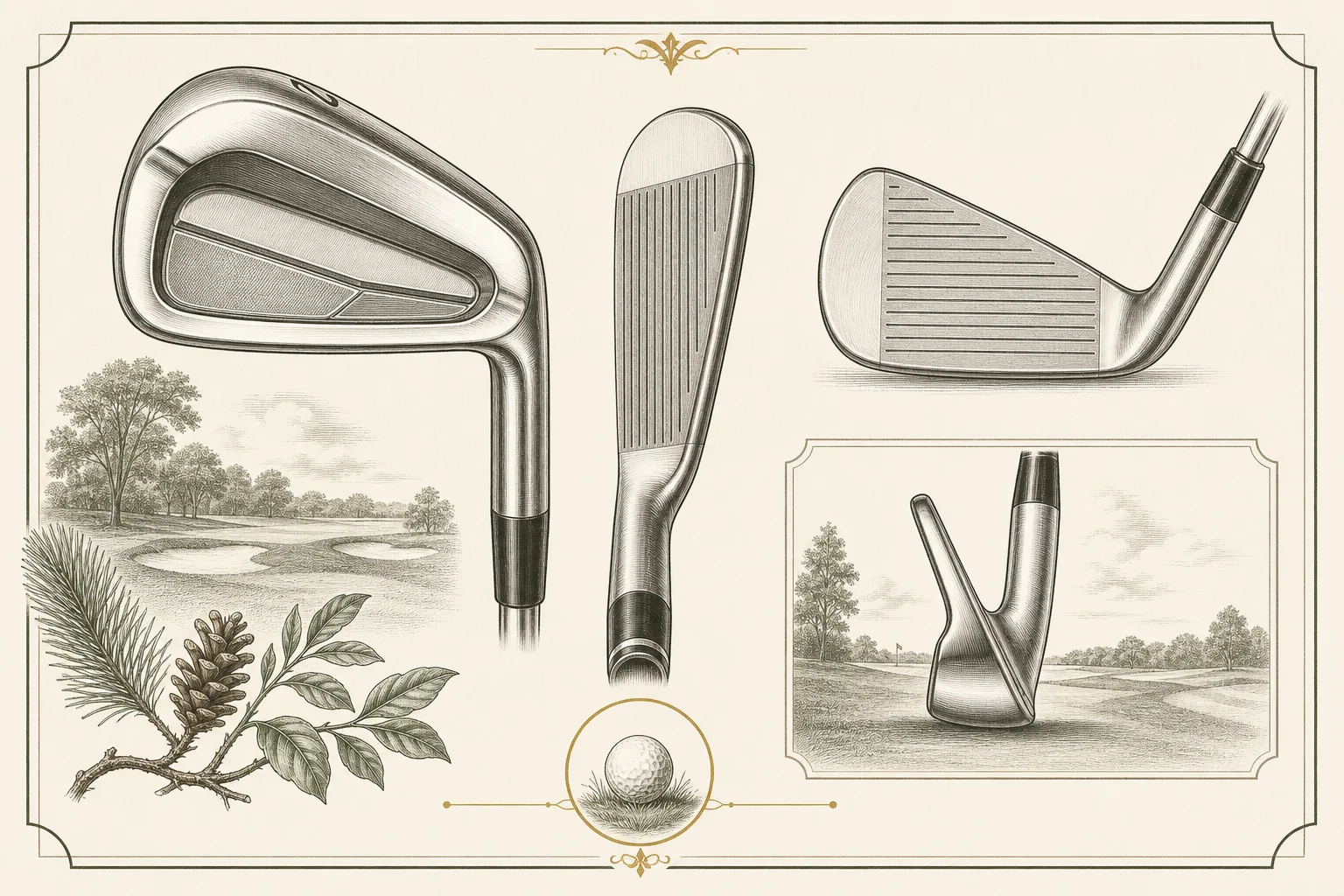
The 221 CB is the middle iron in Bridgestone's 220-series forged trio (220 MB blade, 221 CB cavity, 222 CB+ game-improvement), all forged by Endo Manufacturing — the same elite Japanese forging house whose precision work is central to several premium Japan-forged iron lines. It's a one-piece forged carbon-steel cavity back with a wider sole than the 220 MB for stability, and the 4- and 5-irons add a dual-pocket cavity behind the face to help launch long irons higher with more control. Matt Kuchar had a set in his bag on the PGA Tour in 2022, ahead of its wider retail push, which is unusual validation for a Bridgestone iron given how much smaller Bridgestone's US tour and marketing presence is next to Titleist, Mizuno or Callaway.
Genuinely well-regarded by the outlets that tested it (MyGolfSpy, Golf.com) and tour-validated by Kuchar, but it never built the enthusiast following of a Mizuno MP or Titleist T-series because Bridgestone's US iron business is a rounding error next to its golf ball business — most golfers who'd love this iron never hear about it. That gap between quality and visibility is the definition of a sleeper, not a cult classic (there's no dedicated forum following or resale scarcity to back a cult claim).
Built for a solid, low-to-mid single-digit ball-striker who wants Endo forged feel and workability with a bit more margin than a blade, especially in the long irons. A double-digit handicapper chasing forgiveness and distance would be better served by Bridgestone's own 222 CB+ or a mainstream game-improvement iron.
Launched into a 2021–2024 market where every major forged-iron line (Titleist T100/T150, Mizuno Pro, TaylorMade P7MC) was fielding an MB/CB/CB+ or similar three-tier ladder; the 221 CB is Bridgestone's answer to the Mizuno Pro 223/Titleist T150 slot. It replaced Bridgestone's earlier J-series/Tour B X-CB forged cavities as the brand's flagship players-cavity offering.
A genuine players-cavity: the small cavity and wider sole give more stability than the 220 MB blade sitting beside it, and the dual-pocket long irons help mis-hit long irons launch acceptably — but the head is still compact with limited offset and a fairly small effective sweet spot next to a true game-improvement iron. Score it like the MP-32 tier: forgiving for a players' cavity, not forgiving in absolute terms.
Calibrated across the whole catalog — a tour blade scores low here on purpose; it means control, not ease.
Because it was a lower-volume line from a brand with thin secondary-market demand in the US, clean used sets are genuinely scarce. When they do surface, realistic private-party pricing for a clean steel 4-PW set runs roughly $550–$750, well under the ~$1,050–$1,200 original retail, but well above a mass-market iron of similar age simply because so few are being resold.
Reading is one thing — hitting is another. Book a bay and see the numbers for yourself before you buy anywhere.
“The 221 CB was gamed on tour (Kuchar) before its wider release. A crisp rung-2 players cavity; low-key excellent and hard to find used.”
The 221 CB is the middle iron in Bridgestone's 220-series forged trio (220 MB blade, 221 CB cavity, 222 CB+ game-improvement), all forged by Endo Manufacturing — the same elite Japanese forging house whose precision work is central to several premium Japan-forged iron lines. It's a one-piece forged carbon-steel cavity back with a wider sole than the 220 MB for stability, and the 4- and 5-irons add a dual-pocket cavity behind the face to help launch long irons higher with more control. Matt Kuchar had a set in his bag on the PGA Tour in 2022, ahead of its wider retail push, which is unusual validation for a Bridgestone iron given how much smaller Bridgestone's US tour and marketing presence is next to Titleist, Mizuno or Callaway.
Genuinely well-regarded by the outlets that tested it (MyGolfSpy, Golf.com) and tour-validated by Kuchar, but it never built the enthusiast following of a Mizuno MP or Titleist T-series because Bridgestone's US iron business is a rounding error next to its golf ball business — most golfers who'd love this iron never hear about it. That gap between quality and visibility is the definition of a sleeper, not a cult classic (there's no dedicated forum following or resale scarcity to back a cult claim).
Built for a solid, low-to-mid single-digit ball-striker who wants Endo forged feel and workability with a bit more margin than a blade, especially in the long irons. A double-digit handicapper chasing forgiveness and distance would be better served by Bridgestone's own 222 CB+ or a mainstream game-improvement iron.
Launched into a 2021–2024 market where every major forged-iron line (Titleist T100/T150, Mizuno Pro, TaylorMade P7MC) was fielding an MB/CB/CB+ or similar three-tier ladder; the 221 CB is Bridgestone's answer to the Mizuno Pro 223/Titleist T150 slot. It replaced Bridgestone's earlier J-series/Tour B X-CB forged cavities as the brand's flagship players-cavity offering.
A genuine players-cavity: the small cavity and wider sole give more stability than the 220 MB blade sitting beside it, and the dual-pocket long irons help mis-hit long irons launch acceptably — but the head is still compact with limited offset and a fairly small effective sweet spot next to a true game-improvement iron. Score it like the MP-32 tier: forgiving for a players' cavity, not forgiving in absolute terms.
Calibrated across the whole catalog — a tour blade scores low here on purpose; it means control, not ease.
Because it was a lower-volume line from a brand with thin secondary-market demand in the US, clean used sets are genuinely scarce. When they do surface, realistic private-party pricing for a clean steel 4-PW set runs roughly $550–$750, well under the ~$1,050–$1,200 original retail, but well above a mass-market iron of similar age simply because so few are being resold.
Reading is one thing — hitting is another. Book a bay and see the numbers for yourself before you buy anywhere.