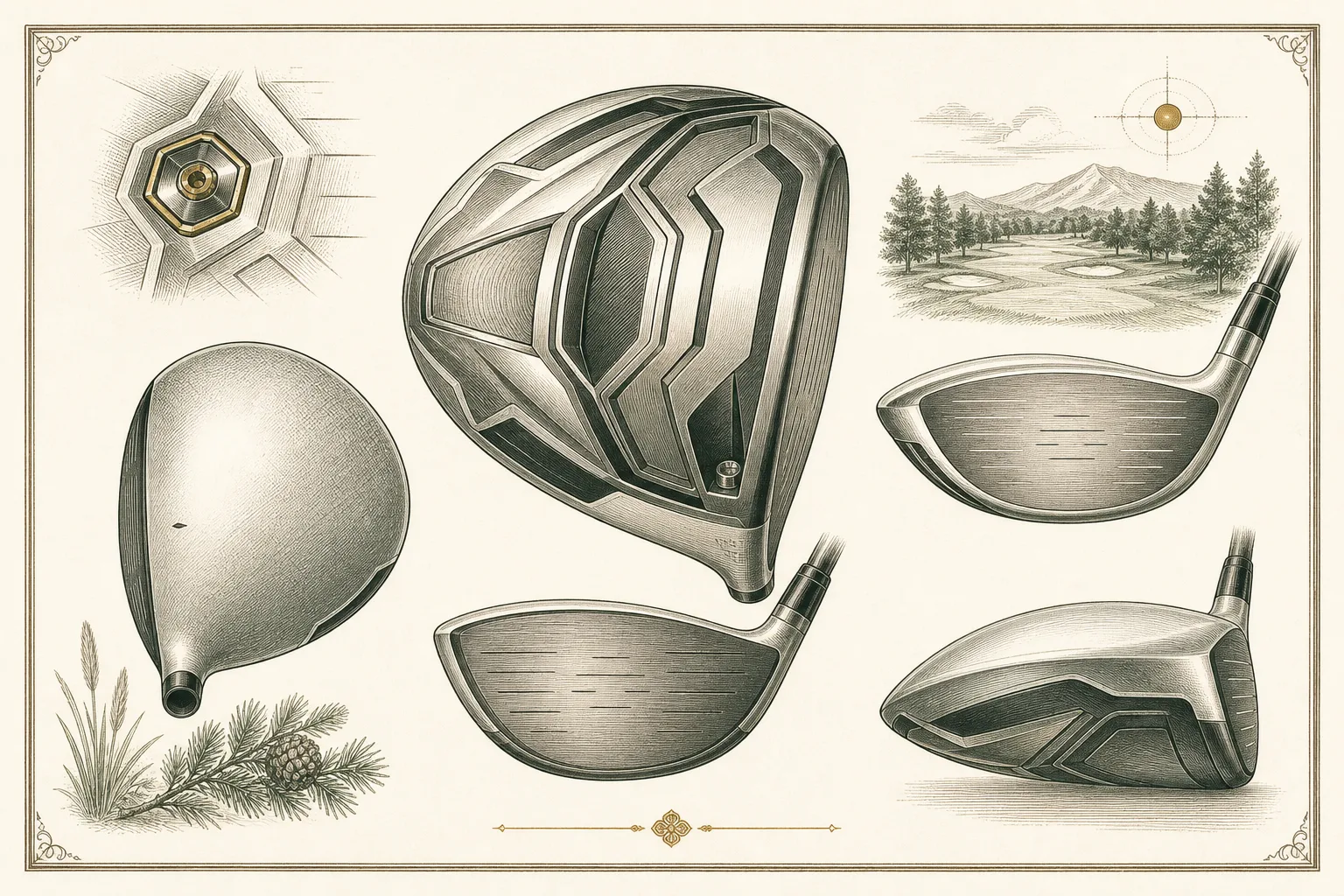
“Launched August 2013 and kicked off the low-spin, loft-up era with a sliding sole weight and low forward CG. This is the standard 460cc head - a separate compact SLDR 430 followed in 2014 for tour players. Great for fast swings who spin it too much; slower players must add loft or it launches low and short. Superseded by SLDR S in 2014.”
TaylorMade's answer to the 2013 loft-up wave: instead of the heel/toe or front/back weight tracks of the R1/RBZ Stage 2, the SLDR moved a single 20g weight along a low, forward rail running heel-to-toe inside a 460cc titanium head, paired with a low-forward CG that let players carry more loft without ballooning spin. It went to World No.1-on-Tour status within about four weeks of release, and Sergio Garcia won the January 2014 Qatar Masters with it in the bag. TaylorMade also sold SLDR S (draw-biased) and SLDR White versions alongside it, and reused the low-forward-CG platform on the Aeroburner, M1 and M2 weight-track drivers that followed.
No lasting collector cult, but it is a genuine inflection point in driver design: it was the first mainstream TaylorMade driver to pair a single sliding weight with a deliberately low-forward CG built around the '#LoftUp' marketing push, and outlets like GolfWRX and Golfalot still cite it as the direct ancestor of the M1/M2 weight-track family. Historical significance, not scarcity, is the story here.
Best for mid-to-low handicappers with moderate-to-fast swing speeds who were spinning the ball too much with earlier weak-lofted, high-spin heads and needed to add loft without ballooning. A high-handicapper who slices or needs pure forgiveness is better served by a max-MOI head from the same era.
Launched in 2013 against Callaway's Big Bertha and Ping's G25/i25, both still using more traditional weighting; SLDR's low-forward-CG-plus-sliding-weight combo pushed TaylorMade's whole line for the next three years (Aeroburner 2015, M1/M2 2016). A modern equivalent is the TaylorMade Qi10, which keeps the low-forward-CG philosophy but with a much larger forgiveness envelope.
Middling for a full-size 460cc driver: the low-forward CG and sliding weight help launch higher/spin lower for faster swingers, and 21 weight positions let a fitter dial out a slice or hook, but the head prioritizes low spin over max MOI, so mis-hits lose more ball speed than they would on a true game-improvement/max-forgiveness head of the same era.
Calibrated across the whole catalog — a tour blade scores low here on purpose; it means control, not ease.
A 2013 driver is now firmly bargain-bin: expect roughly $35-70 for a clean head-and-shaft private-party sale (eBay/SidelineSwap) in 2026, with reconditioned-retail listings at 2nd Swing running somewhat higher for graded/warrantied examples. No collector premium; value is purely functional.
The Legends Rack
The driver that changed how the whole industry talks about launch. Its sliding sole weight and low-forward CG launched the "loft up" revolution — and it remains famously long and famously unforgiving. Hitting it is a fitting lesson disguised as fun. Who'll love it: speed guys chasing that low-spin missile; a humbling for everyone else.
Who it suitsAll
Reading is one thing — hitting is another. Book a bay and see the numbers for yourself before you buy anywhere.
“Launched August 2013 and kicked off the low-spin, loft-up era with a sliding sole weight and low forward CG. This is the standard 460cc head - a separate compact SLDR 430 followed in 2014 for tour players. Great for fast swings who spin it too much; slower players must add loft or it launches low and short. Superseded by SLDR S in 2014.”
TaylorMade's answer to the 2013 loft-up wave: instead of the heel/toe or front/back weight tracks of the R1/RBZ Stage 2, the SLDR moved a single 20g weight along a low, forward rail running heel-to-toe inside a 460cc titanium head, paired with a low-forward CG that let players carry more loft without ballooning spin. It went to World No.1-on-Tour status within about four weeks of release, and Sergio Garcia won the January 2014 Qatar Masters with it in the bag. TaylorMade also sold SLDR S (draw-biased) and SLDR White versions alongside it, and reused the low-forward-CG platform on the Aeroburner, M1 and M2 weight-track drivers that followed.
No lasting collector cult, but it is a genuine inflection point in driver design: it was the first mainstream TaylorMade driver to pair a single sliding weight with a deliberately low-forward CG built around the '#LoftUp' marketing push, and outlets like GolfWRX and Golfalot still cite it as the direct ancestor of the M1/M2 weight-track family. Historical significance, not scarcity, is the story here.
Best for mid-to-low handicappers with moderate-to-fast swing speeds who were spinning the ball too much with earlier weak-lofted, high-spin heads and needed to add loft without ballooning. A high-handicapper who slices or needs pure forgiveness is better served by a max-MOI head from the same era.
Launched in 2013 against Callaway's Big Bertha and Ping's G25/i25, both still using more traditional weighting; SLDR's low-forward-CG-plus-sliding-weight combo pushed TaylorMade's whole line for the next three years (Aeroburner 2015, M1/M2 2016). A modern equivalent is the TaylorMade Qi10, which keeps the low-forward-CG philosophy but with a much larger forgiveness envelope.
Middling for a full-size 460cc driver: the low-forward CG and sliding weight help launch higher/spin lower for faster swingers, and 21 weight positions let a fitter dial out a slice or hook, but the head prioritizes low spin over max MOI, so mis-hits lose more ball speed than they would on a true game-improvement/max-forgiveness head of the same era.
Calibrated across the whole catalog — a tour blade scores low here on purpose; it means control, not ease.
A 2013 driver is now firmly bargain-bin: expect roughly $35-70 for a clean head-and-shaft private-party sale (eBay/SidelineSwap) in 2026, with reconditioned-retail listings at 2nd Swing running somewhat higher for graded/warrantied examples. No collector premium; value is purely functional.
The Legends Rack
The driver that changed how the whole industry talks about launch. Its sliding sole weight and low-forward CG launched the "loft up" revolution — and it remains famously long and famously unforgiving. Hitting it is a fitting lesson disguised as fun. Who'll love it: speed guys chasing that low-spin missile; a humbling for everyone else.
Who it suitsAll
Reading is one thing — hitting is another. Book a bay and see the numbers for yourself before you buy anywhere.