“Hugely popular rung-1 head; the LS Tec is a low-spin subtype for fast swings only. Base G30 is pure forgiveness and ages very well on the used market.”
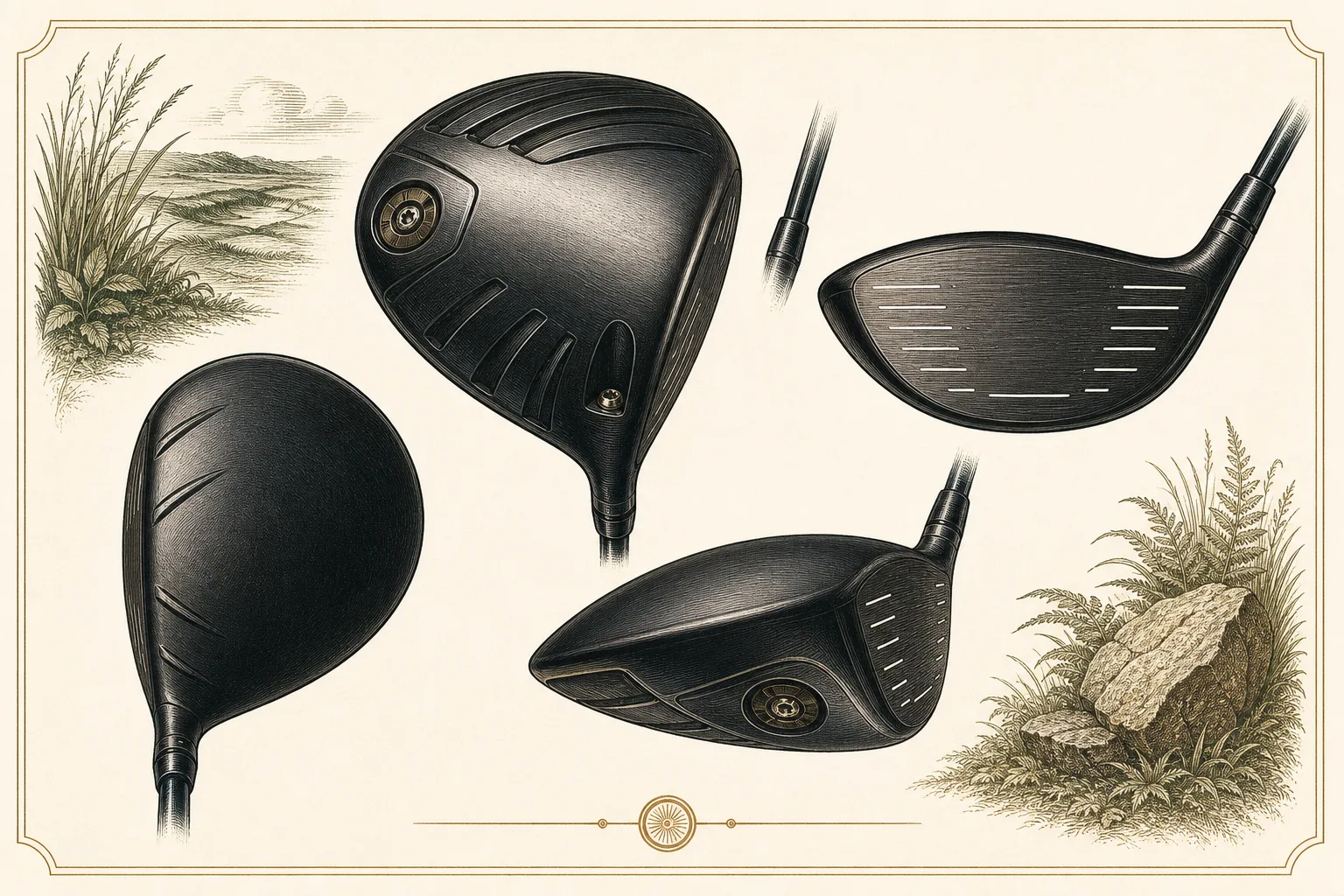
The 2014 G30 is the driver where Ping put visible 'Turbulator' ridges on the front of the crown — an aerodynamic idea borrowed from motorsport that actually measured a small clubhead-speed gain in testing (about 1 mph). Underneath, a thinner, 4-gram-lighter T9S face freed weight that Ping pushed low and rearward to build what it called the highest-MOI driver it had made to that point, launching high with lower spin (roughly 150 rpm less than the G25). Sold in a forgiving standard head plus two specialists — SF Tec (heel-weighted, draw bias) and LS Tec (low-spin for faster swings) — with a five-setting adjustable hosel covering two degrees of loft. It was a commercial hit and made turbulators a Ping signature.
A landmark, high-selling Ping driver remembered for popularizing crown turbulators and posting Ping's highest MOI to date, widely and positively reviewed (Today's Golfer, GolfWRX, Golf Monthly). But it was a mainstream best-seller, quickly superseded by the G/G400 line, with no scarcity or collector status — notable, not cult.
Wide fit for mid-to-high handicaps and moderate swing speeds (roughly 75-105 mph) wanting easy launch and stability; the standard/SF Tec heads help slicers and slower swings, while LS Tec suits 100+ mph players chasing lower spin. Better players wanting a compact, workable head or the last word in adjustability will prefer a modern movable-weight driver.
Launched against the TaylorMade SLDR/R15, Callaway Big Bertha Alpha and Titleist 913D of 2014, when adjustable-loft hosels were standard and the industry chased low spin. Turbulators became a recurring Ping design cue seen through the G, G400 and G425. Its direct successor was the 2016 Ping G, then the G400 (2017).
Genuinely forgiving for its era: the low-back CG and record-for-Ping MOI make off-center hits hold ball speed and line better than most 2014 drivers, and the standard head is a point-and-shoot stability play. It trails the later 9,000+ MOI G400 and 10,000 MOI G425, so an 8 places it clearly in the high-forgiveness tier without pretending it matches Ping's own next-generation heads.
Calibrated across the whole catalog — a tour blade scores low here on purpose; it means control, not ease.
A plentiful, cheap used driver in 2026: realistic private-party value is roughly $60-110 depending on head (LS Tec/premium shafts higher), condition and shaft. It doesn't hold value or appreciate — millions were sold and it's two generations behind current MOI figures. An MSRP of $385 matches its ~$385 launch price.
Reading is one thing — hitting is another. Book a bay and see the numbers for yourself before you buy anywhere.
“Hugely popular rung-1 head; the LS Tec is a low-spin subtype for fast swings only. Base G30 is pure forgiveness and ages very well on the used market.”
The 2014 G30 is the driver where Ping put visible 'Turbulator' ridges on the front of the crown — an aerodynamic idea borrowed from motorsport that actually measured a small clubhead-speed gain in testing (about 1 mph). Underneath, a thinner, 4-gram-lighter T9S face freed weight that Ping pushed low and rearward to build what it called the highest-MOI driver it had made to that point, launching high with lower spin (roughly 150 rpm less than the G25). Sold in a forgiving standard head plus two specialists — SF Tec (heel-weighted, draw bias) and LS Tec (low-spin for faster swings) — with a five-setting adjustable hosel covering two degrees of loft. It was a commercial hit and made turbulators a Ping signature.
A landmark, high-selling Ping driver remembered for popularizing crown turbulators and posting Ping's highest MOI to date, widely and positively reviewed (Today's Golfer, GolfWRX, Golf Monthly). But it was a mainstream best-seller, quickly superseded by the G/G400 line, with no scarcity or collector status — notable, not cult.
Wide fit for mid-to-high handicaps and moderate swing speeds (roughly 75-105 mph) wanting easy launch and stability; the standard/SF Tec heads help slicers and slower swings, while LS Tec suits 100+ mph players chasing lower spin. Better players wanting a compact, workable head or the last word in adjustability will prefer a modern movable-weight driver.
Launched against the TaylorMade SLDR/R15, Callaway Big Bertha Alpha and Titleist 913D of 2014, when adjustable-loft hosels were standard and the industry chased low spin. Turbulators became a recurring Ping design cue seen through the G, G400 and G425. Its direct successor was the 2016 Ping G, then the G400 (2017).
Genuinely forgiving for its era: the low-back CG and record-for-Ping MOI make off-center hits hold ball speed and line better than most 2014 drivers, and the standard head is a point-and-shoot stability play. It trails the later 9,000+ MOI G400 and 10,000 MOI G425, so an 8 places it clearly in the high-forgiveness tier without pretending it matches Ping's own next-generation heads.
Calibrated across the whole catalog — a tour blade scores low here on purpose; it means control, not ease.
A plentiful, cheap used driver in 2026: realistic private-party value is roughly $60-110 depending on head (LS Tec/premium shafts higher), condition and shaft. It doesn't hold value or appreciate — millions were sold and it's two generations behind current MOI figures. An MSRP of $385 matches its ~$385 launch price.
Reading is one thing — hitting is another. Book a bay and see the numbers for yourself before you buy anywhere.