“The first Bertha to use triaxial carbon to save mass and push MOI ~17% over XR 16 -- a genuine forgiveness play and a precursor to Epic. A strong rung-1 used bargain.”
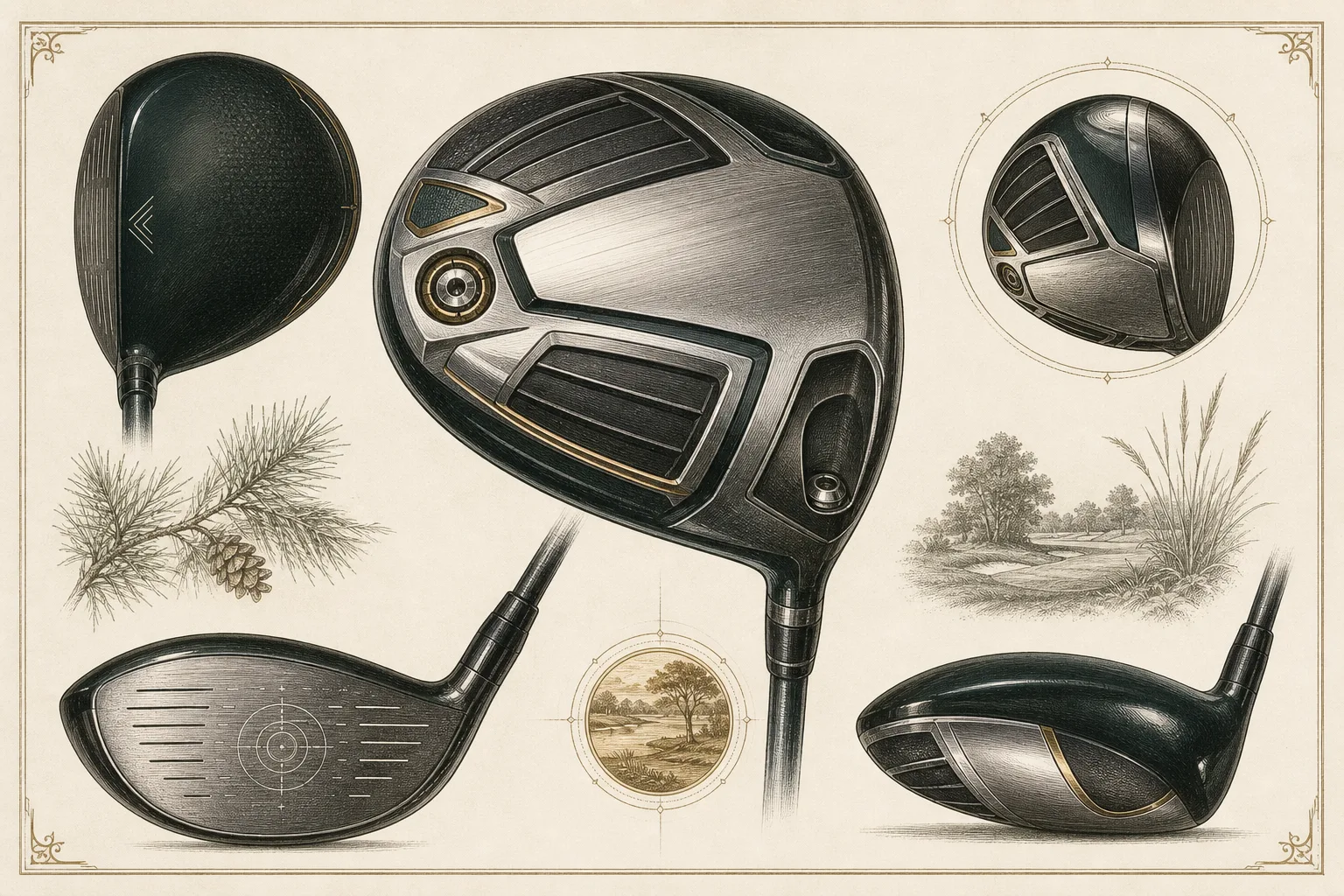
The 2016 Big Bertha Fusion driver introduced Callaway's Exo-Cage: a 460cc titanium head wrapped in triaxial carbon (a braided rather than woven fiber layup) that Callaway claimed was 35% lighter than the composite it had used previously, freeing mass to push into a high-MOI perimeter configuration. In head-to-head testing against Callaway's own XR16 and Great Big Bertha using matched lofts and shafts, the Fusion measured roughly 2.8 mph higher ball speed on off-center hits while running lower spin than is typical for such a forgiving head — an unusual combination reviewers noted directly. Its long, triangular, FT-iZ-inspired shape divided opinion at address, and it traded some outright distance (10-20 yards behind the longest drivers of the year) for that forgiveness and shape.
Not a cult club with active forum-driven demand, but a genuine, sourced engineering milestone: the triaxial carbon Exo-Cage construction was a direct technical precursor to the Jailbreak-era Epic driver that followed a year later, and reviewers documented a specific, measured forgiveness advantage (2.8 mph ball speed gain off-center vs. Callaway's own prior drivers) rather than generic marketing praise.
Players who prioritize consistency and accuracy over maximum distance, and who don't mind a long, triangular head shape at address; reviewers explicitly noted it costs 10-20 yards versus the longest drivers of 2016. A distance-first player, or one who dislikes the elongated FT-iZ-style profile, should look at Callaway's Epic or XR-series drivers of the same era instead.
Released in 2016 as Callaway's forgiveness-focused driver alongside the distance-focused XR16, the year before the triaxial-carbon/Jailbreak combination fully matured into the 2017 Epic driver. It followed the earlier Big Bertha Fusion fairway wood (2004-2005, which used a simpler carbon-crown-on-steel-face fusion) and the Big Bertha Diablo (2009) as another periodic Big Bertha revival, this time built around forgiveness rather than value.
Independent testing against Callaway's own XR16 and Great Big Bertha (matched shaft/loft) showed a measurable 2.8 mph ball speed advantage on off-center strikes, and reviewers called it one of the most forgiving drivers tested that year — while unusually also running lower-than-typical spin for that level of forgiveness, an uncommon combination worth flagging rather than glossing over.
Calibrated across the whole catalog — a tour blade scores low here on purpose; it means control, not ease.
MSRP was $399. Tracked resale data shows an average used sale price around $67 in 2026 (range roughly $9-$325 depending on condition and shaft), reflecting a decade-old mainstream driver that has fully depreciated — a real technical milestone, but not one the used market prices at any premium.
Reading is one thing — hitting is another. Book a bay and see the numbers for yourself before you buy anywhere.
“The first Bertha to use triaxial carbon to save mass and push MOI ~17% over XR 16 -- a genuine forgiveness play and a precursor to Epic. A strong rung-1 used bargain.”
The 2016 Big Bertha Fusion driver introduced Callaway's Exo-Cage: a 460cc titanium head wrapped in triaxial carbon (a braided rather than woven fiber layup) that Callaway claimed was 35% lighter than the composite it had used previously, freeing mass to push into a high-MOI perimeter configuration. In head-to-head testing against Callaway's own XR16 and Great Big Bertha using matched lofts and shafts, the Fusion measured roughly 2.8 mph higher ball speed on off-center hits while running lower spin than is typical for such a forgiving head — an unusual combination reviewers noted directly. Its long, triangular, FT-iZ-inspired shape divided opinion at address, and it traded some outright distance (10-20 yards behind the longest drivers of the year) for that forgiveness and shape.
Not a cult club with active forum-driven demand, but a genuine, sourced engineering milestone: the triaxial carbon Exo-Cage construction was a direct technical precursor to the Jailbreak-era Epic driver that followed a year later, and reviewers documented a specific, measured forgiveness advantage (2.8 mph ball speed gain off-center vs. Callaway's own prior drivers) rather than generic marketing praise.
Players who prioritize consistency and accuracy over maximum distance, and who don't mind a long, triangular head shape at address; reviewers explicitly noted it costs 10-20 yards versus the longest drivers of 2016. A distance-first player, or one who dislikes the elongated FT-iZ-style profile, should look at Callaway's Epic or XR-series drivers of the same era instead.
Released in 2016 as Callaway's forgiveness-focused driver alongside the distance-focused XR16, the year before the triaxial-carbon/Jailbreak combination fully matured into the 2017 Epic driver. It followed the earlier Big Bertha Fusion fairway wood (2004-2005, which used a simpler carbon-crown-on-steel-face fusion) and the Big Bertha Diablo (2009) as another periodic Big Bertha revival, this time built around forgiveness rather than value.
Independent testing against Callaway's own XR16 and Great Big Bertha (matched shaft/loft) showed a measurable 2.8 mph ball speed advantage on off-center strikes, and reviewers called it one of the most forgiving drivers tested that year — while unusually also running lower-than-typical spin for that level of forgiveness, an uncommon combination worth flagging rather than glossing over.
Calibrated across the whole catalog — a tour blade scores low here on purpose; it means control, not ease.
MSRP was $399. Tracked resale data shows an average used sale price around $67 in 2026 (range roughly $9-$325 depending on condition and shaft), reflecting a decade-old mainstream driver that has fully depreciated — a real technical milestone, but not one the used market prices at any premium.
Reading is one thing — hitting is another. Book a bay and see the numbers for yourself before you buy anywhere.