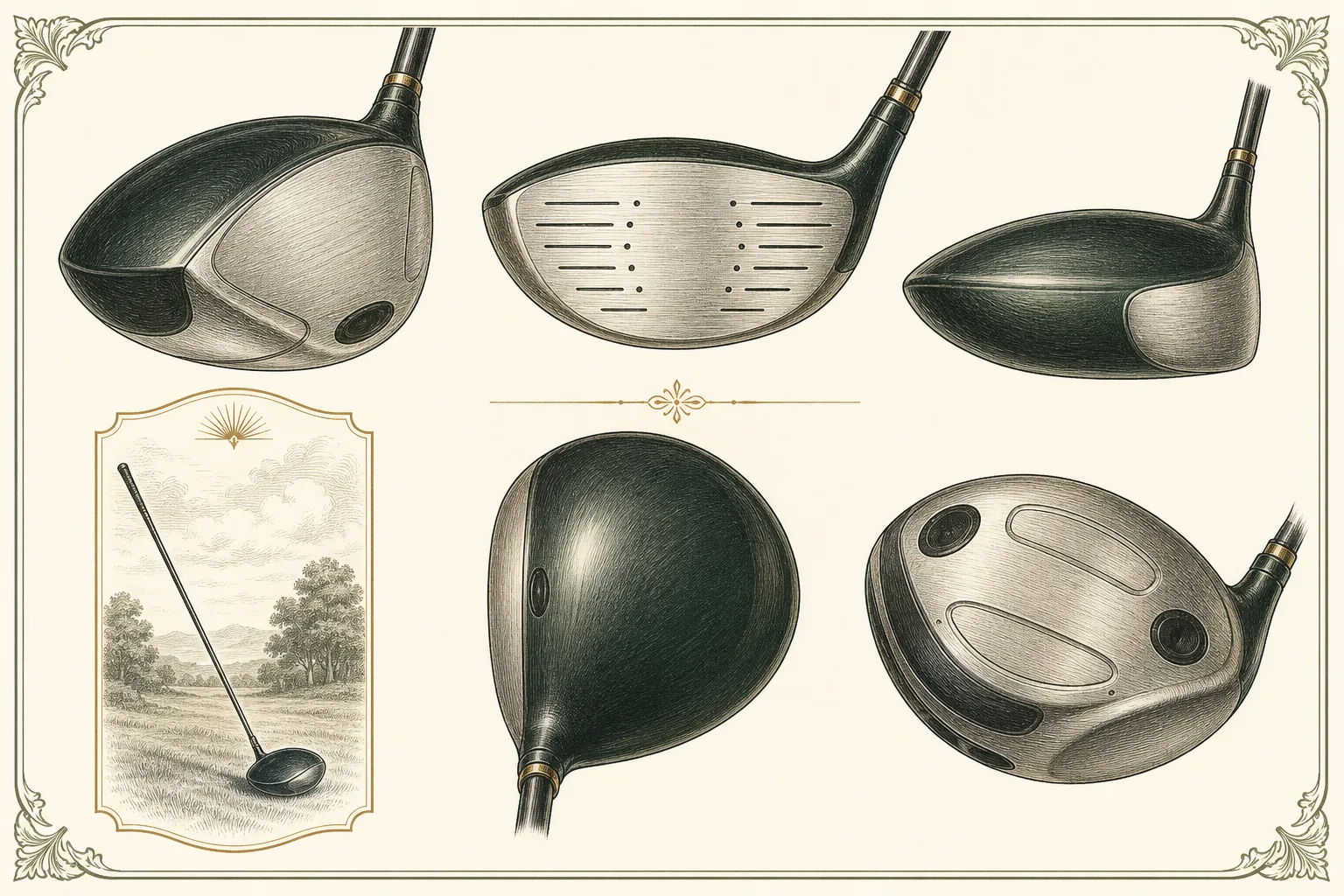
“Callaway's first titanium driver and the club that launched the titanium era -- lighter head let them raise launch and forgiveness. A landmark to collect; not a serious gamer against modern heads.”
Callaway's 1995 leap from steel to titanium. The 1991 Big Bertha that made Callaway a giant was 190cc of stainless; the Great Big Bertha jumped to 250cc of lighter, stronger titanium, letting Callaway grow the head without adding weight. Launched almost simultaneously with the TaylorMade Titanium Bubble, it was one of the two clubs that dragged the whole industry from steel to titanium in a single season. The bigger, lighter head raised MOI and let Callaway push CG lower, and the matched 'Great Big Bertha' fairway woods and irons rode its coattails to enormous sales. It was expensive (~$500, a shocking price then) and it worked, cementing titanium as the default driver material for the next two-plus decades.
Historically important rather than collected: it is repeatedly cited, alongside the TaylorMade Titanium Bubble, as the club that popularized titanium driver construction in 1995 and kicked off the oversized-titanium era. That is a genuine milestone documented across golf-history retrospectives (Golf Digest, Golf Club Brokers lineage pieces), but the franchise icon status belongs to the 1991 stainless Big Bertha; the GBB is revered for what it started, not hunted down by collectors.
A historical/collector or budget curiosity today, not a gamer. In 1995 it fit essentially everyone trading up from steel or persimmon who wanted more size and forgiveness. A modern player chasing distance or forgiveness should not put this in the bag — any current 460cc driver is longer, straighter on misses and easier to launch. Keep it for the shelf or a nostalgia round.
Launched into the 1995 titanium arms race directly opposite the TaylorMade Titanium Bubble, with Cobra, Taylor Made and Ping all racing to grow heads. It succeeded the 1991 stainless Big Bertha and the smaller-titanium originals, and was itself followed by the Biggest Big Bertha (1997) and the steel Big Bertha Steelhead line. Its conceptual descendants are every oversized titanium driver since; a modern equivalent in role is simply today's standard 460cc Big Bertha or Paradym driver, four generations of materials science later.
Forgiving FOR 1995, unforgiving by modern numbers. At 250cc the titanium head was a big jump in size, MOI and low-CG launch over the 190cc steel Bertha and the persimmon/small-steel heads it buried, so off-center hits held up far better than anything most golfers had swung. But 250cc is barely half a modern 460cc head; the sweet spot is small next to a 2020s driver and heel/toe misses still lose meaningful ball speed. A 6 reflects 'very forgiving for its era, modest in absolute terms.'
Calibrated across the whole catalog — a tour blade scores low here on purpose; it means control, not ease.
A vintage curiosity, not an investment: clean private-party examples typically sell for roughly $20-50 in 2026 on eBay/SidelineSwap, more only for genuinely mint/boxed pieces or rare tour lofts. Steel-shaft or beat examples go for near nothing. Any reconditioned-retail listing well above that is paying for grading, not collectibility; value here is nostalgia, not performance.
The Legends Rack
The titanium moonshot. At launch it cost an outrageous $500 in mid-90s money and people paid it gladly. This is where the modern driver era actually begins. Who'll love it: history buffs and anyone whose first "good" driver was a GBB.
Who it suitsAll
Reading is one thing — hitting is another. Book a bay and see the numbers for yourself before you buy anywhere.
“Callaway's first titanium driver and the club that launched the titanium era -- lighter head let them raise launch and forgiveness. A landmark to collect; not a serious gamer against modern heads.”
Callaway's 1995 leap from steel to titanium. The 1991 Big Bertha that made Callaway a giant was 190cc of stainless; the Great Big Bertha jumped to 250cc of lighter, stronger titanium, letting Callaway grow the head without adding weight. Launched almost simultaneously with the TaylorMade Titanium Bubble, it was one of the two clubs that dragged the whole industry from steel to titanium in a single season. The bigger, lighter head raised MOI and let Callaway push CG lower, and the matched 'Great Big Bertha' fairway woods and irons rode its coattails to enormous sales. It was expensive (~$500, a shocking price then) and it worked, cementing titanium as the default driver material for the next two-plus decades.
Historically important rather than collected: it is repeatedly cited, alongside the TaylorMade Titanium Bubble, as the club that popularized titanium driver construction in 1995 and kicked off the oversized-titanium era. That is a genuine milestone documented across golf-history retrospectives (Golf Digest, Golf Club Brokers lineage pieces), but the franchise icon status belongs to the 1991 stainless Big Bertha; the GBB is revered for what it started, not hunted down by collectors.
A historical/collector or budget curiosity today, not a gamer. In 1995 it fit essentially everyone trading up from steel or persimmon who wanted more size and forgiveness. A modern player chasing distance or forgiveness should not put this in the bag — any current 460cc driver is longer, straighter on misses and easier to launch. Keep it for the shelf or a nostalgia round.
Launched into the 1995 titanium arms race directly opposite the TaylorMade Titanium Bubble, with Cobra, Taylor Made and Ping all racing to grow heads. It succeeded the 1991 stainless Big Bertha and the smaller-titanium originals, and was itself followed by the Biggest Big Bertha (1997) and the steel Big Bertha Steelhead line. Its conceptual descendants are every oversized titanium driver since; a modern equivalent in role is simply today's standard 460cc Big Bertha or Paradym driver, four generations of materials science later.
Forgiving FOR 1995, unforgiving by modern numbers. At 250cc the titanium head was a big jump in size, MOI and low-CG launch over the 190cc steel Bertha and the persimmon/small-steel heads it buried, so off-center hits held up far better than anything most golfers had swung. But 250cc is barely half a modern 460cc head; the sweet spot is small next to a 2020s driver and heel/toe misses still lose meaningful ball speed. A 6 reflects 'very forgiving for its era, modest in absolute terms.'
Calibrated across the whole catalog — a tour blade scores low here on purpose; it means control, not ease.
A vintage curiosity, not an investment: clean private-party examples typically sell for roughly $20-50 in 2026 on eBay/SidelineSwap, more only for genuinely mint/boxed pieces or rare tour lofts. Steel-shaft or beat examples go for near nothing. Any reconditioned-retail listing well above that is paying for grading, not collectibility; value here is nostalgia, not performance.
The Legends Rack
The titanium moonshot. At launch it cost an outrageous $500 in mid-90s money and people paid it gladly. This is where the modern driver era actually begins. Who'll love it: history buffs and anyone whose first "good" driver was a GBB.
Who it suitsAll
Reading is one thing — hitting is another. Book a bay and see the numbers for yourself before you buy anywhere.