“Direct-to-consumer driver sold heavily via email marketing; a single 10.5 loft was typical but exact stock shaft is uncertain.”
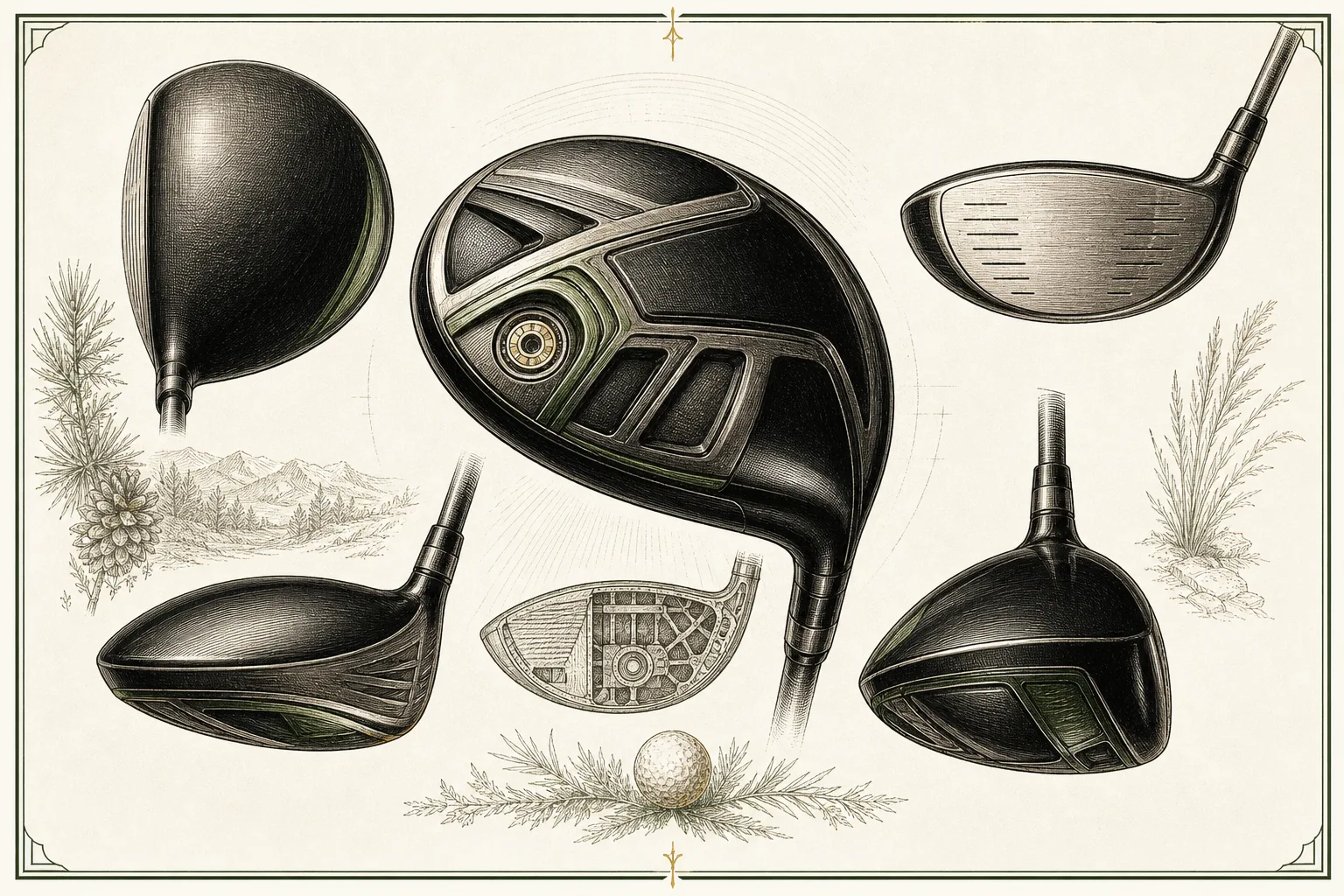
The original Grenade is the club that launched BombTech Golf: founder Tyler 'Sully' Sullivan, a University of Vermont grad running a custom-fitting business, partnered with his alma mater's engineering department on a capstone project to design a driver head that could compete with major-brand drivers at roughly half the retail price. It used an unusual two-piece cast titanium build with a TI-1188 beta-titanium face, and two triangular sole channels — developed with SolidWorks CAD and CFD — to cut aerodynamic drag and raise CG for a penetrating, lower-spin flight. Sold direct-to-consumer with Sullivan's personal cell number for support, it became the founding product of a real disruptor brand in a category dominated by major manufacturers.
Documented, independent media attention well beyond a typical budget driver: multi-page GolfWRX forum threads, a Rick Shiels YouTube/Facebook review presented explicitly as a non-sponsored 'REAL review,' and coverage in Practical Golf and Forbes framing BombTech as a genuine direct-to-consumer disruptor that has sold well over 100,000 clubs since 2012-13 with under a 5% return rate — a surprisingly well-regarded budget performer relative to its price and brand recognition, the definition of a sleeper rather than a mass-hyped icon.
Golfers who want major-brand-competitive distance on center contact at a fraction of premium retail price, and who are comfortable with a direct-to-consumer brand and its 60-day return policy rather than a big-name label, are the intended buyer; someone who mishits frequently and needs maximum forgiveness on off-center strikes, or who values pedigree/resale recognition, should look at a mainstream max-forgiveness driver instead.
First released around 2013 as BombTech's founding product (roster lists 2016, but the timeline implied by BombTech's own history and the 2017 Grenade 2 release — stated as launching 'four years' after the original — points to an original launch closer to 2013; this is flagged for review). It predates and set up the Grenade 2 (2017) and Grenade 3.0 (2019) follow-ons, competing on price against Callaway, TaylorMade and Titleist drivers costing two to three times as much; a modern equivalent in market position is a direct-to-consumer challenger brand like Sub 70 or Tour Edge.
Reviewer accounts conflict on this point, which is itself informative: multiple testers reported the Grenade launching high and consistently long, on par with or ahead of major-brand comparisons, including on center strikes; but at least one in-depth review found that missing the sweet spot causes a serious drop-off in distance and feel, indicating the club rewards a good strike more than it protects a poor one — a mid-pack forgiveness profile, not a max-MOI game-improvement head.
Calibrated across the whole catalog — a tour blade scores low here on purpose; it means control, not ease.
Used examples sell cheaply on eBay, commonly in the $50-$90 range depending on shaft, loft and condition, consistent with a budget-positioned driver that never had significant resale/collector premium even when new; BombTech itself also runs a pre-owned Grenade sales channel at reduced pricing.
Reading is one thing — hitting is another. Book a bay and see the numbers for yourself before you buy anywhere.
“Direct-to-consumer driver sold heavily via email marketing; a single 10.5 loft was typical but exact stock shaft is uncertain.”
The original Grenade is the club that launched BombTech Golf: founder Tyler 'Sully' Sullivan, a University of Vermont grad running a custom-fitting business, partnered with his alma mater's engineering department on a capstone project to design a driver head that could compete with major-brand drivers at roughly half the retail price. It used an unusual two-piece cast titanium build with a TI-1188 beta-titanium face, and two triangular sole channels — developed with SolidWorks CAD and CFD — to cut aerodynamic drag and raise CG for a penetrating, lower-spin flight. Sold direct-to-consumer with Sullivan's personal cell number for support, it became the founding product of a real disruptor brand in a category dominated by major manufacturers.
Documented, independent media attention well beyond a typical budget driver: multi-page GolfWRX forum threads, a Rick Shiels YouTube/Facebook review presented explicitly as a non-sponsored 'REAL review,' and coverage in Practical Golf and Forbes framing BombTech as a genuine direct-to-consumer disruptor that has sold well over 100,000 clubs since 2012-13 with under a 5% return rate — a surprisingly well-regarded budget performer relative to its price and brand recognition, the definition of a sleeper rather than a mass-hyped icon.
Golfers who want major-brand-competitive distance on center contact at a fraction of premium retail price, and who are comfortable with a direct-to-consumer brand and its 60-day return policy rather than a big-name label, are the intended buyer; someone who mishits frequently and needs maximum forgiveness on off-center strikes, or who values pedigree/resale recognition, should look at a mainstream max-forgiveness driver instead.
First released around 2013 as BombTech's founding product (roster lists 2016, but the timeline implied by BombTech's own history and the 2017 Grenade 2 release — stated as launching 'four years' after the original — points to an original launch closer to 2013; this is flagged for review). It predates and set up the Grenade 2 (2017) and Grenade 3.0 (2019) follow-ons, competing on price against Callaway, TaylorMade and Titleist drivers costing two to three times as much; a modern equivalent in market position is a direct-to-consumer challenger brand like Sub 70 or Tour Edge.
Reviewer accounts conflict on this point, which is itself informative: multiple testers reported the Grenade launching high and consistently long, on par with or ahead of major-brand comparisons, including on center strikes; but at least one in-depth review found that missing the sweet spot causes a serious drop-off in distance and feel, indicating the club rewards a good strike more than it protects a poor one — a mid-pack forgiveness profile, not a max-MOI game-improvement head.
Calibrated across the whole catalog — a tour blade scores low here on purpose; it means control, not ease.
Used examples sell cheaply on eBay, commonly in the $50-$90 range depending on shaft, loft and condition, consistent with a budget-positioned driver that never had significant resale/collector premium even when new; BombTech itself also runs a pre-owned Grenade sales channel at reduced pricing.
Reading is one thing — hitting is another. Book a bay and see the numbers for yourself before you buy anywhere.