“Smaller, open-faced, lower-spinning Octane for better players. Cheap low-spin classic for a fast swing.”
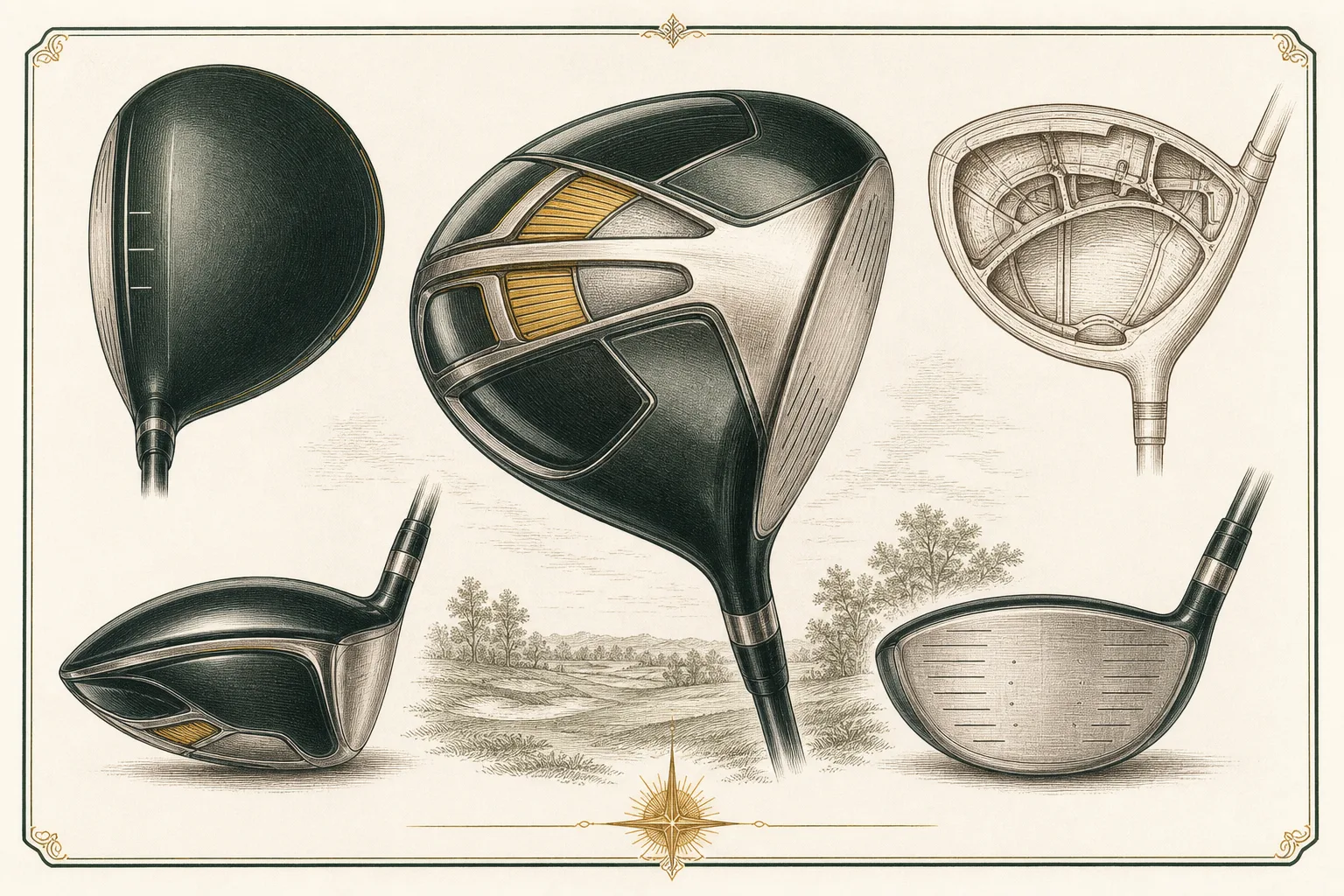
The Diablo Octane Tour was the better-player sibling in Callaway's 2011 Diablo Octane launch, built around a genuine materials-science first: a crown forged from carbon-fiber composite developed jointly with Automobili Lamborghini, packing roughly 500,000 turbostatic carbon fibers per square inch. Moving crown weight into that ultralight composite let Callaway push mass low and to the perimeter for stability, while Hyperbolic Face Technology (in Callaway's driver line since 2008) kept ball speeds high across the face. Where the standard Octane chased forgiveness, the Tour version returned to a more classic pear-shaped head, an open-at-address face angle, and a lower-spin build aimed at faster swingers who were already spinning the ball too much — shaping, not bailout, was the pitch.
No lasting collector or forum cult, but it earns 'notable' rather than plain commodity for one specific, sourced fact: the Lamborghini-developed Forged Composite crown was a genuine materials first for Callaway's driver line, referenced repeatedly across independent equipment coverage rather than just marketing copy. It sold well in its year and was replaced on Callaway's normal annual cycle by the RAZR Fit family, with no scarcity or reverence attached today.
Faster-swinging players who were over-spinning their tee shots and wanted flight control more than forgiveness — the review consensus calls it a good fit for golfers who like to shape shots and want low, penetrating flight. A slower-swing or high-handicap player chasing carry and forgiveness should look at the standard Octane (or a modern GI driver) instead; the Tour head gives up too much margin for that buyer.
Launched alongside the standard Diablo Octane and Octane Drawin 2011, competing against TaylorMade's R11 and Titleist's 910D2/D3 in the better-player-driver space that year. It used Callaway's OptiFit adjustable hosel (two independently rotating cogs giving eight loft/lie combinations), the same adjustability wave every major OEM adopted around 2010-2011. Callaway superseded the whole Diablo Octane line with RAZR Fit in 2012, folding the composite-crown idea into later Big Bertha and Epic drivers.
Deliberately less forgiving than its own stablemate. The standard Diablo Octane was the forgiveness play; the Tour head is smaller, more open-faced, and shaped for shot control and lower spin rather than a wide sweet spot, so mis-hits are punished more than on the standard model. Within the 2011 better-player-driver bracket it's mid-pack forgiving, not a game-improvement head.
Calibrated across the whole catalog — a tour blade scores low here on purpose; it means control, not ease.
A 15-year-old mid-market driver with no collector premium: realistic 2026 private-party price is roughly $25-$55 for a clean head with a decent aftermarket or worn stock shaft; reconditioned-retail listings occasionally run higher for near-mint examples with the original Lamborghini-branded headcover, but that is a condition premium, not a value one.
Reading is one thing — hitting is another. Book a bay and see the numbers for yourself before you buy anywhere.
“Smaller, open-faced, lower-spinning Octane for better players. Cheap low-spin classic for a fast swing.”
The Diablo Octane Tour was the better-player sibling in Callaway's 2011 Diablo Octane launch, built around a genuine materials-science first: a crown forged from carbon-fiber composite developed jointly with Automobili Lamborghini, packing roughly 500,000 turbostatic carbon fibers per square inch. Moving crown weight into that ultralight composite let Callaway push mass low and to the perimeter for stability, while Hyperbolic Face Technology (in Callaway's driver line since 2008) kept ball speeds high across the face. Where the standard Octane chased forgiveness, the Tour version returned to a more classic pear-shaped head, an open-at-address face angle, and a lower-spin build aimed at faster swingers who were already spinning the ball too much — shaping, not bailout, was the pitch.
No lasting collector or forum cult, but it earns 'notable' rather than plain commodity for one specific, sourced fact: the Lamborghini-developed Forged Composite crown was a genuine materials first for Callaway's driver line, referenced repeatedly across independent equipment coverage rather than just marketing copy. It sold well in its year and was replaced on Callaway's normal annual cycle by the RAZR Fit family, with no scarcity or reverence attached today.
Faster-swinging players who were over-spinning their tee shots and wanted flight control more than forgiveness — the review consensus calls it a good fit for golfers who like to shape shots and want low, penetrating flight. A slower-swing or high-handicap player chasing carry and forgiveness should look at the standard Octane (or a modern GI driver) instead; the Tour head gives up too much margin for that buyer.
Launched alongside the standard Diablo Octane and Octane Drawin 2011, competing against TaylorMade's R11 and Titleist's 910D2/D3 in the better-player-driver space that year. It used Callaway's OptiFit adjustable hosel (two independently rotating cogs giving eight loft/lie combinations), the same adjustability wave every major OEM adopted around 2010-2011. Callaway superseded the whole Diablo Octane line with RAZR Fit in 2012, folding the composite-crown idea into later Big Bertha and Epic drivers.
Deliberately less forgiving than its own stablemate. The standard Diablo Octane was the forgiveness play; the Tour head is smaller, more open-faced, and shaped for shot control and lower spin rather than a wide sweet spot, so mis-hits are punished more than on the standard model. Within the 2011 better-player-driver bracket it's mid-pack forgiving, not a game-improvement head.
Calibrated across the whole catalog — a tour blade scores low here on purpose; it means control, not ease.
A 15-year-old mid-market driver with no collector premium: realistic 2026 private-party price is roughly $25-$55 for a clean head with a decent aftermarket or worn stock shaft; reconditioned-retail listings occasionally run higher for near-mint examples with the original Lamborghini-branded headcover, but that is a condition premium, not a value one.
Reading is one thing — hitting is another. Book a bay and see the numbers for yourself before you buy anywhere.