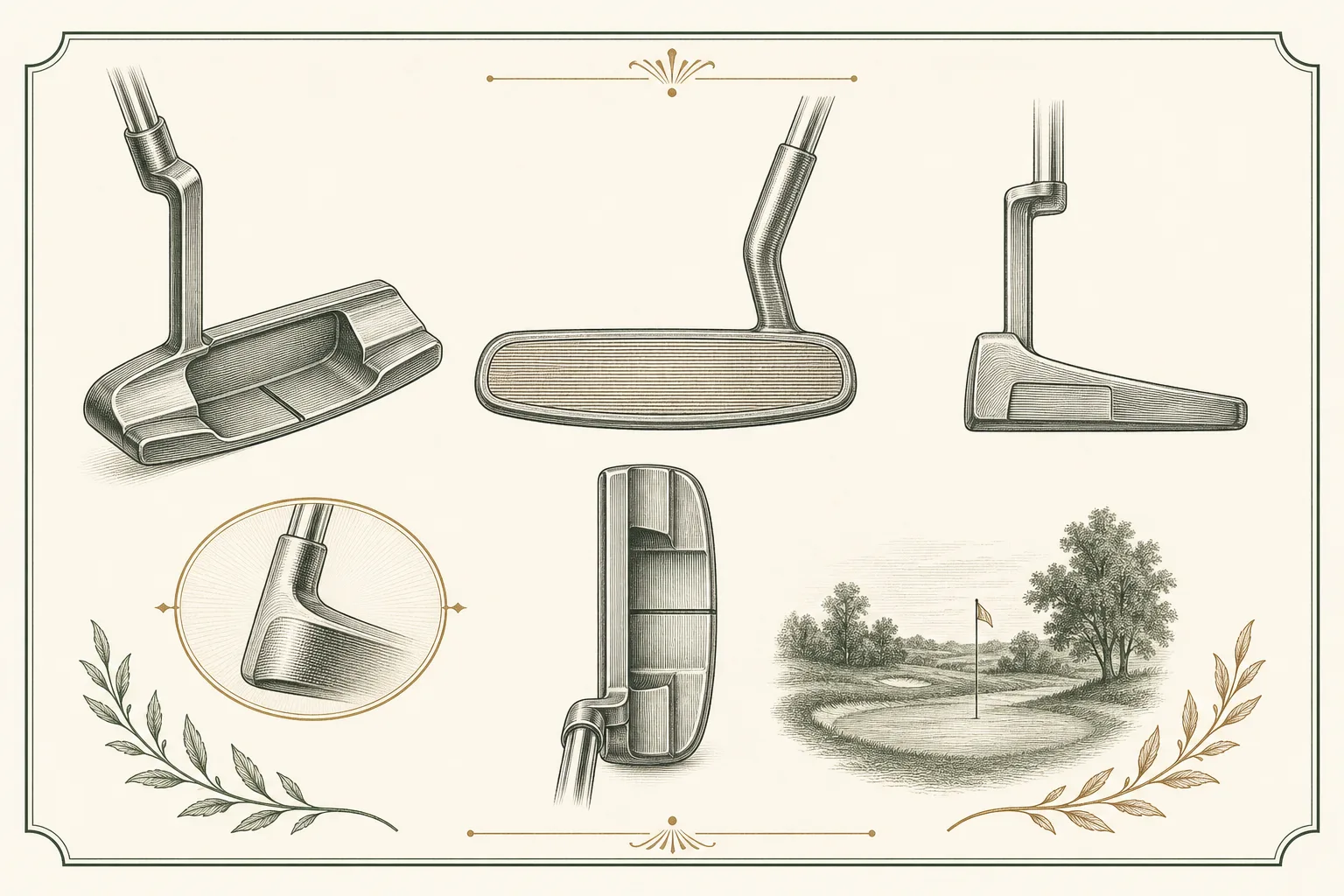
“The legendary 8802 flow-neck blade shape (Palmer's putter); heel-shafted with heavy toe hang for a pronounced arc. A timeless classic for the feel purist.”
The 8802 shape dates back to a 'Designed By Arnold Palmer' flanged blade putter Wilson introduced around 1962; when Palmer left in 1963, the company stripped his name off the sole, stamped it with the catalog number instead, and 'The Wilson 8802' was born. For fifty-plus years that flow-neck, heel-shafted blade — with pronounced toe hang for players who like an arcing stroke — found its way into the bags of Ben Crenshaw, Greg Norman and Phil Mickelson, and it is routinely ranked among the five most famous putter shapes ever made alongside the Ping Anser and Bobby Jones's Calamity Jane. Wilson has periodically reissued the shape in modern materials for a new generation of feel-purist buyers rather than letting the design lapse into pure vintage-collector territory.
The original shape's tour pedigree (Crenshaw, Norman, Mickelson all gaming it at various points) and its recurring place on 'most iconic putter shapes ever' lists across independent golf media give it real, sourced cult standing — distinct from a generic vintage blade, buyers specifically seek out the 8802 shape by name decades on, and Wilson has repeatedly judged the nameplate valuable enough to relaunch (a signal manufacturers only send for designs with proven ongoing demand).
Best suited to players with a natural arcing putting stroke who value feel and classic look over forgiveness — traditionally better players and feel purists, consistent with its tour usage by Crenshaw and Mickelson. A player with a straight-back-straight-through stroke or one who mis-hits putts off-center regularly will get more forgiveness from a modern mallet or heel-toe-weighted blade.
This entry's 2003-2015 window sits within a longer sequence of 8802 reissues bridging the original 1960s design and today: Wilson brought the shape back again in 2014 for its corporate centennial (a double-milled-face 304-stainless version) and again in 2022 as part of a four-shape Staff Model putter range. Across all of these relaunches the core geometry — heel shaft, flow neck, blade profile — stayed essentially the shape Palmer used in 1962, competing conceptually against other reissued classics like the Ping Anser rather than against contemporary mallet designs.
A traditional small-blade putter shape with heavy toe hang and minimal perimeter weighting — the opposite design philosophy from a modern high-MOI mallet. It rewards a compact, repeatable arc stroke and offers little forgiveness on mis-hits toward the heel or toe; players choose it for feel and stroke-shape fit, not for mis-hit tolerance.
Calibrated across the whole catalog — a tour blade scores low here on purpose; it means control, not ease.
Used examples typically sell for roughly $50-$95 (SidelineSwap), with trade-in value around $101 (Golf Avenue) against a new retail price near $199-200 — modest numbers for a putter with this much design pedigree, since decades of reissues have kept supply plentiful rather than scarce. Clean, unmarked heads with original grips command the top of that range; buyers specifically hunting the shape for its arc-friendly toe hang, rather than any one production year, drive most of the demand.
Reading is one thing — hitting is another. Book a bay and see the numbers for yourself before you buy anywhere.
“The legendary 8802 flow-neck blade shape (Palmer's putter); heel-shafted with heavy toe hang for a pronounced arc. A timeless classic for the feel purist.”
The 8802 shape dates back to a 'Designed By Arnold Palmer' flanged blade putter Wilson introduced around 1962; when Palmer left in 1963, the company stripped his name off the sole, stamped it with the catalog number instead, and 'The Wilson 8802' was born. For fifty-plus years that flow-neck, heel-shafted blade — with pronounced toe hang for players who like an arcing stroke — found its way into the bags of Ben Crenshaw, Greg Norman and Phil Mickelson, and it is routinely ranked among the five most famous putter shapes ever made alongside the Ping Anser and Bobby Jones's Calamity Jane. Wilson has periodically reissued the shape in modern materials for a new generation of feel-purist buyers rather than letting the design lapse into pure vintage-collector territory.
The original shape's tour pedigree (Crenshaw, Norman, Mickelson all gaming it at various points) and its recurring place on 'most iconic putter shapes ever' lists across independent golf media give it real, sourced cult standing — distinct from a generic vintage blade, buyers specifically seek out the 8802 shape by name decades on, and Wilson has repeatedly judged the nameplate valuable enough to relaunch (a signal manufacturers only send for designs with proven ongoing demand).
Best suited to players with a natural arcing putting stroke who value feel and classic look over forgiveness — traditionally better players and feel purists, consistent with its tour usage by Crenshaw and Mickelson. A player with a straight-back-straight-through stroke or one who mis-hits putts off-center regularly will get more forgiveness from a modern mallet or heel-toe-weighted blade.
This entry's 2003-2015 window sits within a longer sequence of 8802 reissues bridging the original 1960s design and today: Wilson brought the shape back again in 2014 for its corporate centennial (a double-milled-face 304-stainless version) and again in 2022 as part of a four-shape Staff Model putter range. Across all of these relaunches the core geometry — heel shaft, flow neck, blade profile — stayed essentially the shape Palmer used in 1962, competing conceptually against other reissued classics like the Ping Anser rather than against contemporary mallet designs.
A traditional small-blade putter shape with heavy toe hang and minimal perimeter weighting — the opposite design philosophy from a modern high-MOI mallet. It rewards a compact, repeatable arc stroke and offers little forgiveness on mis-hits toward the heel or toe; players choose it for feel and stroke-shape fit, not for mis-hit tolerance.
Calibrated across the whole catalog — a tour blade scores low here on purpose; it means control, not ease.
Used examples typically sell for roughly $50-$95 (SidelineSwap), with trade-in value around $101 (Golf Avenue) against a new retail price near $199-200 — modest numbers for a putter with this much design pedigree, since decades of reissues have kept supply plentiful rather than scarce. Clean, unmarked heads with original grips command the top of that range; buyers specifically hunting the shape for its arc-friendly toe hang, rather than any one production year, drive most of the demand.
Reading is one thing — hitting is another. Book a bay and see the numbers for yourself before you buy anywhere.