“Replaced the 2016 speed pocket with a three-times-more-flexible Hammerhead slot for more ball speed low on the face. Still TaylorMade's forgiving, high-launch answer to M1; one of the better-value used gamers from this era.”
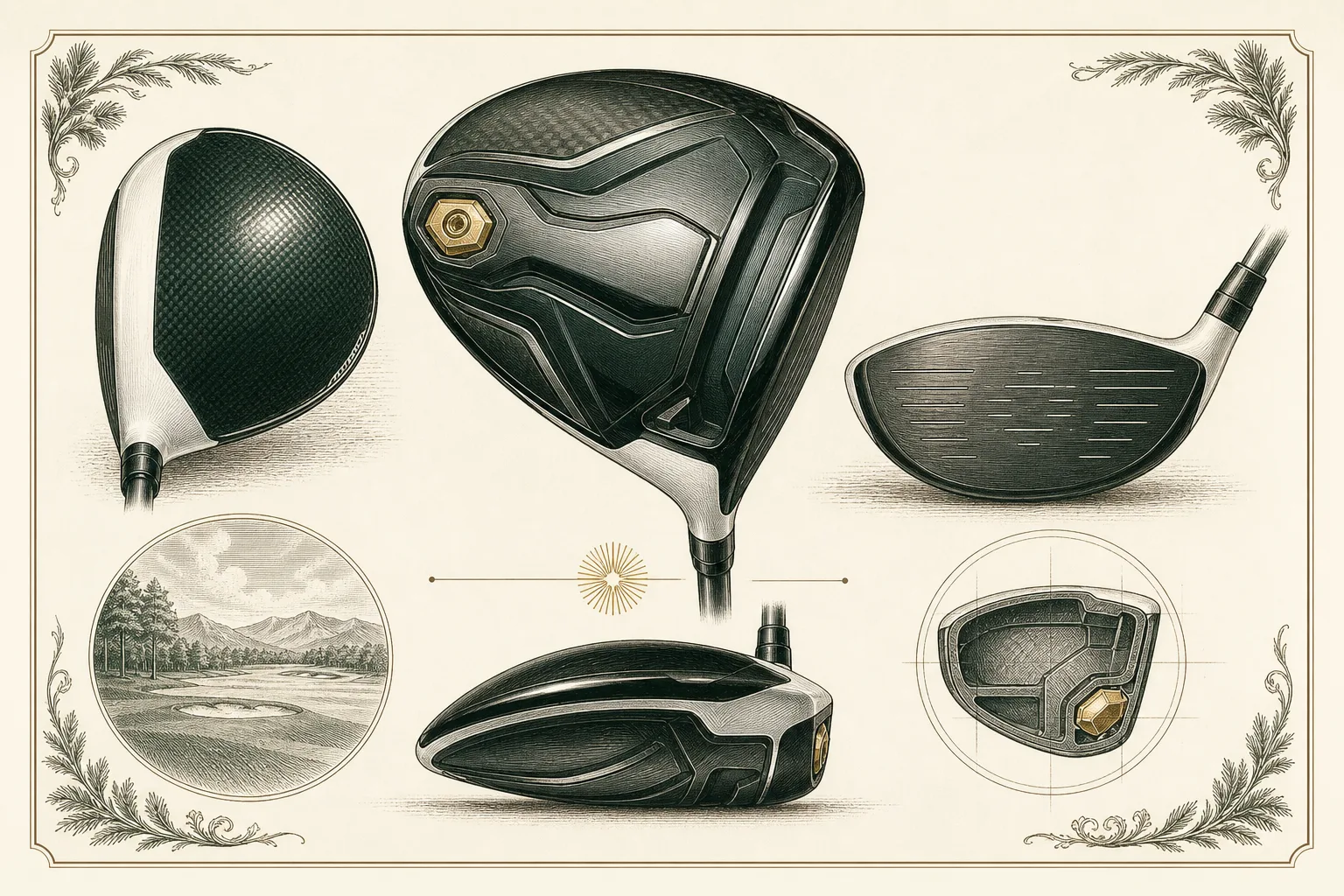
The second-generation M2 driver kept the 460cc carbon-composite-crown shape of the 2016 original but introduced 'Geocoustic' design: sinking a 9-1-1 titanium panel on the toe of the sole to free up internal volume and stiffen the head, which let engineers strip out sound ribs and relocate roughly 25 grams of that saved weight low and back. That pushed MOI past 5,000 g/cm^2, a meaningful forgiveness gain over the original M2, while the face grew about 7% larger and sat in front of a redesigned Speed Pocket for more ball speed on low strikes. Reviewers noted the change also quieted the notoriously loud, clicky 2016 M2 crack into a deeper, more muted impact sound.
Consistently rated among TaylorMade's better forgiving drivers of the late 2010s across independent outlets (Golf Monthly, Plugged In Golf, Driving Range Heroes), but it is an iterative annual refresh, not a club with its own cult following separate from the wider M2 name.
A high-handicap-to-mid-handicap forgiveness driver for players who want distance and stability over workability or adjustable weighting (the M2 has no movable weight track, unlike the pricier M1 sold the same year). Good players wanting to shape shots or fine-tune spin should look at the 2017 M1 or a modern adjustable driver instead.
Sold alongside the 2017 M1 as TaylorMade's forgiveness-focused driver, one tier below the tour-preferred, more adjustable M1. It replaced the 2016 M2 driver on TaylorMade's yearly refresh cycle and was itself replaced in 2018 by the Twist-Face M3/M4 generation.
Geocoustic's toe-sole redistribution of roughly 25g specifically targeted MOI, pushing it above 5,000 g/cm^2 - genuinely excellent stability on off-center hits for a non-adjustable-weight driver of its era, placing it near the top of the forgiveness scale short of the true max-forgiveness/draw-bias D-Type variant sold alongside it.
Calibrated across the whole catalog — a tour blade scores low here on purpose; it means control, not ease.
A widely produced, roughly 8-9-year-old forgiveness driver; realistic 2026 private-party pricing for a clean head with stock or aftermarket shaft runs about $60-$100, with reconditioned-retail (2nd Swing/Global Golf) listings somewhat above that for graded, warrantied examples. It has no scarcity or collector premium.
Reading is one thing — hitting is another. Book a bay and see the numbers for yourself before you buy anywhere.
“Replaced the 2016 speed pocket with a three-times-more-flexible Hammerhead slot for more ball speed low on the face. Still TaylorMade's forgiving, high-launch answer to M1; one of the better-value used gamers from this era.”
The second-generation M2 driver kept the 460cc carbon-composite-crown shape of the 2016 original but introduced 'Geocoustic' design: sinking a 9-1-1 titanium panel on the toe of the sole to free up internal volume and stiffen the head, which let engineers strip out sound ribs and relocate roughly 25 grams of that saved weight low and back. That pushed MOI past 5,000 g/cm^2, a meaningful forgiveness gain over the original M2, while the face grew about 7% larger and sat in front of a redesigned Speed Pocket for more ball speed on low strikes. Reviewers noted the change also quieted the notoriously loud, clicky 2016 M2 crack into a deeper, more muted impact sound.
Consistently rated among TaylorMade's better forgiving drivers of the late 2010s across independent outlets (Golf Monthly, Plugged In Golf, Driving Range Heroes), but it is an iterative annual refresh, not a club with its own cult following separate from the wider M2 name.
A high-handicap-to-mid-handicap forgiveness driver for players who want distance and stability over workability or adjustable weighting (the M2 has no movable weight track, unlike the pricier M1 sold the same year). Good players wanting to shape shots or fine-tune spin should look at the 2017 M1 or a modern adjustable driver instead.
Sold alongside the 2017 M1 as TaylorMade's forgiveness-focused driver, one tier below the tour-preferred, more adjustable M1. It replaced the 2016 M2 driver on TaylorMade's yearly refresh cycle and was itself replaced in 2018 by the Twist-Face M3/M4 generation.
Geocoustic's toe-sole redistribution of roughly 25g specifically targeted MOI, pushing it above 5,000 g/cm^2 - genuinely excellent stability on off-center hits for a non-adjustable-weight driver of its era, placing it near the top of the forgiveness scale short of the true max-forgiveness/draw-bias D-Type variant sold alongside it.
Calibrated across the whole catalog — a tour blade scores low here on purpose; it means control, not ease.
A widely produced, roughly 8-9-year-old forgiveness driver; realistic 2026 private-party pricing for a clean head with stock or aftermarket shaft runs about $60-$100, with reconditioned-retail (2nd Swing/Global Golf) listings somewhat above that for graded, warrantied examples. It has no scarcity or collector premium.
Reading is one thing — hitting is another. Book a bay and see the numbers for yourself before you buy anywhere.