“H.O.T. face carries speed further into the heel and toe than the F8, so off-center strikes off the deck still carry.”
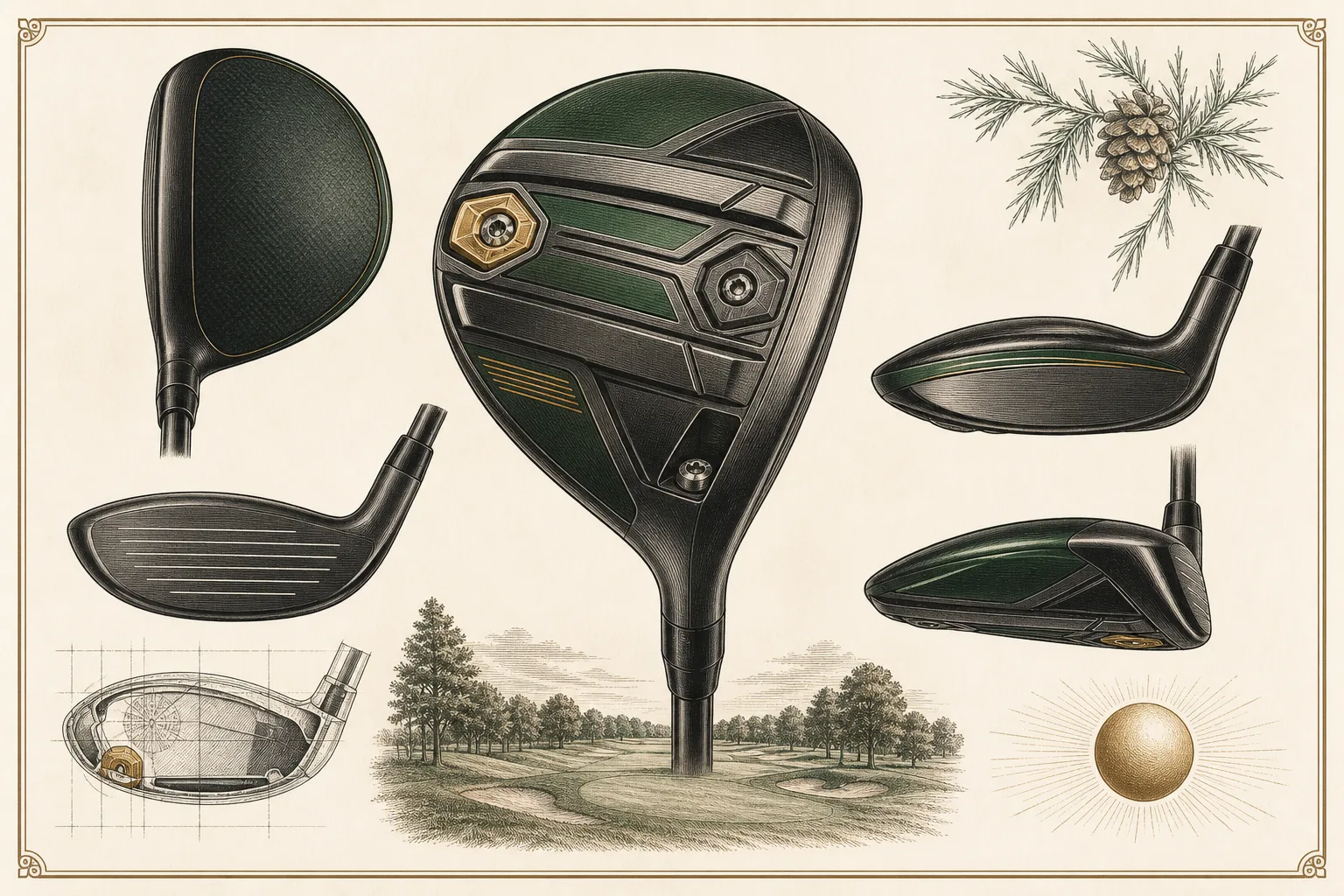
The King SpeedZone fairway wood, part of Cobra's 2020 SpeedZone family at $279, moved to a forged, CNC-milled face Cobra said was up to five times more precise than hand polishing, freeing up weight via a lightweight glossy carbon crown (with two front-to-back ridges) that Cobra redistributed elsewhere in the head to optimize CG. Three models were offered: the standard SpeedZone with back weighting for easy, high launch aimed at most golfers; the Tour model with forward weighting for lower spin and workability for better players; and the Big Tour, a stronger-lofted pure-distance option that testers found produced the highest ball speed and lowest spin of the three.
Enthusiastically reviewed as a 'rocket launcher' with big carry numbers in period testing, but this is standard clubtest praise for a mainstream annual release, not lasting cult reputation; it slots between the King F8 and King RadSpeed in Cobra's normal product cadence with no independent scarcity or collector following.
The standard SpeedZone suits mid-to-high handicappers wanting easy height and forgiveness; the Tour model suits better players wanting workability and lower spin; the Big Tour suits distance-focused players willing to give up some forgiveness for outright carry. Not a fit for anyone wanting the very latest face/aero technology, given two full Cobra generations have since replaced it.
Launched in 2020 opposite TaylorMade's SIM and Callaway's Mavrik fairway woods; succeeded the King F8 and was itself replaced by the King RadSpeed in 2021, continuing Cobra's roughly two-year King fairway refresh cycle.
The low, back-weighted CG on the standard model gives an especially forgiving, easy-launching feel per testers, with balance described as 'near perfect'; the Tour and Big Tour variants trade some of that forgiveness for lower spin and, in the Big Tour's case, maximum distance over all-around consistency.
Calibrated across the whole catalog — a tour blade scores low here on purpose; it means control, not ease.
Realistic 2026 private-party pricing runs roughly $90-$140 per club, reflecting a five-to-six-year-old but still-common used fairway wood with no collectible premium.
Reading is one thing — hitting is another. Book a bay and see the numbers for yourself before you buy anywhere.
“H.O.T. face carries speed further into the heel and toe than the F8, so off-center strikes off the deck still carry.”
The King SpeedZone fairway wood, part of Cobra's 2020 SpeedZone family at $279, moved to a forged, CNC-milled face Cobra said was up to five times more precise than hand polishing, freeing up weight via a lightweight glossy carbon crown (with two front-to-back ridges) that Cobra redistributed elsewhere in the head to optimize CG. Three models were offered: the standard SpeedZone with back weighting for easy, high launch aimed at most golfers; the Tour model with forward weighting for lower spin and workability for better players; and the Big Tour, a stronger-lofted pure-distance option that testers found produced the highest ball speed and lowest spin of the three.
Enthusiastically reviewed as a 'rocket launcher' with big carry numbers in period testing, but this is standard clubtest praise for a mainstream annual release, not lasting cult reputation; it slots between the King F8 and King RadSpeed in Cobra's normal product cadence with no independent scarcity or collector following.
The standard SpeedZone suits mid-to-high handicappers wanting easy height and forgiveness; the Tour model suits better players wanting workability and lower spin; the Big Tour suits distance-focused players willing to give up some forgiveness for outright carry. Not a fit for anyone wanting the very latest face/aero technology, given two full Cobra generations have since replaced it.
Launched in 2020 opposite TaylorMade's SIM and Callaway's Mavrik fairway woods; succeeded the King F8 and was itself replaced by the King RadSpeed in 2021, continuing Cobra's roughly two-year King fairway refresh cycle.
The low, back-weighted CG on the standard model gives an especially forgiving, easy-launching feel per testers, with balance described as 'near perfect'; the Tour and Big Tour variants trade some of that forgiveness for lower spin and, in the Big Tour's case, maximum distance over all-around consistency.
Calibrated across the whole catalog — a tour blade scores low here on purpose; it means control, not ease.
Realistic 2026 private-party pricing runs roughly $90-$140 per club, reflecting a five-to-six-year-old but still-common used fairway wood with no collectible premium.
Reading is one thing — hitting is another. Book a bay and see the numbers for yourself before you buy anywhere.