“Low-CG composite hybrid that gets long irons airborne. A great rung-1 bargain for the player who fights the 3- and 4-iron.”
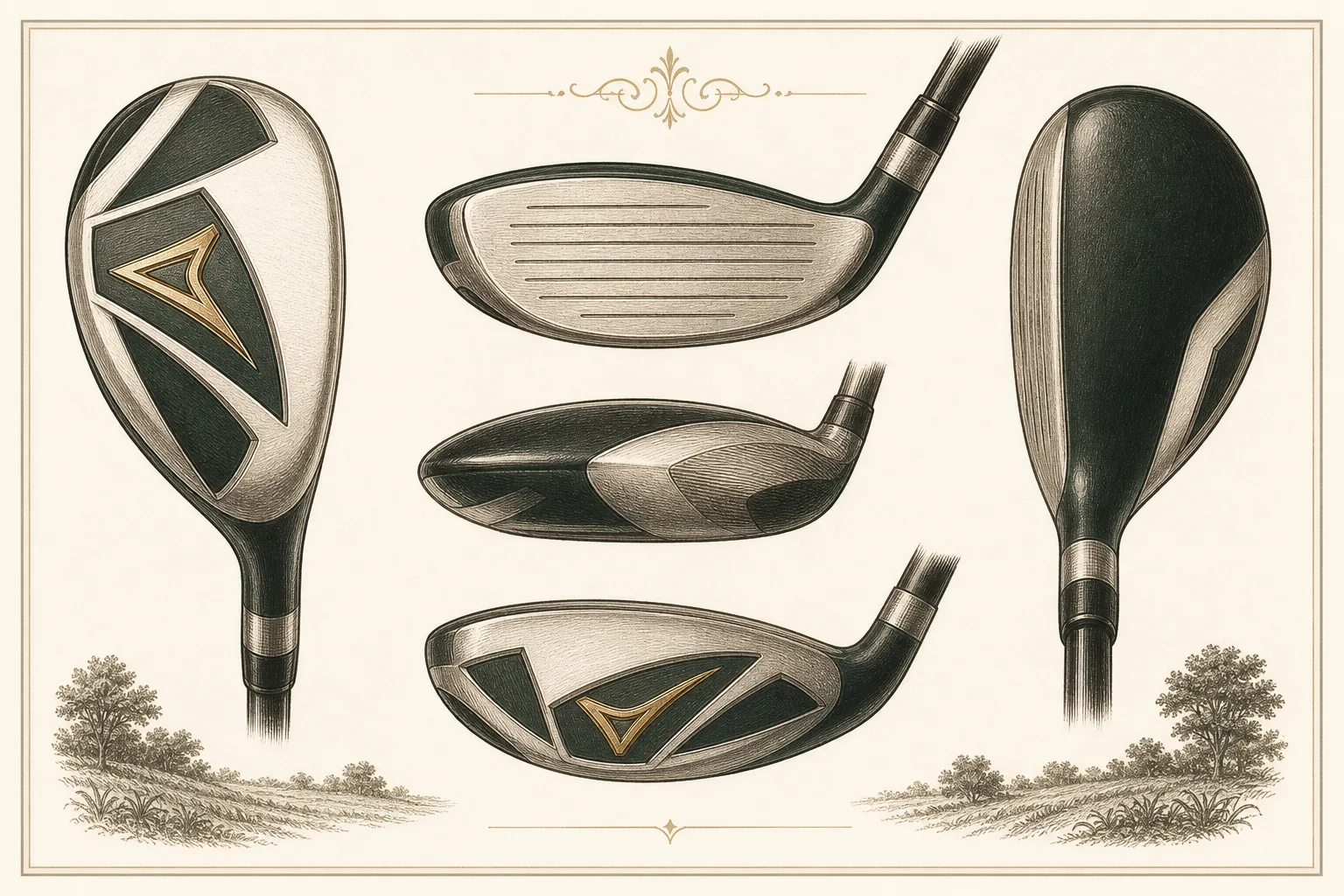
Callaway's 2010 mainstream hybrid, built around what it called Vertical CG Optimization - a sole and internal weighting scheme meant to push the center of gravity low and back for easy launch. The crown was thinned by roughly 30% versus prior Callaway steel hybrids to save mass that was then repositioned low in the head, which Callaway said gave it the highest MOI of any steel hybrid it had made to that point. A composite/steel hybrid head with sole rails intended to help the club glide through rough rather than dig, it was offered in four lofts (18, 21, 24, 27 degrees) covering long-iron replacement duty. Period reviews were positive, with at least one tester scoring it a perfect 5/5 across categories and praising its distance and forgiveness out of rough lies.
Strong contemporary reviews at launch, but nothing that produced lasting reputation: it was one generation in Callaway's constant hybrid refresh cycle, replaced within about a year by the Diablo Octane Hybrid, and shows no evidence of forum demand or scarcity today. Good-in-its-year is not the same as cult status.
Any handicap level wanting an easy long-iron replacement, particularly players who struggle from rough given the rail-equipped sole. Better players wanting to shape long-iron-type shots or keep flight down would find it too high-launching and one-dimensional; a modern low-spin hybrid would suit them better.
Launched alongside the Diablo Edge driver and irons as part of Callaway's 2010 game-improvement family, competing with Ping's G15 hybrid, TaylorMade Rescue, and Titleist's 910H. Superseded in 2011 by the Diablo Octane Hybrid using Callaway's new Forged Composite material.
Hybrids as a category are inherently forgiving relative to long irons, and this one leaned further into it: a thinned crown, low-back CG via Vertical CG Optimization, and sole rails to reduce turf drag. Reviewers specifically called it 'ultra forgiving.' Scored near the top of the forgiveness scale because its whole design brief was ease of launch and mis-hit tolerance, not workability.
Calibrated across the whole catalog — a tour blade scores low here on purpose; it means control, not ease.
2nd Swing's reconditioned stock runs roughly $35-$72 depending on condition; realistic private-party pricing is similar or a little lower, around $25-$50 for a clean head. Original retail was $199.99, so it has already lost most of its value as an ordinary 16-year-old commodity hybrid.
Reading is one thing — hitting is another. Book a bay and see the numbers for yourself before you buy anywhere.
“Low-CG composite hybrid that gets long irons airborne. A great rung-1 bargain for the player who fights the 3- and 4-iron.”
Callaway's 2010 mainstream hybrid, built around what it called Vertical CG Optimization - a sole and internal weighting scheme meant to push the center of gravity low and back for easy launch. The crown was thinned by roughly 30% versus prior Callaway steel hybrids to save mass that was then repositioned low in the head, which Callaway said gave it the highest MOI of any steel hybrid it had made to that point. A composite/steel hybrid head with sole rails intended to help the club glide through rough rather than dig, it was offered in four lofts (18, 21, 24, 27 degrees) covering long-iron replacement duty. Period reviews were positive, with at least one tester scoring it a perfect 5/5 across categories and praising its distance and forgiveness out of rough lies.
Strong contemporary reviews at launch, but nothing that produced lasting reputation: it was one generation in Callaway's constant hybrid refresh cycle, replaced within about a year by the Diablo Octane Hybrid, and shows no evidence of forum demand or scarcity today. Good-in-its-year is not the same as cult status.
Any handicap level wanting an easy long-iron replacement, particularly players who struggle from rough given the rail-equipped sole. Better players wanting to shape long-iron-type shots or keep flight down would find it too high-launching and one-dimensional; a modern low-spin hybrid would suit them better.
Launched alongside the Diablo Edge driver and irons as part of Callaway's 2010 game-improvement family, competing with Ping's G15 hybrid, TaylorMade Rescue, and Titleist's 910H. Superseded in 2011 by the Diablo Octane Hybrid using Callaway's new Forged Composite material.
Hybrids as a category are inherently forgiving relative to long irons, and this one leaned further into it: a thinned crown, low-back CG via Vertical CG Optimization, and sole rails to reduce turf drag. Reviewers specifically called it 'ultra forgiving.' Scored near the top of the forgiveness scale because its whole design brief was ease of launch and mis-hit tolerance, not workability.
Calibrated across the whole catalog — a tour blade scores low here on purpose; it means control, not ease.
2nd Swing's reconditioned stock runs roughly $35-$72 depending on condition; realistic private-party pricing is similar or a little lower, around $25-$50 for a clean head. Original retail was $199.99, so it has already lost most of its value as an ordinary 16-year-old commodity hybrid.
Reading is one thing — hitting is another. Book a bay and see the numbers for yourself before you buy anywhere.