“The LS is the low-spin, stronger-player Speedline for 2013 with an adjustable hosel. A low-spin-players rung driver that flights down for faster swings.”
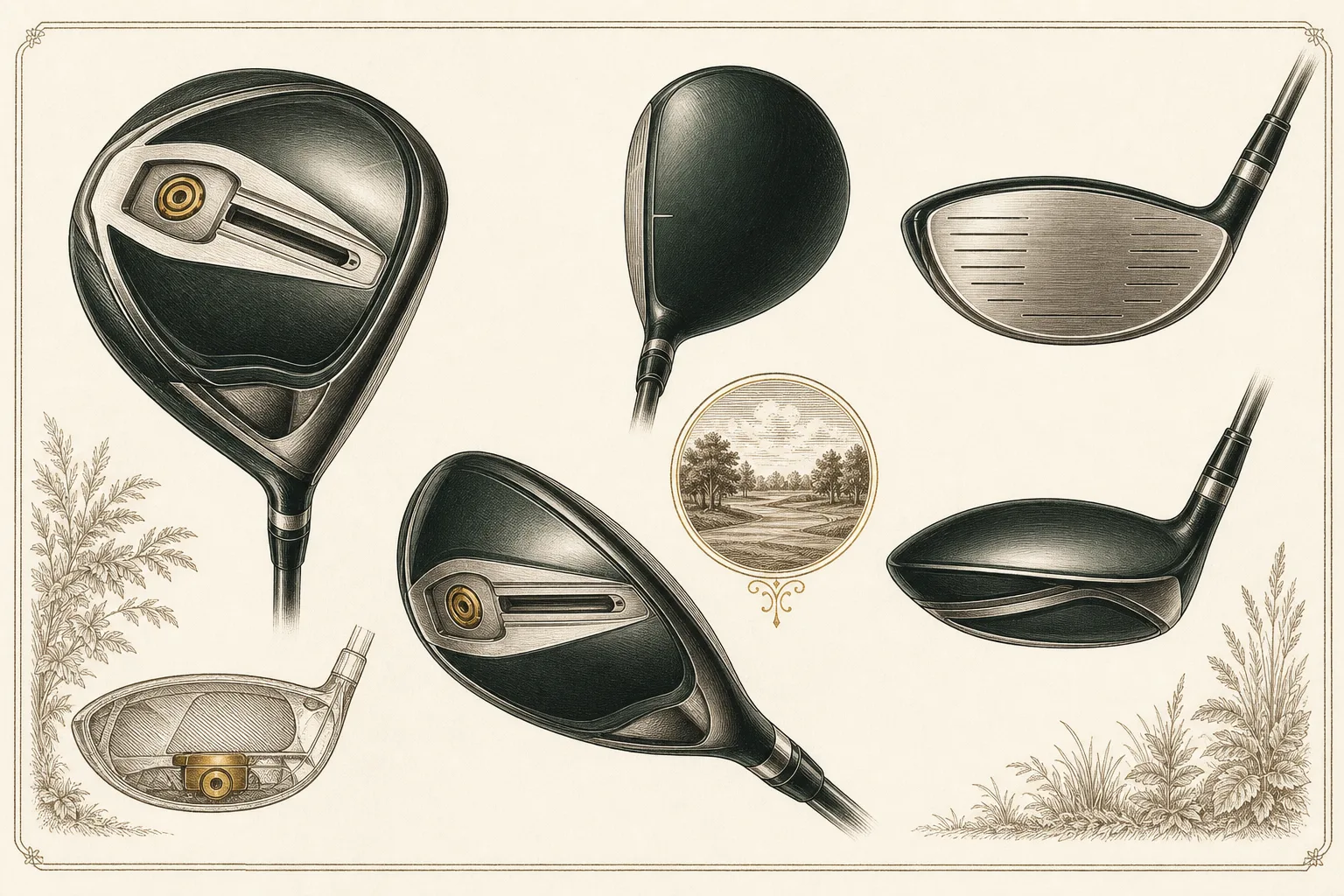
The Super LS was Adams' last driver generation before the brand was fully wound down under TaylorMade ownership, and it replaced the prior generation's aero-only messaging with Velocity Slot Technology (VST) — a sole slot cut deeper in the heel and toe specifically to widen the effective sweet spot rather than purely to reduce drag. Adams positioned it as its lowest-spinning driver yet, with a CG placed low and back to flatten launch while keeping the ball airborne, on a stock Mitsubishi Kuro Kage graphite shaft finished in gray-and-black to match the driver's understated gray crown and aggressive black face/sole. Tested at 9.5 degrees and 45 inches, reviewers found it easy to control but noted flight stayed mid-height at best, the tradeoff of its spin-suppressing design.
It landed as a well-executed but unremarkable closing chapter for Adams as a driver brand — solid reviews from The Hackers Paradise, Golf Monthly and GolfWRX's editor review, no controversy, no tour story, and no lasting demand once TaylorMade discontinued the standalone Adams line shortly after. It is a footnote in Adams' history, not a club anyone actively chases today.
Fits better players and faster swingers wanting low spin and a flatter, more penetrating flight with genuine (if secondary) forgiveness from the VST sole design. Higher-handicap players who need help getting the ball up in the air should choose the higher-launching Super S sold alongside it — reviewers explicitly noted the LS flies lower, which is a drawback for a player who needs more carry, not less.
Launched for 2013 as Adams' final driver generation, competing with TaylorMade's SLDR, Callaway's RAZR Fit Xtreme, and Titleist's 913 series in the low-spin/adjustable-CG segment that dominated driver marketing that year. It was the direct successor to the Fast 12 LS's low-spin positioning, refined with Velocity Slot Technology; TaylorMade discontinued new Adams driver development shortly after this generation, making the Super LS effectively the last standalone Adams driver.
Consistent with its low-spin-players ladder placement: the Velocity Slot Technology genuinely widened the sweet spot across the face versus earlier Speedline drivers, but the low-and-back CG bias that suppresses spin for better players also caps how much it can help higher-handicap mis-hits get airborne — a deliberate control-over-forgiveness tradeoff, not a max-GI head.
Calibrated across the whole catalog — a tour blade scores low here on purpose; it means control, not ease.
Realistic 2026 private-party pricing is roughly $40-$70; 2nd Swing's graded reconditioned-retail listings for the Super LS run somewhat higher, but that reflects warrantied store pricing rather than what a private seller can expect. It is a discontinued brand's discontinued final driver — decent playability at a bargain price, not a collectible.
Reading is one thing — hitting is another. Book a bay and see the numbers for yourself before you buy anywhere.
“The LS is the low-spin, stronger-player Speedline for 2013 with an adjustable hosel. A low-spin-players rung driver that flights down for faster swings.”
The Super LS was Adams' last driver generation before the brand was fully wound down under TaylorMade ownership, and it replaced the prior generation's aero-only messaging with Velocity Slot Technology (VST) — a sole slot cut deeper in the heel and toe specifically to widen the effective sweet spot rather than purely to reduce drag. Adams positioned it as its lowest-spinning driver yet, with a CG placed low and back to flatten launch while keeping the ball airborne, on a stock Mitsubishi Kuro Kage graphite shaft finished in gray-and-black to match the driver's understated gray crown and aggressive black face/sole. Tested at 9.5 degrees and 45 inches, reviewers found it easy to control but noted flight stayed mid-height at best, the tradeoff of its spin-suppressing design.
It landed as a well-executed but unremarkable closing chapter for Adams as a driver brand — solid reviews from The Hackers Paradise, Golf Monthly and GolfWRX's editor review, no controversy, no tour story, and no lasting demand once TaylorMade discontinued the standalone Adams line shortly after. It is a footnote in Adams' history, not a club anyone actively chases today.
Fits better players and faster swingers wanting low spin and a flatter, more penetrating flight with genuine (if secondary) forgiveness from the VST sole design. Higher-handicap players who need help getting the ball up in the air should choose the higher-launching Super S sold alongside it — reviewers explicitly noted the LS flies lower, which is a drawback for a player who needs more carry, not less.
Launched for 2013 as Adams' final driver generation, competing with TaylorMade's SLDR, Callaway's RAZR Fit Xtreme, and Titleist's 913 series in the low-spin/adjustable-CG segment that dominated driver marketing that year. It was the direct successor to the Fast 12 LS's low-spin positioning, refined with Velocity Slot Technology; TaylorMade discontinued new Adams driver development shortly after this generation, making the Super LS effectively the last standalone Adams driver.
Consistent with its low-spin-players ladder placement: the Velocity Slot Technology genuinely widened the sweet spot across the face versus earlier Speedline drivers, but the low-and-back CG bias that suppresses spin for better players also caps how much it can help higher-handicap mis-hits get airborne — a deliberate control-over-forgiveness tradeoff, not a max-GI head.
Calibrated across the whole catalog — a tour blade scores low here on purpose; it means control, not ease.
Realistic 2026 private-party pricing is roughly $40-$70; 2nd Swing's graded reconditioned-retail listings for the Super LS run somewhat higher, but that reflects warrantied store pricing rather than what a private seller can expect. It is a discontinued brand's discontinued final driver — decent playability at a bargain price, not a collectible.
Reading is one thing — hitting is another. Book a bay and see the numbers for yourself before you buy anywhere.