“Lazrus Premium hybrid - $69 rescue clubs, forgiving and easy. Rung-max-forgiveness.”
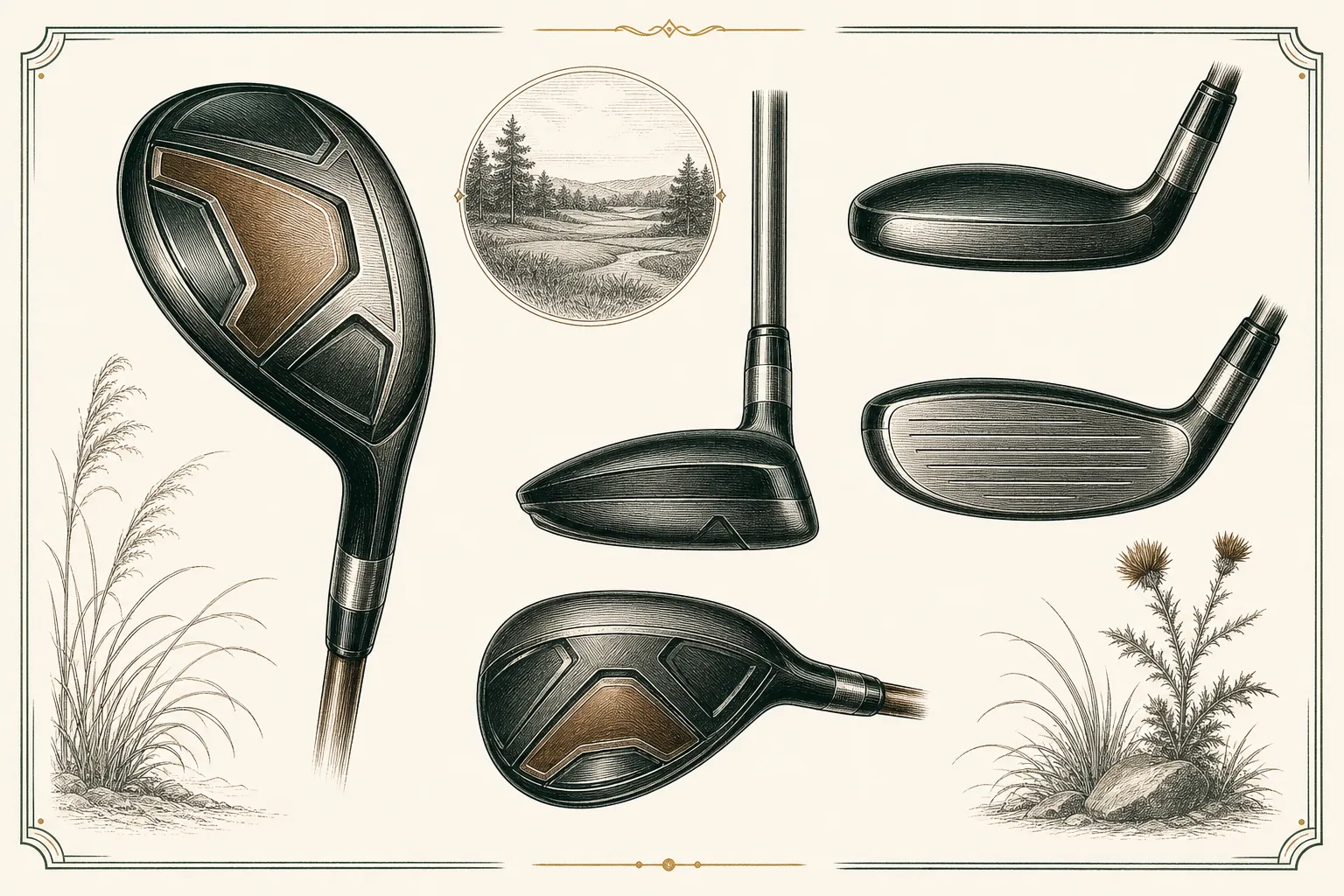
Lazrus Golf was founded in 2017 by Colton Draper, a Boise, Idaho construction-industry veteran, who started the brand with a single wedge sold out of his home garage before expanding into a full direct-to-consumer catalog of irons, wedges and hybrids. Like most budget DTC brands, Lazrus's clubs are produced in Asian - largely Chinese - foundries and then finished, warehoused and shipped from the US, the same production model most major and boutique brands now use; the difference is Lazrus sells online without retail markup, tour sponsorship costs, or brand premium layered on top. The Premium Hybrid, priced at $69 (roughly a quarter of a comparable big-brand hybrid), pairs a stainless face with a sizable, wide, deep clubhead and a high-flex graphite shaft aimed squarely at slower swing speeds, and independent testers found it produced a notably high, easy draw with minimal swing effort.
Straightforwardly a budget commodity: no tour affiliation, no scarcity, no forum reverence. Reviewers assess it purely on value for a beginner or high-handicap buyer, and even sympathetic reviews flag real limitations - turf interaction and no loft adjustability - rather than treating it as special.
Mid-to-high handicap, moderate-or-slower swing speed golfers who want an easy-launching long-game replacement for hard-to-hit long irons at minimal cost. Better players wanting workability or tour-level turf interaction should look elsewhere.
Part of a wave of online-only, no-middleman golf brands that emerged in the late 2010s competing on price against Callaway, TaylorMade and Ping hybrids costing three to four times as much; Lazrus differentiates mainly on price and a return-if-unsatisfied policy rather than any distinct engineering claim.
Genuinely forgiving in the way slow-swing-speed hybrids are engineered to be: a wide, deep, offset clubhead with a high-flex shaft that launches the ball high and helps square the face at impact. The tradeoffs are real too - reviewers report digging and turf-interaction issues on some lies and no loft adjustability, so it forgives a weak strike more than it forgives a poor lie.
Calibrated across the whole catalog — a tour blade scores low here on purpose; it means control, not ease.
As a sub-$100 direct-to-consumer club with no trade-in support from mainstream retailers like 2nd Swing or the PGA Value Guide, the used market is effectively private-party only - low resale prices are expected given the low new price, with condition mattering less than for a premium club since there is little collector or brand-loyalty value to protect.
Reading is one thing — hitting is another. Book a bay and see the numbers for yourself before you buy anywhere.
“Lazrus Premium hybrid - $69 rescue clubs, forgiving and easy. Rung-max-forgiveness.”
Lazrus Golf was founded in 2017 by Colton Draper, a Boise, Idaho construction-industry veteran, who started the brand with a single wedge sold out of his home garage before expanding into a full direct-to-consumer catalog of irons, wedges and hybrids. Like most budget DTC brands, Lazrus's clubs are produced in Asian - largely Chinese - foundries and then finished, warehoused and shipped from the US, the same production model most major and boutique brands now use; the difference is Lazrus sells online without retail markup, tour sponsorship costs, or brand premium layered on top. The Premium Hybrid, priced at $69 (roughly a quarter of a comparable big-brand hybrid), pairs a stainless face with a sizable, wide, deep clubhead and a high-flex graphite shaft aimed squarely at slower swing speeds, and independent testers found it produced a notably high, easy draw with minimal swing effort.
Straightforwardly a budget commodity: no tour affiliation, no scarcity, no forum reverence. Reviewers assess it purely on value for a beginner or high-handicap buyer, and even sympathetic reviews flag real limitations - turf interaction and no loft adjustability - rather than treating it as special.
Mid-to-high handicap, moderate-or-slower swing speed golfers who want an easy-launching long-game replacement for hard-to-hit long irons at minimal cost. Better players wanting workability or tour-level turf interaction should look elsewhere.
Part of a wave of online-only, no-middleman golf brands that emerged in the late 2010s competing on price against Callaway, TaylorMade and Ping hybrids costing three to four times as much; Lazrus differentiates mainly on price and a return-if-unsatisfied policy rather than any distinct engineering claim.
Genuinely forgiving in the way slow-swing-speed hybrids are engineered to be: a wide, deep, offset clubhead with a high-flex shaft that launches the ball high and helps square the face at impact. The tradeoffs are real too - reviewers report digging and turf-interaction issues on some lies and no loft adjustability, so it forgives a weak strike more than it forgives a poor lie.
Calibrated across the whole catalog — a tour blade scores low here on purpose; it means control, not ease.
As a sub-$100 direct-to-consumer club with no trade-in support from mainstream retailers like 2nd Swing or the PGA Value Guide, the used market is effectively private-party only - low resale prices are expected given the low new price, with condition mattering less than for a premium club since there is little collector or brand-loyalty value to protect.
Reading is one thing — hitting is another. Book a bay and see the numbers for yourself before you buy anywhere.