“The 'EZ' name says it plainly - Mizuno's most forgiving cast iron of its era, wide sole and high launch. A textbook rung-1 club for a beginner or slower-speed member.”
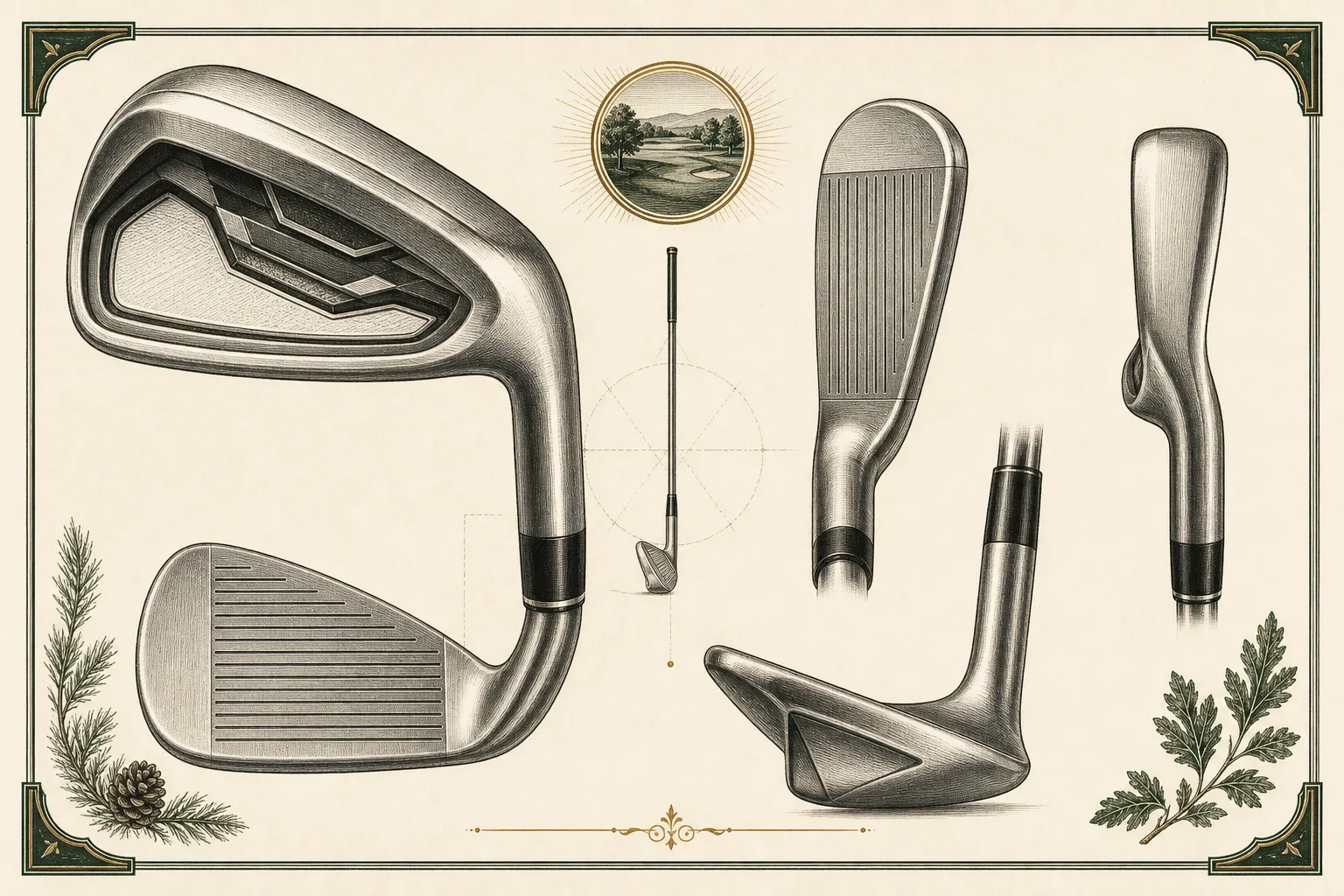
The JPX-EZ (2014) was Mizuno's entry-level super-game-improvement iron, built with an oversized head, a thicker top line than the companion JPX-EZ Forged, and a deep cavity with weight shifted low and into the sole and toe -- explicitly aimed at squaring the face at impact on toe-side mishits. It used Hot Metal Face technology and an "Ultra-Pocket Cavity" in the 4-7 irons for higher launch, while the 8-iron through gap wedge relied on a deep-pocket design for control instead. Finished in a DuPont-blasted matte black with bright orange medallions -- a distinctive look for the category -- it also carried Mizuno's Harmonic Impact Technology, tuning sound frequencies for a notably pleasant strike sound for a max-forgiveness cavity.
Positioned and remembered purely as good-value, high-handicap forgiveness -- reviewers called it "good value for money" for beginners rather than a club with any following; it was replaced within about two years by newer Mizuno GI irons.
High-handicap and beginning golfers who most need forgiveness and easy launch; not intended for better players, for whom Mizuno's own JPX 850/900 Forged or MP-series irons of the same period were the workability-focused options.
Sat at the bottom of Mizuno's 2014 JPX range alongside the JPX-EZ Forged (a more compact, players-leaning version of the same platform). Replaced by the JPX 850 in 2015 as Mizuno's naming convention shifted to model numbers.
A dedicated super-game-improvement iron -- oversized head, deep low/toe-weighted cavity, wide sole -- explicitly engineered to forgive toe-side mishits and launch easily from varied lies; reviewers confirmed it played easy from a variety of lies without ballooning trajectory.
Calibrated across the whole catalog — a tour blade scores low here on purpose; it means control, not ease.
A cheap, common used set today: eBay listings for a played 4-PW/GW steel set run roughly $150-$250 in 2026 depending on shaft and condition; reconditioned-retail sellers price meaningfully higher, which overstates realistic private-party value.
Reading is one thing — hitting is another. Book a bay and see the numbers for yourself before you buy anywhere.
“The 'EZ' name says it plainly - Mizuno's most forgiving cast iron of its era, wide sole and high launch. A textbook rung-1 club for a beginner or slower-speed member.”
The JPX-EZ (2014) was Mizuno's entry-level super-game-improvement iron, built with an oversized head, a thicker top line than the companion JPX-EZ Forged, and a deep cavity with weight shifted low and into the sole and toe -- explicitly aimed at squaring the face at impact on toe-side mishits. It used Hot Metal Face technology and an "Ultra-Pocket Cavity" in the 4-7 irons for higher launch, while the 8-iron through gap wedge relied on a deep-pocket design for control instead. Finished in a DuPont-blasted matte black with bright orange medallions -- a distinctive look for the category -- it also carried Mizuno's Harmonic Impact Technology, tuning sound frequencies for a notably pleasant strike sound for a max-forgiveness cavity.
Positioned and remembered purely as good-value, high-handicap forgiveness -- reviewers called it "good value for money" for beginners rather than a club with any following; it was replaced within about two years by newer Mizuno GI irons.
High-handicap and beginning golfers who most need forgiveness and easy launch; not intended for better players, for whom Mizuno's own JPX 850/900 Forged or MP-series irons of the same period were the workability-focused options.
Sat at the bottom of Mizuno's 2014 JPX range alongside the JPX-EZ Forged (a more compact, players-leaning version of the same platform). Replaced by the JPX 850 in 2015 as Mizuno's naming convention shifted to model numbers.
A dedicated super-game-improvement iron -- oversized head, deep low/toe-weighted cavity, wide sole -- explicitly engineered to forgive toe-side mishits and launch easily from varied lies; reviewers confirmed it played easy from a variety of lies without ballooning trajectory.
Calibrated across the whole catalog — a tour blade scores low here on purpose; it means control, not ease.
A cheap, common used set today: eBay listings for a played 4-PW/GW steel set run roughly $150-$250 in 2026 depending on shaft and condition; reconditioned-retail sellers price meaningfully higher, which overstates realistic private-party value.
Reading is one thing — hitting is another. Book a bay and see the numbers for yourself before you buy anywhere.