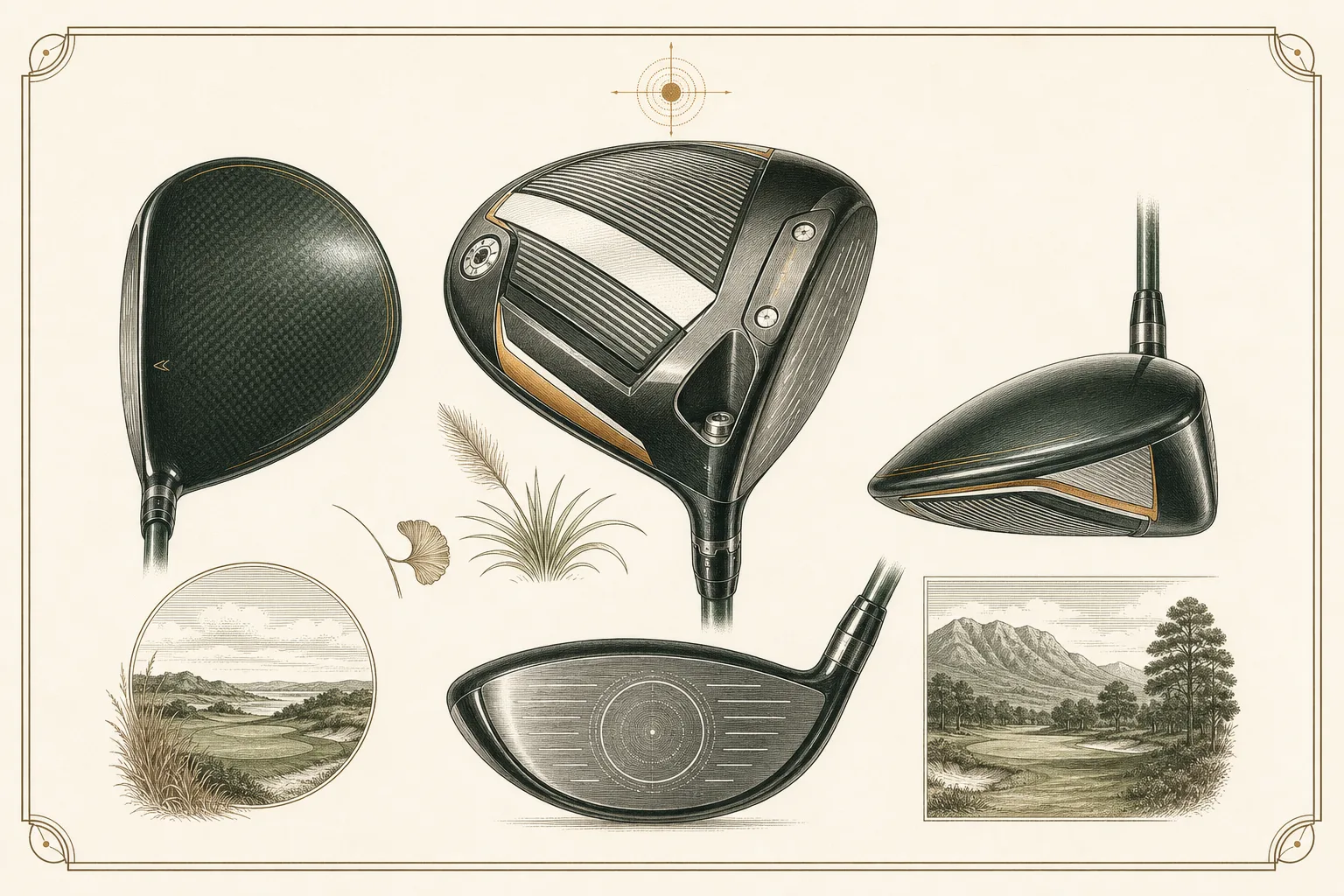
“The ultralight, high-loft, draw-biased Mavrik built for slower swing speeds and women. Easy launch and turnover with no penalty -- an ideal rung-1 fit for a gentle tempo.”
The Mavrik Max Lite sat at the far forgiveness-and-lightness end of Callaway's 2020 Mavrik driver range, built for players who need swing-speed help more than adjustability. Where the standard Mavrik Max offered switchable rear weights for high-MOI or max-draw settings, the Max Lite simplified that to a single fixed heel weight for a built-in draw bias, and pared components down with an old-school bonded (non-adjustable) hosel to save weight everywhere it could. It shipped in just two lofts, 11.5 and 13 degrees, both higher than the standard Mavrik range, and paired with an ultralight ~40-gram graphite shaft aimed at maximizing clubhead speed for slower-swinging and senior/women's players rather than better ball-strikers.
A niche, function-first SKU within a mainstream annual product cycle — no tour usage, no forum reverence, no scarcity. It exists to solve a specific fitting problem (low swing speed, need for draw bias and lightness) rather than to chase performance headlines, and it was retired within the normal Callaway one-to-two-year refresh window.
Purpose-built for slower swing speeds (senior and many women golfers, or anyone losing distance to a slow tempo) who need extra loft, lightness, and a fade-fighting draw bias. Faster-swinging or better players will find it too light, too high-launching, and too draw-biased to be useful — the standard Mavrik or Mavrik Sub Zero fits that player instead.
Part of the four-way 2020 Mavrik driver split (Mavrik, Mavrik Max, Mavrik Max Lite/Max W Lite, Mavrik Sub Zero), mirroring how TaylorMade and Ping also segmented their same-season lines by swing-speed need. It was Callaway's answer to Ping's G410/G425 SFT and TaylorMade's SIM Max D/Max Lite draw-and-lite drivers of the same period.
High loft, fixed draw-bias heel weighting, and a lightweight build combine to maximize launch and minimize the penalty for an off-center or mis-timed strike — exactly what it was built for. The trade-off for that forgiveness is the loss of the adjustable weighting the standard Mavrik Max offers, so there's no way to dial out the draw bias for a player who doesn't need it.
Calibrated across the whole catalog — a tour blade scores low here on purpose; it means control, not ease.
Private-party value in 2026 for this specialty low-volume SKU runs roughly $90-$160 depending on shaft and condition (original MSRP $499); demand is thinner than for the standard Mavrik or Mavrik Max because it targets a narrower buyer, which keeps prices soft relative to the mainstream models from the same release year.
Reading is one thing — hitting is another. Book a bay and see the numbers for yourself before you buy anywhere.
“The ultralight, high-loft, draw-biased Mavrik built for slower swing speeds and women. Easy launch and turnover with no penalty -- an ideal rung-1 fit for a gentle tempo.”
The Mavrik Max Lite sat at the far forgiveness-and-lightness end of Callaway's 2020 Mavrik driver range, built for players who need swing-speed help more than adjustability. Where the standard Mavrik Max offered switchable rear weights for high-MOI or max-draw settings, the Max Lite simplified that to a single fixed heel weight for a built-in draw bias, and pared components down with an old-school bonded (non-adjustable) hosel to save weight everywhere it could. It shipped in just two lofts, 11.5 and 13 degrees, both higher than the standard Mavrik range, and paired with an ultralight ~40-gram graphite shaft aimed at maximizing clubhead speed for slower-swinging and senior/women's players rather than better ball-strikers.
A niche, function-first SKU within a mainstream annual product cycle — no tour usage, no forum reverence, no scarcity. It exists to solve a specific fitting problem (low swing speed, need for draw bias and lightness) rather than to chase performance headlines, and it was retired within the normal Callaway one-to-two-year refresh window.
Purpose-built for slower swing speeds (senior and many women golfers, or anyone losing distance to a slow tempo) who need extra loft, lightness, and a fade-fighting draw bias. Faster-swinging or better players will find it too light, too high-launching, and too draw-biased to be useful — the standard Mavrik or Mavrik Sub Zero fits that player instead.
Part of the four-way 2020 Mavrik driver split (Mavrik, Mavrik Max, Mavrik Max Lite/Max W Lite, Mavrik Sub Zero), mirroring how TaylorMade and Ping also segmented their same-season lines by swing-speed need. It was Callaway's answer to Ping's G410/G425 SFT and TaylorMade's SIM Max D/Max Lite draw-and-lite drivers of the same period.
High loft, fixed draw-bias heel weighting, and a lightweight build combine to maximize launch and minimize the penalty for an off-center or mis-timed strike — exactly what it was built for. The trade-off for that forgiveness is the loss of the adjustable weighting the standard Mavrik Max offers, so there's no way to dial out the draw bias for a player who doesn't need it.
Calibrated across the whole catalog — a tour blade scores low here on purpose; it means control, not ease.
Private-party value in 2026 for this specialty low-volume SKU runs roughly $90-$160 depending on shaft and condition (original MSRP $499); demand is thinner than for the standard Mavrik or Mavrik Max because it targets a narrower buyer, which keeps prices soft relative to the mainstream models from the same release year.
Reading is one thing — hitting is another. Book a bay and see the numbers for yourself before you buy anywhere.