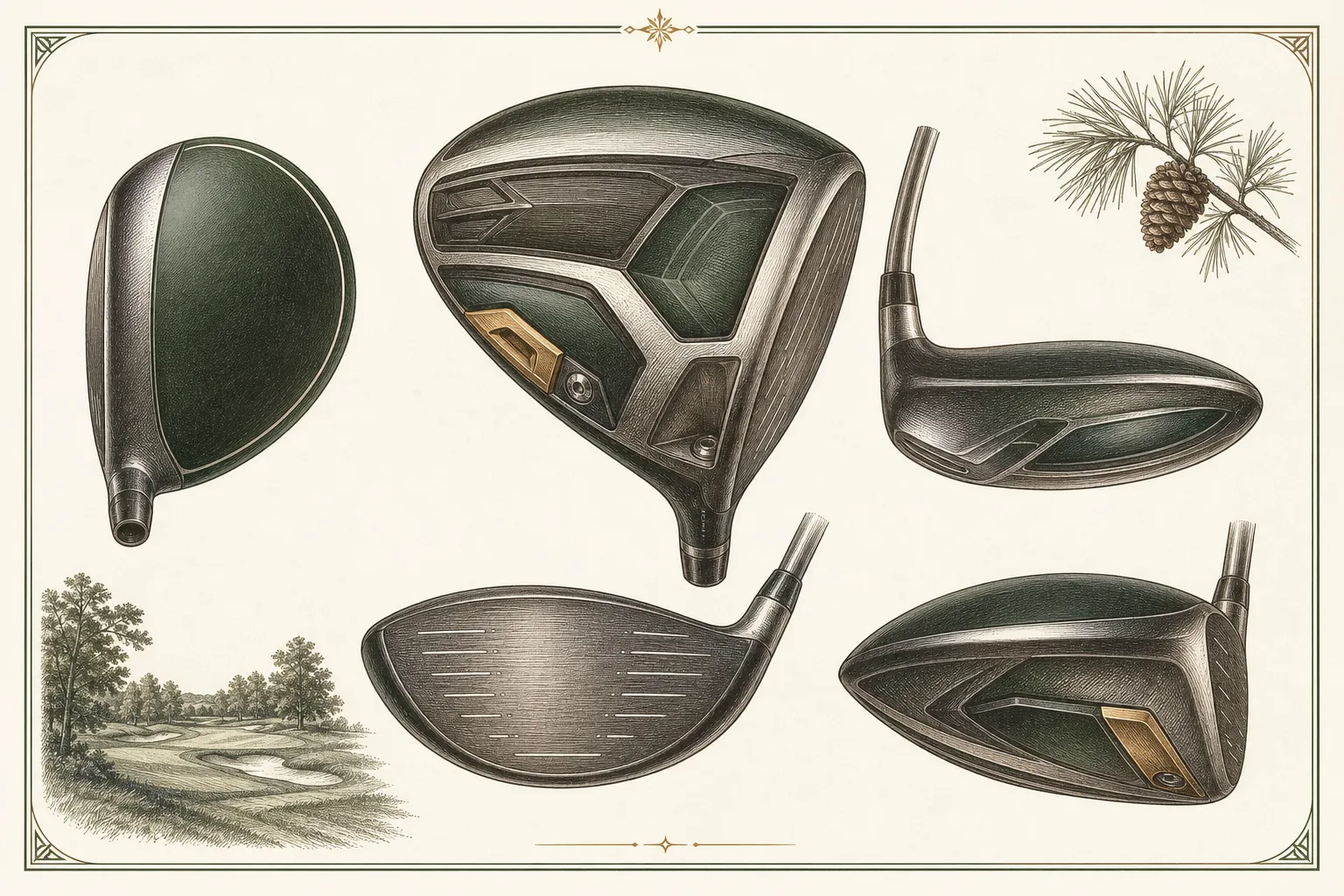
“Ultra-light, draw-biased, anti-slice driver built for slower swings - the rung-1 max-forgiveness home. Fights a slice and launches high; forgiveness has no penalty.”
Wilson built the Launch Pad driver around a specific, researched slicer profile: the brand studied 27 self-described slicers and found a typical swing path 5.5 degrees outside-in with the clubface open about 3 degrees at impact, then engineered a driver to cancel both. The fix was a 2-degree-upright, closed-face setup, 13 grams of heel-side weight to help square the face, and one of the lightest driver builds Wilson has made at roughly 272 grams total, aimed at generating clubhead speed with minimal effort. It offered no adjustability by design — the whole point was to make one correct, anti-slice setup impossible to misconfigure.
A well-reviewed, purpose-built niche product (multiple outlets called it excellent value for combating a slice) but a mass-market, recreational-golfer tool with no tour or forum cachet — it was designed to solve a specific swing fault cheaply, not to be coveted.
Built for slower-swing golfers who slice, especially beginners and higher-handicap players (Wilson's fitting gate: 75+ mph). A better player who already draws or fades the ball on demand gets nothing from the fixed anti-slice bias and should look at a standard or low-spin head instead.
Launched in 2019 into a driver market increasingly split between max-forgiveness/anti-slice heads (Callaway Rogue Draw, TaylorMade M6 D-Type) and low-spin players' drivers; Wilson doubled down on the anti-slice niche rather than chasing tour-level adjustability, then refreshed the line as Launch Pad 2 and later Launch Pad 22.
About as forgiving as a driver gets: ultra-light 272g build for easy clubhead speed, a closed, 2-degree-upright face and heel-weighted head specifically engineered to neutralize an outside-in slice path, and a high, easy launch. The tradeoff for that forgiveness is the total lack of adjustability and a distinctive address look that some golfers find unusual.
Calibrated across the whole catalog — a tour blade scores low here on purpose; it means control, not ease.
Realistic 2026 private-party pricing runs roughly $50-$110 used on eBay/SidelineSwap for a clean Launch Pad driver; it was a budget club new (well under $300) and depreciates the way most non-adjustable game-improvement drivers do.
Reading is one thing — hitting is another. Book a bay and see the numbers for yourself before you buy anywhere.