“The ES (extra-wide/eye-sole) grind is the forgiving anti-dig Glide option. Rung-2 leaning easy: a wide, chunk-resistant sole for members who catch it heavy.”
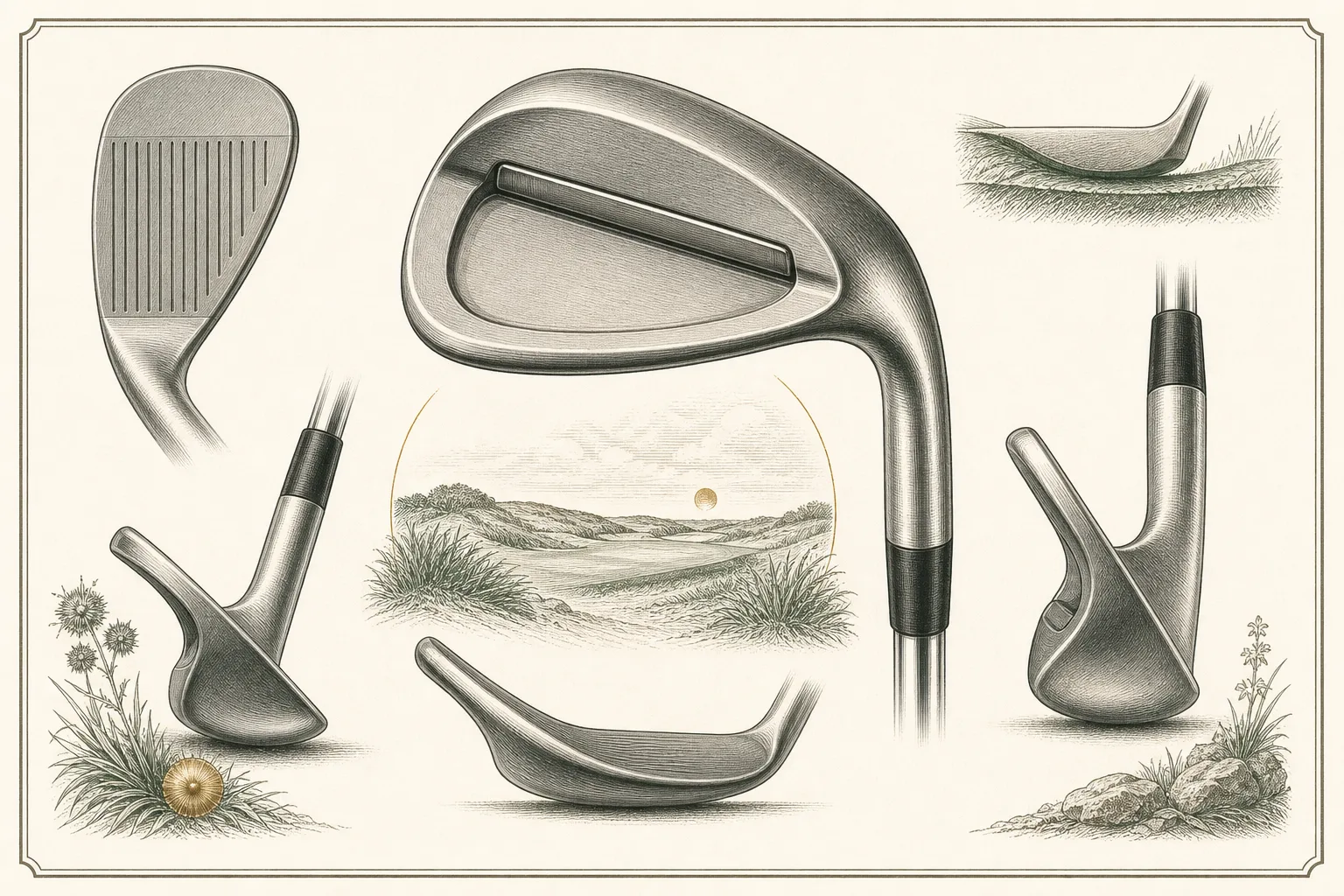
The Glide 2.0 generation introduced Ping's four-sole-grind system -- Thin Sole, Standard Sole, Wide Sole and Eye Sole -- letting golfers pick a grind matched to attack angle and turf rather than one universal sole shape. The ES ('Eye Sole', sometimes read as extra-wide) is the sand- and dig-resistant end of that spread: a thinner hosel paired with a dished, concave sole cavity that reviewers found made it the easiest Glide 2.0 grind to get out of bunkers, since the concave shape helps the sole skip through sand rather than dig. Ping also claimed roughly 200 rpm more spin in dry conditions and up to 1,000 rpm more in wet conditions across the Glide 2.0 line versus the original Glide, credited to refined Gorge-groove geometry and face milling.
A well-executed, specifically-purposed sole grind within a mainstream wedge platform, not a club with independent cult standing -- golfers choose the ES grind for its bunker/dig-resistant function, and reviews treat it as one option within the broader Glide 2.0 lineup rather than as a standout product in its own right.
Golfers who catch the turf steeply or play a lot of bunker and soft-sand shots -- the wide/eye sole is built specifically to prevent digging in those conditions. Players with a shallow, sweeping attack angle or who mostly play firm turf should choose the Thin Sole or Standard Sole Glide 2.0 grind instead; the ES's extra bounce and camber can add unwanted bounce interaction on tight lies.
Part of the broader 2016-2017 wedge generation that included Titleist's Vokey SM6/SM7 and Cleveland's RTX-3/RTX-4, all pushing multi-grind sole systems as the era's key differentiator. Ping carried the four-grind (TS/SS/WS/ES) system forward into the Glide 2.0 Stealth, Glide 3.0 and Glide 4.0 generations.
The widest, most dig-resistant grind in the Glide 2.0 family: the dished sole cavity and thinner hosel actively resist digging on steep or heavy strikes and reviewers called it the most effective Glide 2.0 grind out of sand specifically because of that anti-dig geometry. It scores a 7 rather than higher because it is still a compact players'-style wedge head at its core -- true game-improvement wedges with wider, shallower cavities and larger overall footprints go further, and off-center face strikes are still punished more than on a full GI iron.
Calibrated across the whole catalog — a tour blade scores low here on purpose; it means control, not ease.
Cheap and easy to find used: individual Glide 2.0 ES wedges typically sell for roughly $30-55 on eBay/SidelineSwap depending on loft and wear, in line with other mid-2010s Ping wedges. No collector premium attaches to the ES grind specifically -- pricing tracks condition and loft, not grind rarity.
Reading is one thing — hitting is another. Book a bay and see the numbers for yourself before you buy anywhere.
“The ES (extra-wide/eye-sole) grind is the forgiving anti-dig Glide option. Rung-2 leaning easy: a wide, chunk-resistant sole for members who catch it heavy.”
The Glide 2.0 generation introduced Ping's four-sole-grind system -- Thin Sole, Standard Sole, Wide Sole and Eye Sole -- letting golfers pick a grind matched to attack angle and turf rather than one universal sole shape. The ES ('Eye Sole', sometimes read as extra-wide) is the sand- and dig-resistant end of that spread: a thinner hosel paired with a dished, concave sole cavity that reviewers found made it the easiest Glide 2.0 grind to get out of bunkers, since the concave shape helps the sole skip through sand rather than dig. Ping also claimed roughly 200 rpm more spin in dry conditions and up to 1,000 rpm more in wet conditions across the Glide 2.0 line versus the original Glide, credited to refined Gorge-groove geometry and face milling.
A well-executed, specifically-purposed sole grind within a mainstream wedge platform, not a club with independent cult standing -- golfers choose the ES grind for its bunker/dig-resistant function, and reviews treat it as one option within the broader Glide 2.0 lineup rather than as a standout product in its own right.
Golfers who catch the turf steeply or play a lot of bunker and soft-sand shots -- the wide/eye sole is built specifically to prevent digging in those conditions. Players with a shallow, sweeping attack angle or who mostly play firm turf should choose the Thin Sole or Standard Sole Glide 2.0 grind instead; the ES's extra bounce and camber can add unwanted bounce interaction on tight lies.
Part of the broader 2016-2017 wedge generation that included Titleist's Vokey SM6/SM7 and Cleveland's RTX-3/RTX-4, all pushing multi-grind sole systems as the era's key differentiator. Ping carried the four-grind (TS/SS/WS/ES) system forward into the Glide 2.0 Stealth, Glide 3.0 and Glide 4.0 generations.
The widest, most dig-resistant grind in the Glide 2.0 family: the dished sole cavity and thinner hosel actively resist digging on steep or heavy strikes and reviewers called it the most effective Glide 2.0 grind out of sand specifically because of that anti-dig geometry. It scores a 7 rather than higher because it is still a compact players'-style wedge head at its core -- true game-improvement wedges with wider, shallower cavities and larger overall footprints go further, and off-center face strikes are still punished more than on a full GI iron.
Calibrated across the whole catalog — a tour blade scores low here on purpose; it means control, not ease.
Cheap and easy to find used: individual Glide 2.0 ES wedges typically sell for roughly $30-55 on eBay/SidelineSwap depending on loft and wear, in line with other mid-2010s Ping wedges. No collector premium attaches to the ES grind specifically -- pricing tracks condition and loft, not grind rarity.
Reading is one thing — hitting is another. Book a bay and see the numbers for yourself before you buy anywhere.