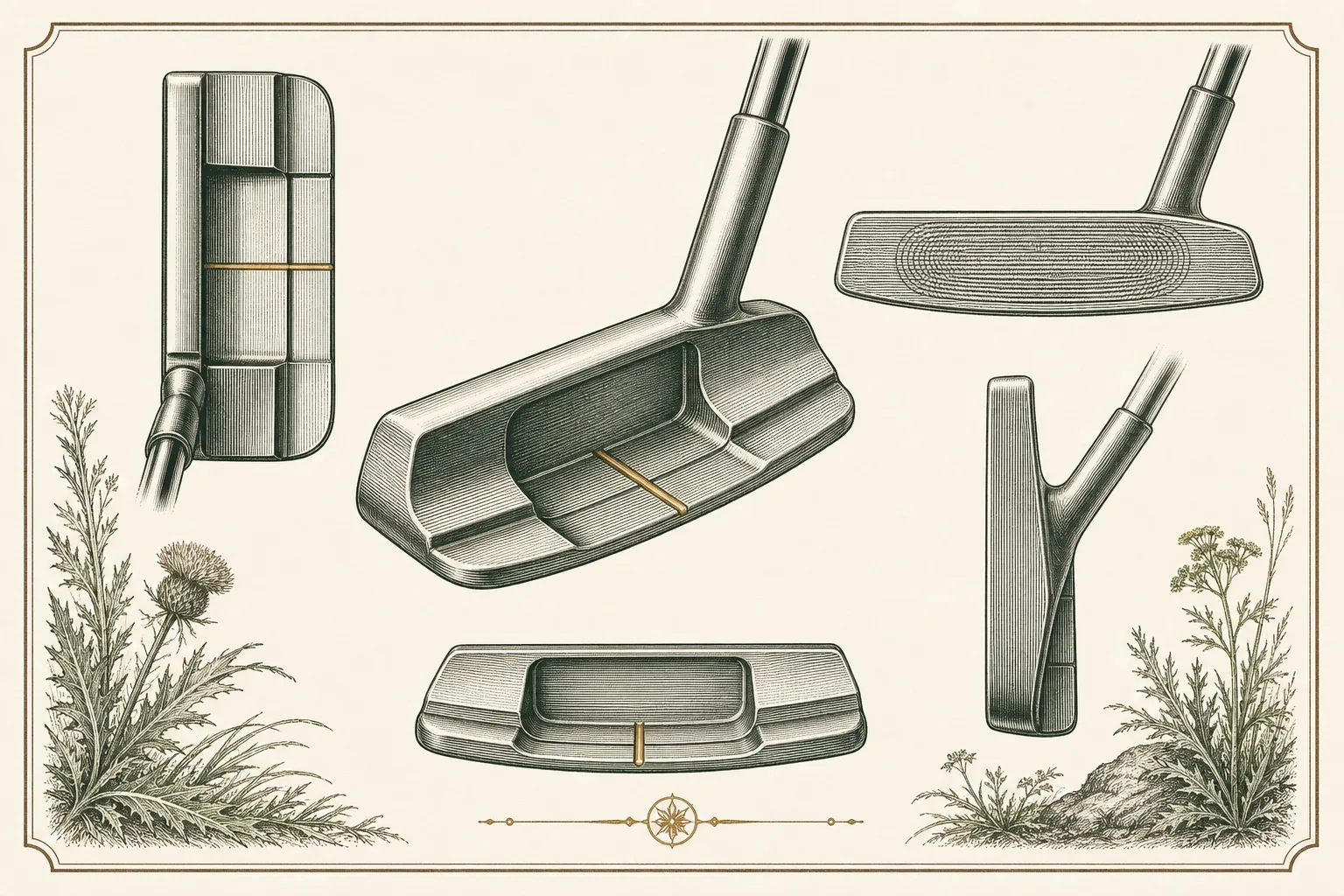
“Gauge's finest-milled putters, made with David Whitlam, are boutique flat-sticks for the buyer who treats a putter as an heirloom object. Feel and finish over any technology story.”
This is the putter line where Gauge Design's real reputation lives: designed by Canadian miller David Whitlam, marketed as fully CNC-milled and USGA-conforming, made in the USA, with the brand's own materials claiming over 50 worldwide tour wins across the Whitlam/Gauge lineage. A GolfWRX thread titled around 'the best roll I've ever seen' captures genuine enthusiast reaction to Whitlam's milling quality. But the brand's history is tangled: a documented split between Whitlam's operation and a separate 'Gauge Design Japan' entity led to public disputes on forums including Toronto Golf Nuts and MyGolfSpy, including allegations around a Chinese-foundry-sourced fairway wood -- worth knowing before treating any Gauge/Whitlam product as one unified brand.
A GolfWRX enthusiast thread specifically praising the roll/feel ('the best roll I've ever seen') plus the brand's own claimed 50-plus tour wins and a genuine Maruman Golf Japan distribution deal are real, if modest, evidence of a following among boutique-putter enthusiasts that most golfers have never heard of -- the definition of a sleeper. It falls short of full cult-classic status because the brand's public image is complicated by the Whitlam/Gauge Design Japan dispute, which muddies rather than reinforces a clean collector narrative.
Boutique milled putters from this maker hold moderate value among enthusiasts: expect roughly $200-350 used in 2026 against a $500 retail price, with clean face-milling and documentation of authenticity (given the brand's split history) mattering more than for a typical mass-market putter.
Golfers who care about feel, milling precision and craftsmanship as much as (or more than) pure forgiveness numbers, and who are comfortable buying a boutique putter without big-brand fitting infrastructure behind it. Buyers should research whether their specific unit is a genuine Whitlam-milled US product or a Gauge Design Japan-sourced piece, given the documented split between the two operations.
Released 2020 into a healthy boutique/artisan putter scene (Bettinardi, Scotty Cameron Custom Shop, L.A.B. Golf, various one-man millers) where craftsmanship story and milling precision are the entire value proposition. Whitlam/Gauge's Maruman Golf distribution deal in Japan situates the brand as a real, if small, cross-border player in that scene rather than a purely US boutique.
A blade/mallet hybrid design sits in the middle of putter forgiveness: more forgiving on off-center hits than a classic toe-hang blade thanks to added mass/MOI from the mallet-influenced shaping, but not a full high-MOI mallet. Independent review of a related Gauge model (the G2 'Little Dog') describes a thicker topline aiding alignment despite full toe-hang blade balance, consistent with a moderate-forgiveness verdict.
Calibrated across the whole catalog — a tour blade scores low here on purpose; it means control, not ease.
Reading is one thing — hitting is another. Book a bay and see the numbers for yourself before you buy anywhere.