“The Queen B line, milled with striking finishes (often a dark PVD with accent paint); mostly toe-hang blades for arc strokes. A feel-and-looks flagship, sometimes limited.”
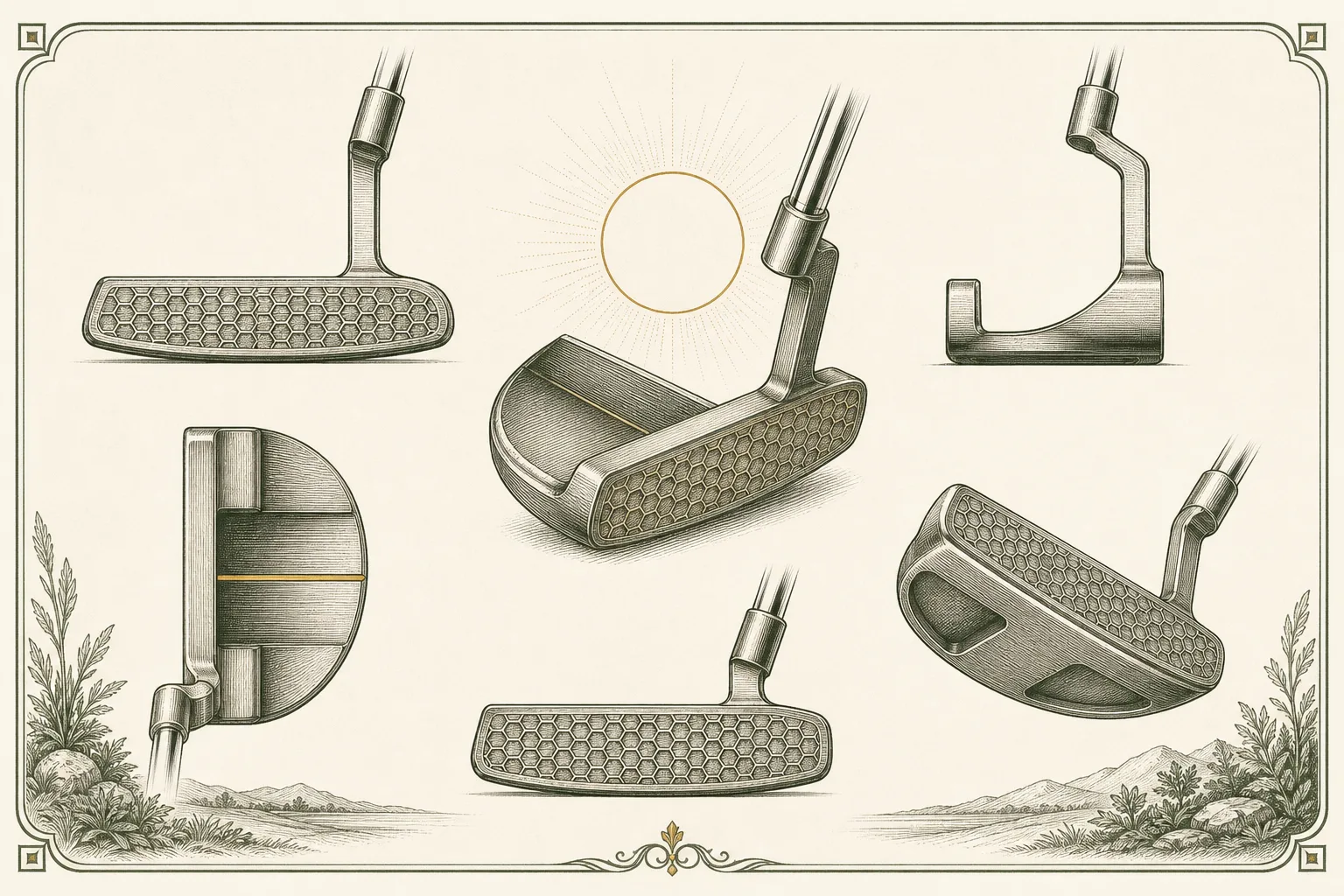
Queen B was born in 2012 as a genuine women's-first putter line rather than a men's shape repainted pink — Robert Bettinardi named it for his wife Ann and built it with a heavier head (originally 360g, roughly 10–15g above typical) in a distinctive 'cashmere bronze' PVD finish over milled soft carbon steel, in mid-mallet (Model I) and heel-toe-weighted blade (Model II) shapes with Bettinardi's Honeycomb face. It launched at $375 with 3-degree loft, 71-degree lie and 3/4 toe hang as standard, customizable to fit. Reviewers noted from day one that despite the feminine branding, roughly half its buyers were men drawn to the finish and feel, and the line has continued for over a decade with later numbered generations (Queen B 6, 8, 10, 12, 16).
Genuinely distinctive and well-reviewed (PutterZone praised its finish and feel), and its cross-gender buyer pattern is a real, sourced fact rather than marketing spin — but there is no evidence of forum-driven demand or scarcity pricing for the line; it is a respected, ongoing niche product rather than a cult chase.
An arc-stroke player who wants Bettinardi's milling and feel with a heavier head and a striking finish, of either gender despite the marketing origin — reviewers noted roughly half of buyers were men. Not the pick for a straight-back-straight-through player chasing maximum MOI; Bettinardi's own Inovai mallets serve that golfer far better.
Launched in 2012 alongside Bettinardi's broader push into distinctive finishes, and has continued as a recurring numbered series (Queen B 5/6/7/8/10/12/16, per Bettinardi's current site) rather than a one-off, making 'Queen B' effectively an ongoing sub-brand within the catalog rather than a single discontinued model — hence the open year_end.
A traditional blade-class shape (this entry sits on the heel-toe-weighted Model II side of the original two-model launch): a heavier-than-average head and Honeycomb face add some perimeter stability versus a lightweight pure blade, but the classic proportions and toe-hang bias mean it is built for feel and a specific arc stroke, not maximum forgiveness. Consistent with Bettinardi's other blade lines (C-Series).
Calibrated across the whole catalog — a tour blade scores low here on purpose; it means control, not ease.
A clean original 2012 cashmere-bronze Queen B realistically sells private-party for roughly $120–$220 in 2026; raw carbon-steel finishes that have patinaed or shown rust sit at the low end, while well-preserved examples with the original finish and headcover — now a somewhat uncommon early-line curiosity — trend toward the top.
Reading is one thing — hitting is another. Book a bay and see the numbers for yourself before you buy anywhere.
“The Queen B line, milled with striking finishes (often a dark PVD with accent paint); mostly toe-hang blades for arc strokes. A feel-and-looks flagship, sometimes limited.”
Queen B was born in 2012 as a genuine women's-first putter line rather than a men's shape repainted pink — Robert Bettinardi named it for his wife Ann and built it with a heavier head (originally 360g, roughly 10–15g above typical) in a distinctive 'cashmere bronze' PVD finish over milled soft carbon steel, in mid-mallet (Model I) and heel-toe-weighted blade (Model II) shapes with Bettinardi's Honeycomb face. It launched at $375 with 3-degree loft, 71-degree lie and 3/4 toe hang as standard, customizable to fit. Reviewers noted from day one that despite the feminine branding, roughly half its buyers were men drawn to the finish and feel, and the line has continued for over a decade with later numbered generations (Queen B 6, 8, 10, 12, 16).
Genuinely distinctive and well-reviewed (PutterZone praised its finish and feel), and its cross-gender buyer pattern is a real, sourced fact rather than marketing spin — but there is no evidence of forum-driven demand or scarcity pricing for the line; it is a respected, ongoing niche product rather than a cult chase.
An arc-stroke player who wants Bettinardi's milling and feel with a heavier head and a striking finish, of either gender despite the marketing origin — reviewers noted roughly half of buyers were men. Not the pick for a straight-back-straight-through player chasing maximum MOI; Bettinardi's own Inovai mallets serve that golfer far better.
Launched in 2012 alongside Bettinardi's broader push into distinctive finishes, and has continued as a recurring numbered series (Queen B 5/6/7/8/10/12/16, per Bettinardi's current site) rather than a one-off, making 'Queen B' effectively an ongoing sub-brand within the catalog rather than a single discontinued model — hence the open year_end.
A traditional blade-class shape (this entry sits on the heel-toe-weighted Model II side of the original two-model launch): a heavier-than-average head and Honeycomb face add some perimeter stability versus a lightweight pure blade, but the classic proportions and toe-hang bias mean it is built for feel and a specific arc stroke, not maximum forgiveness. Consistent with Bettinardi's other blade lines (C-Series).
Calibrated across the whole catalog — a tour blade scores low here on purpose; it means control, not ease.
A clean original 2012 cashmere-bronze Queen B realistically sells private-party for roughly $120–$220 in 2026; raw carbon-steel finishes that have patinaed or shown rust sit at the low end, while well-preserved examples with the original finish and headcover — now a somewhat uncommon early-line curiosity — trend toward the top.
Reading is one thing — hitting is another. Book a bay and see the numbers for yourself before you buy anywhere.