“Draw-biased, max-forgiveness fairway wood - rung-1 help getting the ball up and turning it over, with no penalty for the forgiveness (R5).”
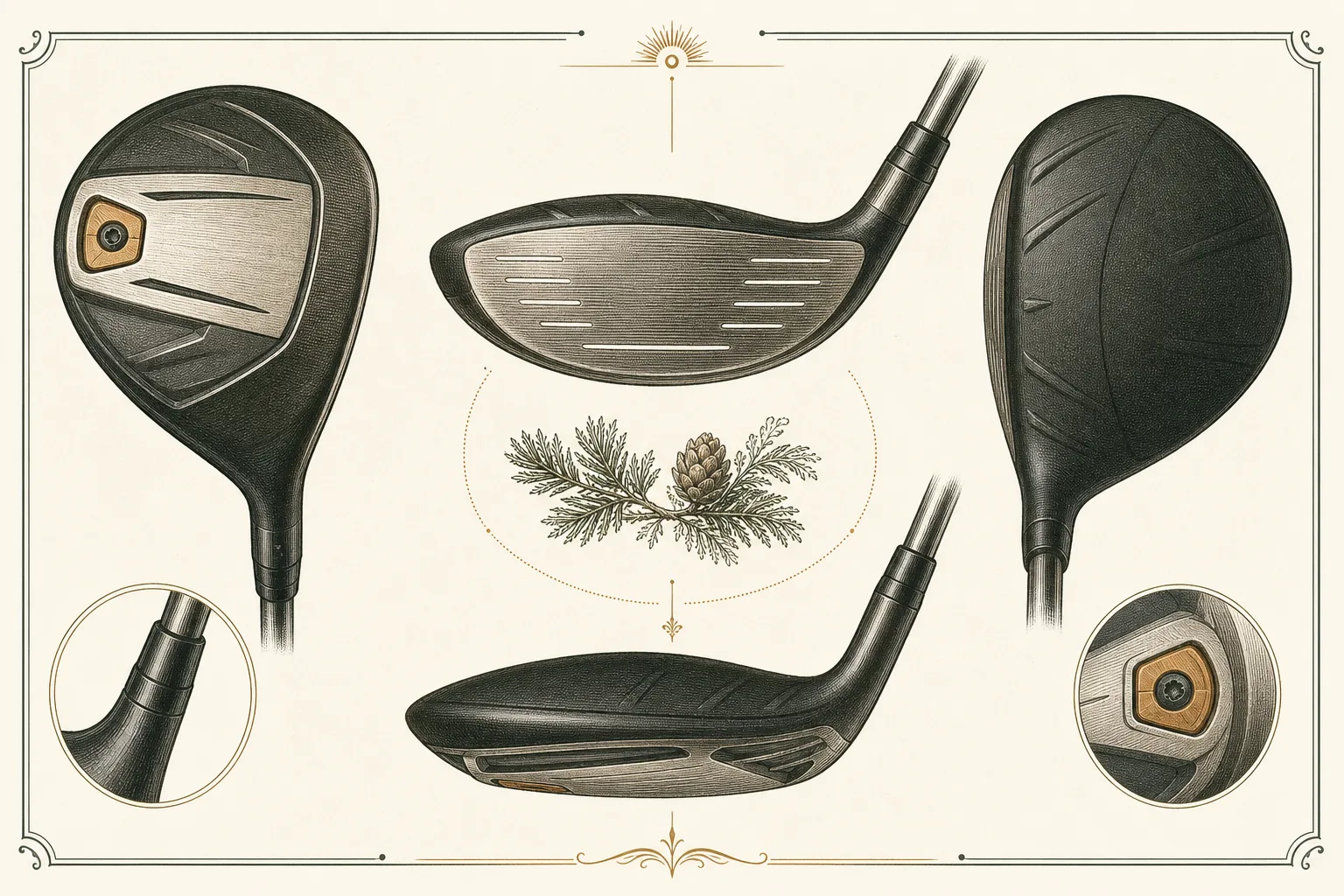
The G400 SFT fairway wood applies the same heel-biased, draw-promoting weighting as the SFT driver to Ping's 2017 fairway wood platform, with a larger, rounder, more symmetrical head and shallower face than the standard G400 fairway. Its lofts run higher than the standard line (16 degrees in the 3-wood versus the standard's 14) specifically to boost launch for the moderate-swing-speed, slice-prone players it's built for, and the head is slightly larger front-to-back (187cc vs. 183cc in the 3-wood) to support that extra draw-bias weighting. It's the fairway-wood half of the same corrective-fitting pairing Ping sold with the SFT driver - same design philosophy, applied one club down the bag.
No cult status: it's a purpose-built corrective fitting tool, reviewed as effective at its narrow job (easy launch, real draw help) but never discussed as a standout or must-have the way the G400 hybrid was. It sold as part of the broader, well-regarded G400 family without carrying any distinct reputation of its own.
For moderate-swing-speed players who slice or fade fairway woods and struggle to get them airborne - the higher stock lofts and draw bias both directly address that miss. A player who already launches fairway woods easily or draws the ball should use the standard G400 fairway instead, since the draw bias here will overcorrect a neutral or draw-leaning ball flight.
Part of the 2017 G400 fairway wood trio (standard, SFT, Stretch), mirroring the same three-way split Ping used on the driver side that same year. It competed with TaylorMade's M2 and Callaway's Rogue draw-biased fairway options, and was succeeded by the G410 SFT fairway (2019).
Shares the G400 fairway wood's thin maraging face and repositioned back weight for solid off-center forgiveness, plus the added heel-side draw bias that widens the effective miss window for a player fighting a slice. It scores a point above the standard G400 fairway because the higher lofts and larger, rounder head both work specifically in favor of easy, high launch - a forgiveness-adjacent trait even beyond pure MOI.
Calibrated across the whole catalog — a tour blade scores low here on purpose; it means control, not ease.
A single G400 SFT fairway wood typically sells for $65-100 private-party in 2026, down from its roughly $269 retail price new. It's a lower-demand niche within an already-plentiful G400 fairway wood market, so pricing sits at or slightly below the standard G400 fairway despite offering the added draw-bias feature.
Reading is one thing — hitting is another. Book a bay and see the numbers for yourself before you buy anywhere.
“Draw-biased, max-forgiveness fairway wood - rung-1 help getting the ball up and turning it over, with no penalty for the forgiveness (R5).”
The G400 SFT fairway wood applies the same heel-biased, draw-promoting weighting as the SFT driver to Ping's 2017 fairway wood platform, with a larger, rounder, more symmetrical head and shallower face than the standard G400 fairway. Its lofts run higher than the standard line (16 degrees in the 3-wood versus the standard's 14) specifically to boost launch for the moderate-swing-speed, slice-prone players it's built for, and the head is slightly larger front-to-back (187cc vs. 183cc in the 3-wood) to support that extra draw-bias weighting. It's the fairway-wood half of the same corrective-fitting pairing Ping sold with the SFT driver - same design philosophy, applied one club down the bag.
No cult status: it's a purpose-built corrective fitting tool, reviewed as effective at its narrow job (easy launch, real draw help) but never discussed as a standout or must-have the way the G400 hybrid was. It sold as part of the broader, well-regarded G400 family without carrying any distinct reputation of its own.
For moderate-swing-speed players who slice or fade fairway woods and struggle to get them airborne - the higher stock lofts and draw bias both directly address that miss. A player who already launches fairway woods easily or draws the ball should use the standard G400 fairway instead, since the draw bias here will overcorrect a neutral or draw-leaning ball flight.
Part of the 2017 G400 fairway wood trio (standard, SFT, Stretch), mirroring the same three-way split Ping used on the driver side that same year. It competed with TaylorMade's M2 and Callaway's Rogue draw-biased fairway options, and was succeeded by the G410 SFT fairway (2019).
Shares the G400 fairway wood's thin maraging face and repositioned back weight for solid off-center forgiveness, plus the added heel-side draw bias that widens the effective miss window for a player fighting a slice. It scores a point above the standard G400 fairway because the higher lofts and larger, rounder head both work specifically in favor of easy, high launch - a forgiveness-adjacent trait even beyond pure MOI.
Calibrated across the whole catalog — a tour blade scores low here on purpose; it means control, not ease.
A single G400 SFT fairway wood typically sells for $65-100 private-party in 2026, down from its roughly $269 retail price new. It's a lower-demand niche within an already-plentiful G400 fairway wood market, so pricing sits at or slightly below the standard G400 fairway despite offering the added draw-bias feature.
Reading is one thing — hitting is another. Book a bay and see the numbers for yourself before you buy anywhere.