“Hot-faced, easy-launch hybrid matching the X Hot family. A dependable rung-1 long-iron replacement and good used value.”
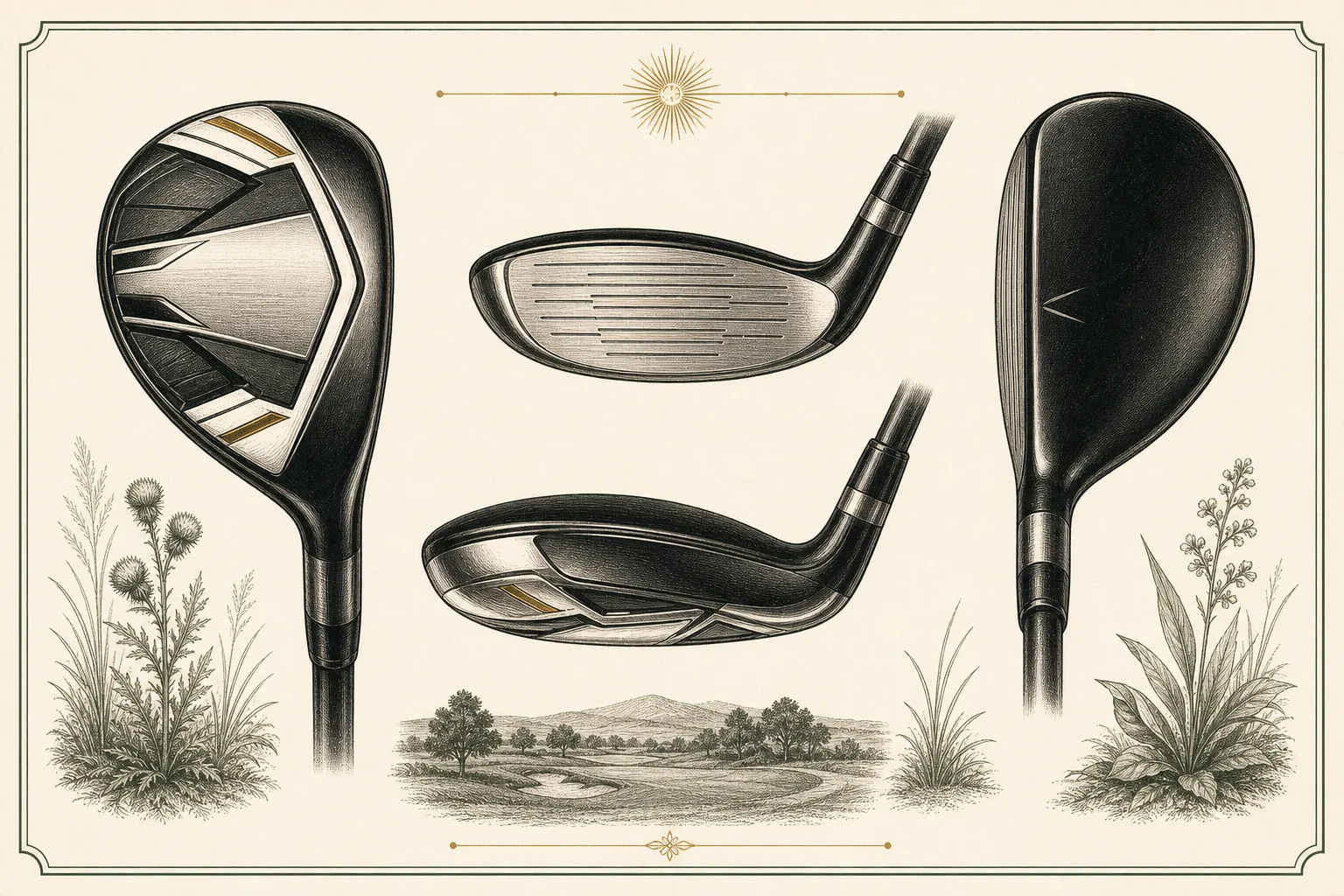
The 2013 X Hot Hybrid was Callaway's mass-market replacement for the 2012 RAZR X hybrid, built around a face precipitation-hardened to run 15% thinner than its predecessor's. Callaway's own engineering claim was that the thinner face added roughly 3 yards of ball speed over RAZR X. It carried a reworked Warbird sole with relief cut into the heel and toe so the head could slide through a wider range of lies, and lofts were bumped about 2 degrees stronger than the previous standard hybrids to chase distance. It sat as the volume, do-everything hybrid in the 2013 X Hot family, positioned squarely below the smaller-headed X Hot Pro released alongside it.
No cult following ever formed around this model; it was a one-cycle mass-market release superseded by the X2 Hot Hybrid the following year and is remembered, if at all, only within the broader X Hot iron/wood/hybrid launch of 2013. Reviews were positive but generic 'solid performer' notices, not lasting enthusiast devotion.
Good fit for mid-to-high handicappers who want a shorter-iron replacement that gets airborne easily and forgives mis-hits; better players seeking workability and a flatter flight should look at the companion X Hot Pro or a modern players hybrid instead.
Launched in the same product cycle as TaylorMade's RocketBallz Stage 2 and Ping's G25 hybrids; it replaced the 2012 RAZR X hybrid and was itself replaced by the Callaway X2 Hot Hybrid in 2014. A modern equivalent in Callaway's own line is the Paradym/Rogue ST Max hybrid.
Today's Golfer testers found it among the most reliably accurate hybrids on test, with off-center hits holding line well and a notably high, spinny ball flight that cost a bit of raw distance in exchange for consistency — the classic high-forgiveness tradeoff.
Calibrated across the whole catalog — a tour blade scores low here on purpose; it means control, not ease.
Private-party/eBay pricing for the 2013 X Hot Hybrid runs roughly $25-45; 2nd Swing's used listings for the closely related X2 Hot Hybrid (same $199 launch MSRP tier) show graded/reconditioned-retail prices of $40-80, which is a store markup over realistic peer-to-peer value, not the private-sale price.
Reading is one thing — hitting is another. Book a bay and see the numbers for yourself before you buy anywhere.
“Hot-faced, easy-launch hybrid matching the X Hot family. A dependable rung-1 long-iron replacement and good used value.”
The 2013 X Hot Hybrid was Callaway's mass-market replacement for the 2012 RAZR X hybrid, built around a face precipitation-hardened to run 15% thinner than its predecessor's. Callaway's own engineering claim was that the thinner face added roughly 3 yards of ball speed over RAZR X. It carried a reworked Warbird sole with relief cut into the heel and toe so the head could slide through a wider range of lies, and lofts were bumped about 2 degrees stronger than the previous standard hybrids to chase distance. It sat as the volume, do-everything hybrid in the 2013 X Hot family, positioned squarely below the smaller-headed X Hot Pro released alongside it.
No cult following ever formed around this model; it was a one-cycle mass-market release superseded by the X2 Hot Hybrid the following year and is remembered, if at all, only within the broader X Hot iron/wood/hybrid launch of 2013. Reviews were positive but generic 'solid performer' notices, not lasting enthusiast devotion.
Good fit for mid-to-high handicappers who want a shorter-iron replacement that gets airborne easily and forgives mis-hits; better players seeking workability and a flatter flight should look at the companion X Hot Pro or a modern players hybrid instead.
Launched in the same product cycle as TaylorMade's RocketBallz Stage 2 and Ping's G25 hybrids; it replaced the 2012 RAZR X hybrid and was itself replaced by the Callaway X2 Hot Hybrid in 2014. A modern equivalent in Callaway's own line is the Paradym/Rogue ST Max hybrid.
Today's Golfer testers found it among the most reliably accurate hybrids on test, with off-center hits holding line well and a notably high, spinny ball flight that cost a bit of raw distance in exchange for consistency — the classic high-forgiveness tradeoff.
Calibrated across the whole catalog — a tour blade scores low here on purpose; it means control, not ease.
Private-party/eBay pricing for the 2013 X Hot Hybrid runs roughly $25-45; 2nd Swing's used listings for the closely related X2 Hot Hybrid (same $199 launch MSRP tier) show graded/reconditioned-retail prices of $40-80, which is a store markup over realistic peer-to-peer value, not the private-sale price.
Reading is one thing — hitting is another. Book a bay and see the numbers for yourself before you buy anywhere.