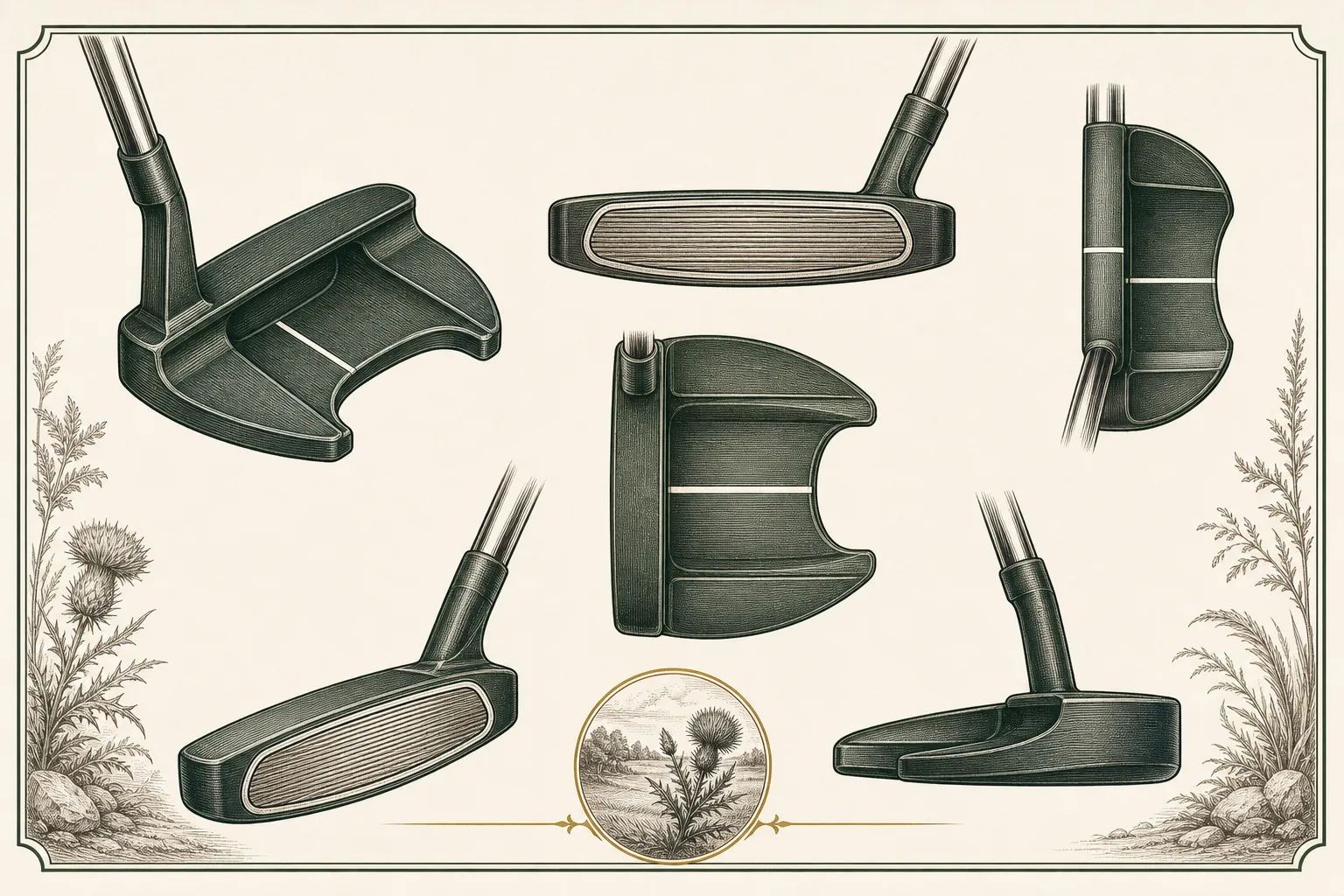
“Haywood milled mallet putter. Identity club.”
Haywood Golf is a small direct-to-consumer club maker founded in Vancouver, British Columbia in 2018, building its lineup (irons, a driving iron, wedges, and two putters) entirely in Canada. Its Mid-Mallet Putter is milled from a single billet of 1020 carbon steel rather than cast or multi-material construction, aiming for the soft, dense feel associated with milled-steel putters at a fraction of premium-mallet pricing. It ships with adjustable stainless steel sole weights (roster's 3/3.5/4 gram-equivalent options) so a buyer can fine-tune swingweight and feel, and offers a choice of alignment markings -- a boutique, fitting-conscious approach typical of small DTC golf brands competing on value and craftsmanship story rather than marketing budget.
Has organic enthusiast attention rather than mainstream cult status: active GolfWRX forum threads discuss the Mid-Mallet specifically, and MyGolfSpy has covered Haywood's iron sets in forum member reviews, but it has no tour pedigree, awards, or broad used-market demand comparable to an established mallet brand.
Fits golfers who want a milled-steel feel and DTC value pricing (around $199-$250) with some adjustability, and who are comfortable buying from a small boutique brand rather than a major manufacturer with a fitting/demo network; players wanting maximum forgiveness or a tour-proven track record should look at bigger-name high-MOI mallets instead.
Launched into a 2022 DTC putter market alongside brands like Sub 70, Tour Edge and other direct-to-consumer challengers competing against retail mallets from Odyssey, TaylorMade Spider and Evnroll; it remains current in Haywood's small two-putter lineup (this mid-mallet plus a Signature Series blade-adjacent model) as of 2026.
A mid-size mallet shape with adjustable heel/toe-adjacent sole weighting gives moderate MOI and mis-hit tolerance above a blade putter, but as a single-piece milled carbon-steel head without a face insert or extreme perimeter weighting, it is less forgiving than max-MOI mallets like the Evnroll ER9 or Odyssey Ai-ONE; reviewers note solid feel and balance rather than exceptional forgiveness.
Calibrated across the whole catalog — a tour blade scores low here on purpose; it means control, not ease.
As a recent DTC product with limited secondary-market volume, used listings are scarce; expect private-party resale in roughly the $100-$160 range (well below its $199-$250 direct retail) given the brand's small footprint and lack of a large installed base driving demand.
Reading is one thing — hitting is another. Book a bay and see the numbers for yourself before you buy anywhere.
“Haywood milled mallet putter. Identity club.”
Haywood Golf is a small direct-to-consumer club maker founded in Vancouver, British Columbia in 2018, building its lineup (irons, a driving iron, wedges, and two putters) entirely in Canada. Its Mid-Mallet Putter is milled from a single billet of 1020 carbon steel rather than cast or multi-material construction, aiming for the soft, dense feel associated with milled-steel putters at a fraction of premium-mallet pricing. It ships with adjustable stainless steel sole weights (roster's 3/3.5/4 gram-equivalent options) so a buyer can fine-tune swingweight and feel, and offers a choice of alignment markings -- a boutique, fitting-conscious approach typical of small DTC golf brands competing on value and craftsmanship story rather than marketing budget.
Has organic enthusiast attention rather than mainstream cult status: active GolfWRX forum threads discuss the Mid-Mallet specifically, and MyGolfSpy has covered Haywood's iron sets in forum member reviews, but it has no tour pedigree, awards, or broad used-market demand comparable to an established mallet brand.
Fits golfers who want a milled-steel feel and DTC value pricing (around $199-$250) with some adjustability, and who are comfortable buying from a small boutique brand rather than a major manufacturer with a fitting/demo network; players wanting maximum forgiveness or a tour-proven track record should look at bigger-name high-MOI mallets instead.
Launched into a 2022 DTC putter market alongside brands like Sub 70, Tour Edge and other direct-to-consumer challengers competing against retail mallets from Odyssey, TaylorMade Spider and Evnroll; it remains current in Haywood's small two-putter lineup (this mid-mallet plus a Signature Series blade-adjacent model) as of 2026.
A mid-size mallet shape with adjustable heel/toe-adjacent sole weighting gives moderate MOI and mis-hit tolerance above a blade putter, but as a single-piece milled carbon-steel head without a face insert or extreme perimeter weighting, it is less forgiving than max-MOI mallets like the Evnroll ER9 or Odyssey Ai-ONE; reviewers note solid feel and balance rather than exceptional forgiveness.
Calibrated across the whole catalog — a tour blade scores low here on purpose; it means control, not ease.
As a recent DTC product with limited secondary-market volume, used listings are scarce; expect private-party resale in roughly the $100-$160 range (well below its $199-$250 direct retail) given the brand's small footprint and lack of a large installed base driving demand.
Reading is one thing — hitting is another. Book a bay and see the numbers for yourself before you buy anywhere.