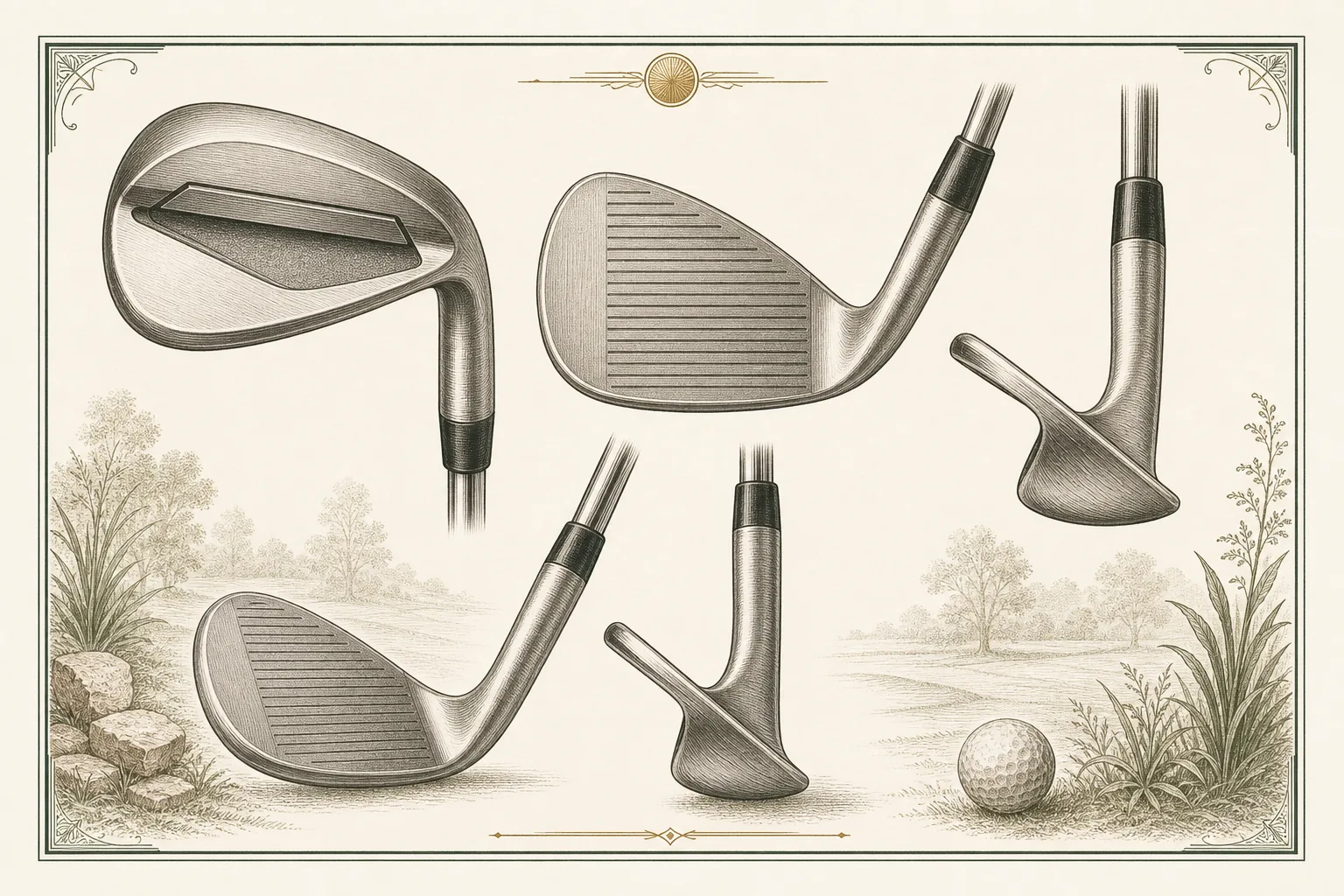
“Launched July 2019 (not 2020) at $150 MSRP; Precision-milled face with return of the Eye2 grind, plus SS, WS, and TS. Steel-dominant players' wedge; a keep when the sole matches the member's turf.”
The Glide 3.0 launched in July 2019 at $150 MSRP with precision-milled grooves and a redesigned cavity that Ping said raised MOI (and so mis-hit stability) versus the Glide 2.0. Its headline addition was a fourth sole grind lifted from Ping's own history: the Eye2 grind (offered in 54-10, 56-10, 58-08 and 60-08 configurations) recreates the high-toe, sharply sloped topline, thin hosel and dramatically rounded leading edge of the original 1982 Ping Eye2 iron -- one of the most influential clubs in golf history, and the club behind Ping's color-dot fitting system. Alongside the Eye2 option, the Glide 3.0 kept Standard, Wide and Thin sole choices, and stock shafts expanded to include the Nippon N.S. Pro Modus 105, broadening beyond the CFS-only approach of earlier Glide generations.
It earns 'notable' specifically for reviving the Eye2 sole profile as a real, documented sole-grind option -- a direct, sourced callback to Ping's most historically significant club (see the Ping Eye 2 iron entry) rather than a generic marketing nod. Multiple outlets (PGA Tour, Golf.com, GolfWRX forum threads) covered the Eye2 grind's return as a notable story in its own right. It stops short of cult classic because the Glide 3.0 itself is a mainstream, widely-available wedge without scarcity or its own independent legend.
Good ball-strikers and better players who want tour-level grind choices, a nostalgic/functional Eye2 option for bunker and creative shots, and Ping's step up in shaft options (including Nippon Modus). A high-handicapper who wants maximum forgiveness on full wedge shots is better served by the Wide-sole grind specifically, or by a dedicated game-improvement wedge outside the Glide players' line.
Launched into the same wedge cycle as Titleist's Vokey SM8 and Cleveland's RTX-4, with sole-grind personalization as the era's dominant differentiator. It followed the Glide 2.0/2.0 Stealth and was itself succeeded by the Glide 4.0, continuing Ping's roughly two-to-three-year wedge refresh cadence.
Ping's own marketing and independent reviews credit a redesigned cavity with higher MOI than the Glide 2.0, meaning more stability on strikes away from center, and the four-grind system (including the anti-dig-oriented Wide sole) lets a buyer choose extra forgiveness by grind. It sits at 6, not higher, because it remains a compact, milled players' wedge at its core -- the Eye2 grind in particular is a narrow, high-toe profile prized for feel and versatility around the green rather than raw forgiveness.
Calibrated across the whole catalog — a tour blade scores low here on purpose; it means control, not ease.
A recent-enough wedge that used pricing still reflects real demand: individual Glide 3.0 wedges commonly run roughly $45-75 on eBay/SidelineSwap depending on loft, grind and shaft, with the Eye2 grind specifically fetching modest interest from Ping-history collectors and short-game specialists above the Standard/Wide grinds in similar condition.
Reading is one thing — hitting is another. Book a bay and see the numbers for yourself before you buy anywhere.
“Launched July 2019 (not 2020) at $150 MSRP; Precision-milled face with return of the Eye2 grind, plus SS, WS, and TS. Steel-dominant players' wedge; a keep when the sole matches the member's turf.”
The Glide 3.0 launched in July 2019 at $150 MSRP with precision-milled grooves and a redesigned cavity that Ping said raised MOI (and so mis-hit stability) versus the Glide 2.0. Its headline addition was a fourth sole grind lifted from Ping's own history: the Eye2 grind (offered in 54-10, 56-10, 58-08 and 60-08 configurations) recreates the high-toe, sharply sloped topline, thin hosel and dramatically rounded leading edge of the original 1982 Ping Eye2 iron -- one of the most influential clubs in golf history, and the club behind Ping's color-dot fitting system. Alongside the Eye2 option, the Glide 3.0 kept Standard, Wide and Thin sole choices, and stock shafts expanded to include the Nippon N.S. Pro Modus 105, broadening beyond the CFS-only approach of earlier Glide generations.
It earns 'notable' specifically for reviving the Eye2 sole profile as a real, documented sole-grind option -- a direct, sourced callback to Ping's most historically significant club (see the Ping Eye 2 iron entry) rather than a generic marketing nod. Multiple outlets (PGA Tour, Golf.com, GolfWRX forum threads) covered the Eye2 grind's return as a notable story in its own right. It stops short of cult classic because the Glide 3.0 itself is a mainstream, widely-available wedge without scarcity or its own independent legend.
Good ball-strikers and better players who want tour-level grind choices, a nostalgic/functional Eye2 option for bunker and creative shots, and Ping's step up in shaft options (including Nippon Modus). A high-handicapper who wants maximum forgiveness on full wedge shots is better served by the Wide-sole grind specifically, or by a dedicated game-improvement wedge outside the Glide players' line.
Launched into the same wedge cycle as Titleist's Vokey SM8 and Cleveland's RTX-4, with sole-grind personalization as the era's dominant differentiator. It followed the Glide 2.0/2.0 Stealth and was itself succeeded by the Glide 4.0, continuing Ping's roughly two-to-three-year wedge refresh cadence.
Ping's own marketing and independent reviews credit a redesigned cavity with higher MOI than the Glide 2.0, meaning more stability on strikes away from center, and the four-grind system (including the anti-dig-oriented Wide sole) lets a buyer choose extra forgiveness by grind. It sits at 6, not higher, because it remains a compact, milled players' wedge at its core -- the Eye2 grind in particular is a narrow, high-toe profile prized for feel and versatility around the green rather than raw forgiveness.
Calibrated across the whole catalog — a tour blade scores low here on purpose; it means control, not ease.
A recent-enough wedge that used pricing still reflects real demand: individual Glide 3.0 wedges commonly run roughly $45-75 on eBay/SidelineSwap depending on loft, grind and shaft, with the Eye2 grind specifically fetching modest interest from Ping-history collectors and short-game specialists above the Standard/Wide grinds in similar condition.
Reading is one thing — hitting is another. Book a bay and see the numbers for yourself before you buy anywhere.