“A smaller head geared to mid and low handicaps, precision-forged from soft S20C with an HRB80 tempered body for crisp feel. A refined, understated Endo players' cavity for the golfer who wants a compact look.”
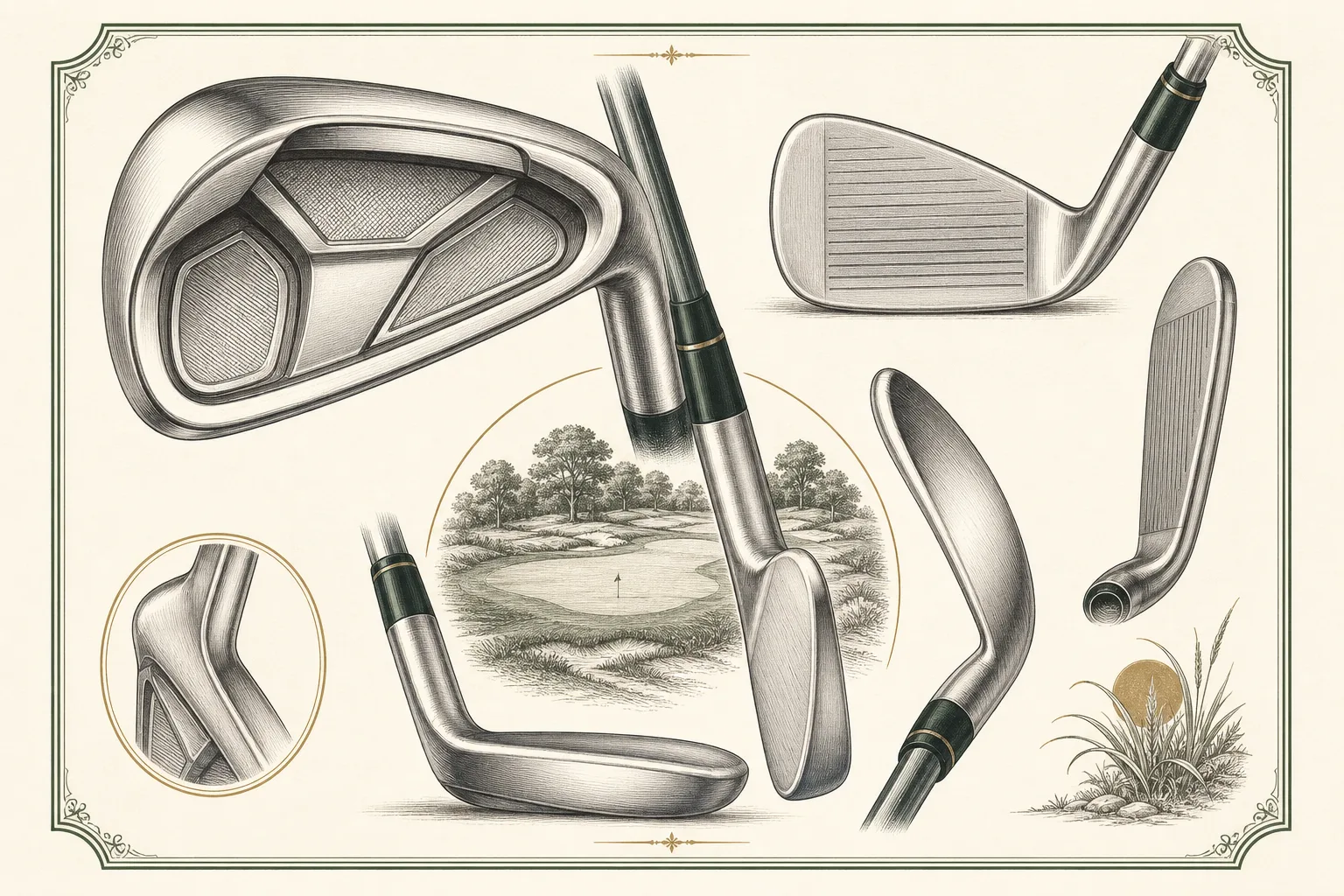
The AF-501 sat in the middle of Epon's numbered iron hierarchy, positioned as a true player's cavity between the smaller, more compact AF-301/302 blade-like cavities and the larger, more forgiving AF-701 game-improvement cavity. Forged from soft S20C carbon steel with an HRB80 body hardness and finished in a soft nickel-chrome plating, the long irons (3-6) carry an internal undercut cavity paired with a hotter spring-steel face insert for added ball speed, while the shorter irons drop the undercut and face insert in favor of solid forged construction for maximum feel and control on scoring clubs. It ran through the mid-2010s before Epon phased it out in favor of the AF-502 and later players-cavity releases.
Epon's forged irons carry a documented cult following on GolfWRX, with posters describing having 'gamed Epons since 2008' and never switching brands, and the 301/501/701 lineup is repeatedly cited by forum regulars debating which Endo-forged model matches their game; the AF-501 specifically is treated as the standard player's recommendation in that comparison, a notch more forgiving than the 302/303 blades favored by better ball-strikers.
Built for low-to-mid handicap ball strikers who prioritize forged feel and shot-shaping control over forgiveness; the compact head and thin sole make it a poor fit for higher handicappers, whom Epon itself steers toward the larger AF-701.
Competed against other Japan-forged players cavities of its era such as Miura's CB-501 and CB-1008, Mizuno's MP line, and PRGR's iS series, and sat below Epon's own AF-701 in forgiveness within the same-era 301/501/701 family.
A genuinely compact players' cavity with a thin topline and minimal offset - comparable in size and forgiveness to clubs like Mizuno's MP-32 - the undercut cavity and spring-steel face help somewhat on long-iron mishits, but the short irons revert to solid forged construction with little forgiveness margin.
Calibrated across the whole catalog — a tour blade scores low here on purpose; it means control, not ease.
New retail was around $1,400 for a steel-shafted set; by 2026 used sets (typically 4-PW or 3-PW with Japan-market shafts like NS Pro or Dynamic Gold) trade for roughly $575-$650, reflecting steady but modest resale demand rather than premium collector pricing.
Reading is one thing — hitting is another. Book a bay and see the numbers for yourself before you buy anywhere.
“A smaller head geared to mid and low handicaps, precision-forged from soft S20C with an HRB80 tempered body for crisp feel. A refined, understated Endo players' cavity for the golfer who wants a compact look.”
The AF-501 sat in the middle of Epon's numbered iron hierarchy, positioned as a true player's cavity between the smaller, more compact AF-301/302 blade-like cavities and the larger, more forgiving AF-701 game-improvement cavity. Forged from soft S20C carbon steel with an HRB80 body hardness and finished in a soft nickel-chrome plating, the long irons (3-6) carry an internal undercut cavity paired with a hotter spring-steel face insert for added ball speed, while the shorter irons drop the undercut and face insert in favor of solid forged construction for maximum feel and control on scoring clubs. It ran through the mid-2010s before Epon phased it out in favor of the AF-502 and later players-cavity releases.
Epon's forged irons carry a documented cult following on GolfWRX, with posters describing having 'gamed Epons since 2008' and never switching brands, and the 301/501/701 lineup is repeatedly cited by forum regulars debating which Endo-forged model matches their game; the AF-501 specifically is treated as the standard player's recommendation in that comparison, a notch more forgiving than the 302/303 blades favored by better ball-strikers.
Built for low-to-mid handicap ball strikers who prioritize forged feel and shot-shaping control over forgiveness; the compact head and thin sole make it a poor fit for higher handicappers, whom Epon itself steers toward the larger AF-701.
Competed against other Japan-forged players cavities of its era such as Miura's CB-501 and CB-1008, Mizuno's MP line, and PRGR's iS series, and sat below Epon's own AF-701 in forgiveness within the same-era 301/501/701 family.
A genuinely compact players' cavity with a thin topline and minimal offset - comparable in size and forgiveness to clubs like Mizuno's MP-32 - the undercut cavity and spring-steel face help somewhat on long-iron mishits, but the short irons revert to solid forged construction with little forgiveness margin.
Calibrated across the whole catalog — a tour blade scores low here on purpose; it means control, not ease.
New retail was around $1,400 for a steel-shafted set; by 2026 used sets (typically 4-PW or 3-PW with Japan-market shafts like NS Pro or Dynamic Gold) trade for roughly $575-$650, reflecting steady but modest resale demand rather than premium collector pricing.
Reading is one thing — hitting is another. Book a bay and see the numbers for yourself before you buy anywhere.