“A monster seller as the affordable steel alternative to pricey titanium. Historically important, performance-obsolete -- only worth it if it's nearly free.”
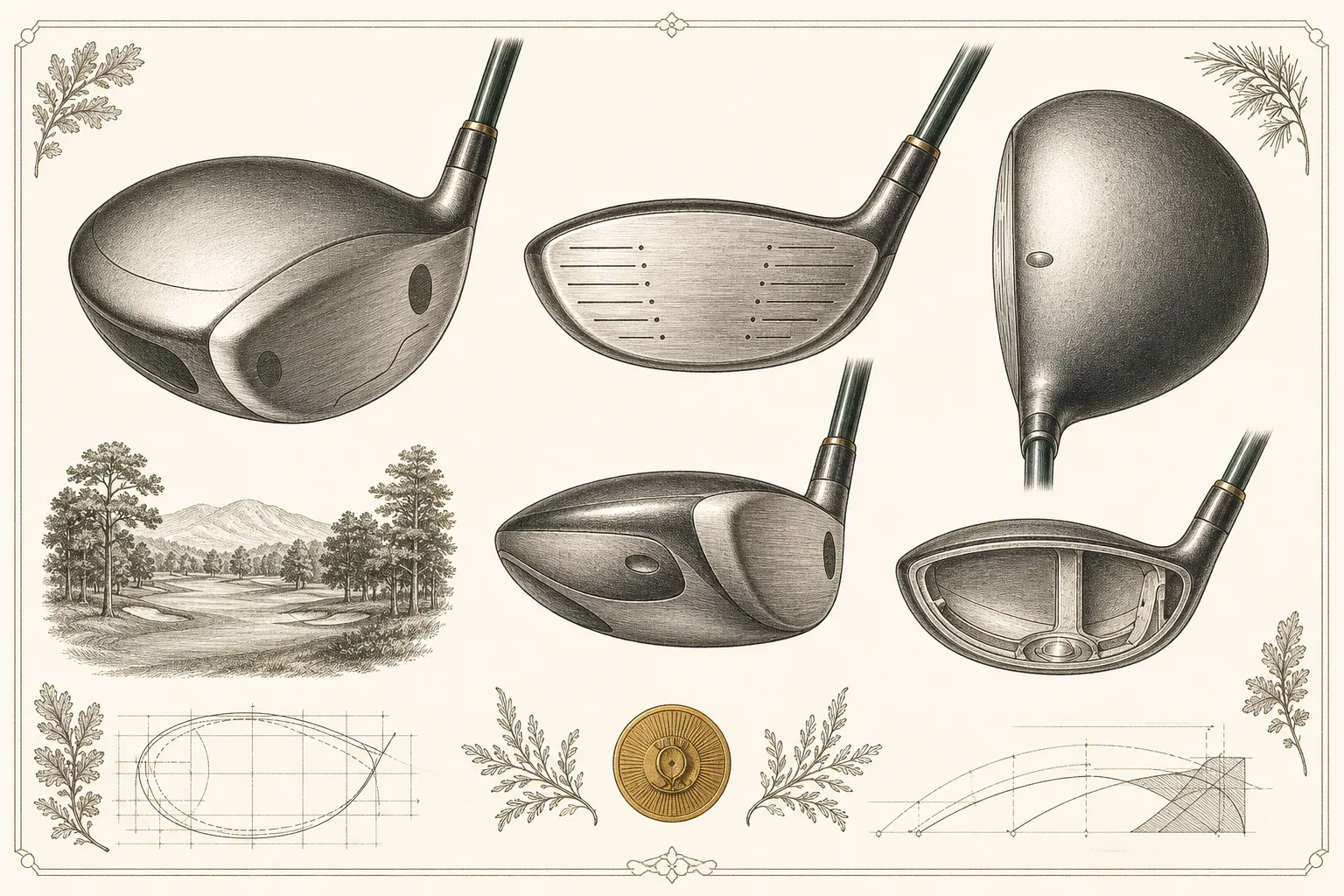
Callaway's 1998 answer to the question 'does a driver really need titanium?' The Steelhead went back to a ~205cc stainless-steel head but engineered it hard: the S2H2 (Short, Straight, Hollow Hosel) design ran the shaft tip down through the head to free up weight, a lightweight crown and a sole 'weight chip' pushed CG low, and the shape launched the ball easily for its size. It sat as the value flagship below the pricier titanium Berthas. Truthfully, the driver was the junior partner in the Steelhead story: the matched Steelhead (and Steelhead X-14) irons were the runaway hits of the family. The driver was a competent, popular, plentiful club and little more.
No cult, honestly stated: the Steelhead DRIVER was a high-volume, quickly-superseded stainless club with no tour legend, scarcity or collector demand. The affection attached to the Steelhead name belongs mostly to the Steelhead / Steelhead X-14 IRONS, which are the genuinely beloved part of the line. As a driver it is plentiful, cheap and valued for function, not collectibility.
A budget/beater or nostalgia driver today, not a performance choice. When new it fit value-minded golfers who wanted easy launch and didn't want to pay the titanium premium. A modern player wanting distance or forgiveness should skip it; a current used game-improvement 460cc driver dwarfs it for little more money.
Launched 1998 between Callaway's own titanium Great Big Bertha / Biggest Big Bertha above it and rivals like the Taylor Made Ti Bubble 2 and Cobra/Titleist offerings. It sat as the affordable stainless option and was refreshed as the Steelhead Plus and later the Steelhead III. Its real conceptual legacy runs through the beloved Steelhead X-14 irons more than the driver. Modern role-equivalent: a value-tier Big Bertha or Rogue driver.
Forgiving for a small late-90s head, ordinary in absolute terms. The S2H2 hollow hosel, lightweight crown and low sole weight genuinely lowered CG and made it easy to launch, and stainless perimeter mass helped stability at ~205cc. But 205cc is tiny by modern standards, so the sweet spot is small and off-center strikes lose real ball speed compared to any 460cc driver. A 5 means 'easy to hit for its size and era, unremarkable next to a modern head.'
Calibrated across the whole catalog — a tour blade scores low here on purpose; it means control, not ease.
Bargain-bin territory: clean private-party Steelhead drivers commonly sell for roughly $15-35 in 2026, sometimes bundled with a matching fairway. It does not appreciate and any store-graded/reconditioned price above this is warranty/grading markup, not collector value. Worth what it can still do off the tee for a casual player, nothing more.
Reading is one thing — hitting is another. Book a bay and see the numbers for yourself before you buy anywhere.
“A monster seller as the affordable steel alternative to pricey titanium. Historically important, performance-obsolete -- only worth it if it's nearly free.”
Callaway's 1998 answer to the question 'does a driver really need titanium?' The Steelhead went back to a ~205cc stainless-steel head but engineered it hard: the S2H2 (Short, Straight, Hollow Hosel) design ran the shaft tip down through the head to free up weight, a lightweight crown and a sole 'weight chip' pushed CG low, and the shape launched the ball easily for its size. It sat as the value flagship below the pricier titanium Berthas. Truthfully, the driver was the junior partner in the Steelhead story: the matched Steelhead (and Steelhead X-14) irons were the runaway hits of the family. The driver was a competent, popular, plentiful club and little more.
No cult, honestly stated: the Steelhead DRIVER was a high-volume, quickly-superseded stainless club with no tour legend, scarcity or collector demand. The affection attached to the Steelhead name belongs mostly to the Steelhead / Steelhead X-14 IRONS, which are the genuinely beloved part of the line. As a driver it is plentiful, cheap and valued for function, not collectibility.
A budget/beater or nostalgia driver today, not a performance choice. When new it fit value-minded golfers who wanted easy launch and didn't want to pay the titanium premium. A modern player wanting distance or forgiveness should skip it; a current used game-improvement 460cc driver dwarfs it for little more money.
Launched 1998 between Callaway's own titanium Great Big Bertha / Biggest Big Bertha above it and rivals like the Taylor Made Ti Bubble 2 and Cobra/Titleist offerings. It sat as the affordable stainless option and was refreshed as the Steelhead Plus and later the Steelhead III. Its real conceptual legacy runs through the beloved Steelhead X-14 irons more than the driver. Modern role-equivalent: a value-tier Big Bertha or Rogue driver.
Forgiving for a small late-90s head, ordinary in absolute terms. The S2H2 hollow hosel, lightweight crown and low sole weight genuinely lowered CG and made it easy to launch, and stainless perimeter mass helped stability at ~205cc. But 205cc is tiny by modern standards, so the sweet spot is small and off-center strikes lose real ball speed compared to any 460cc driver. A 5 means 'easy to hit for its size and era, unremarkable next to a modern head.'
Calibrated across the whole catalog — a tour blade scores low here on purpose; it means control, not ease.
Bargain-bin territory: clean private-party Steelhead drivers commonly sell for roughly $15-35 in 2026, sometimes bundled with a matching fairway. It does not appreciate and any store-graded/reconditioned price above this is warranty/grading markup, not collector value. Worth what it can still do off the tee for a casual player, nothing more.
Reading is one thing — hitting is another. Book a bay and see the numbers for yourself before you buy anywhere.