“The Pro variant tightens the 800's profile for a better player - a fair rung-2 earned climb off the base Hot Metal.”
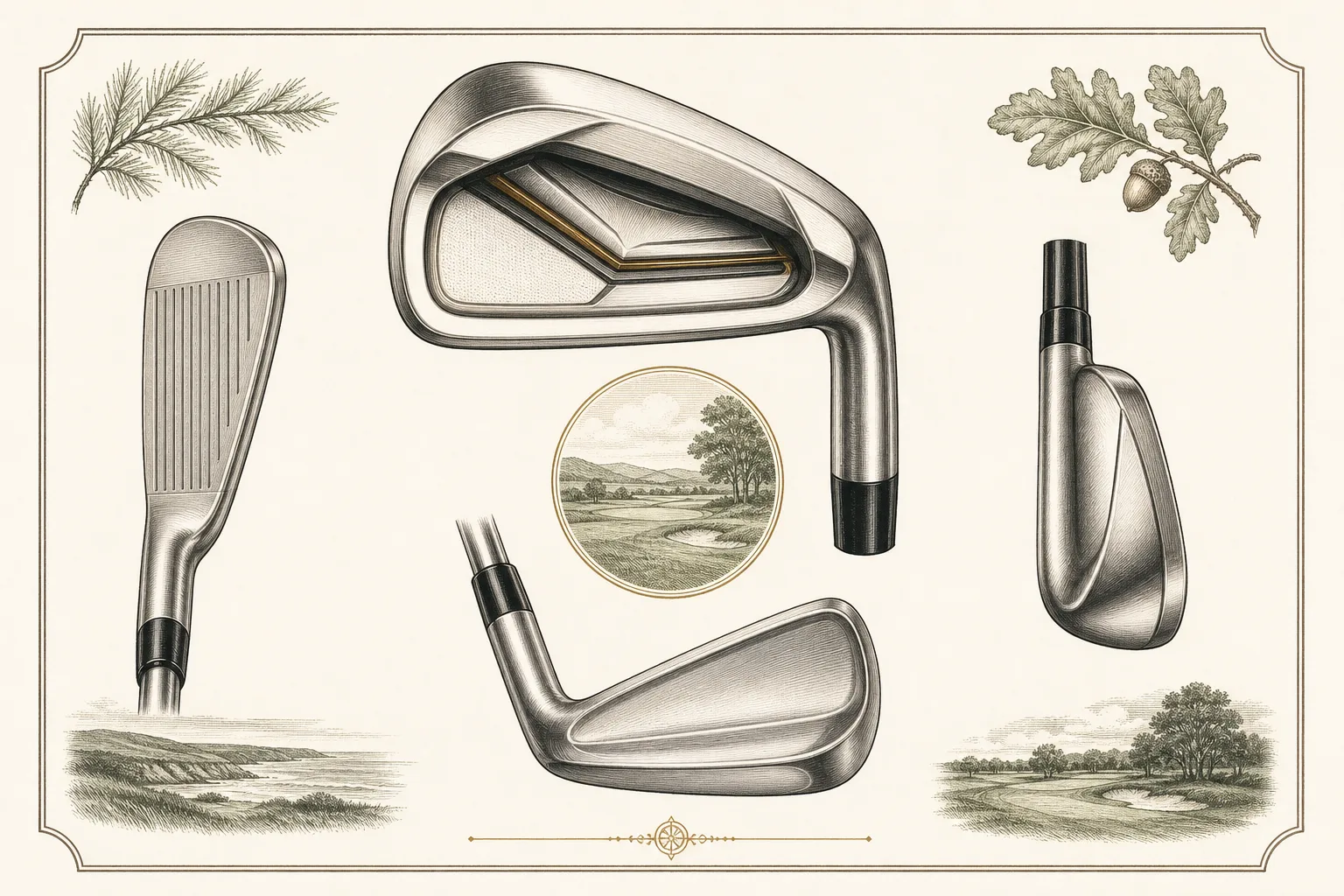
The JPX 800 Pro trimmed the base JPX 800's game-improvement bulk into a more refined shape — narrower sole, thinner top line, less offset — while keeping Mizuno's Grain Flow Forged construction and, at the time, the largest sweet spot ever found in a Grain Flow Forged Mizuno iron. It targeted the golfer who wanted forgiveness without looking like they were playing a game-improvement iron, splitting the difference between the base 800 and the more compact JPX 800 (standard) iron in the same family. Reviews were unusually warm: golfreview.com users rated it 5/5, and Golfalot's reviewer predicted it would 'develop into one of Mizuno's most fondly remembered' irons — high praise for a mid-tier release aimed at improving players rather than tour pros.
Consistently glowing contemporary reviews (a 5/5 user rating on golfreview.com, MyGolfSpy's in-depth 'Ultimate Review' treatment, and Golfalot's prediction it would be fondly remembered) suggest a quietly excellent iron that never became a headline model the way Mizuno's MP-series blades did. It doesn't carry the forum-mythology or hunted-set status of a true cult classic, but it holds a small, genuine reputation among players who tried it as an underrated forged game-improvement option.
Mid-handicappers (roughly 8-18) who want Mizuno's forged feel and a cleaner, less bulky look than a standard game-improvement iron, while still getting real forgiveness on a mis-hit. A high-handicapper wanting maximum forgiveness should look at the base JPX 800 iron instead; a scratch player wanting full workability would find even this 'Pro' shape more forgiving-oriented than a true players' cavity like the MP-series.
Sat between the game-improvement base JPX 800 iron and Mizuno's more traditional MP-series players' irons in the 2012 lineup, competing against similarly positioned 'players-distance' irons like Titleist's AP2/AP1 line and TaylorMade's Tour Preferred CB. Replaced by the JPX 825 Pro in 2013, continuing the JPX line's rapid iteration.
Forgiving for a compact, forged players-cavity shape — reviewers specifically noted distances stayed long and consistent even without a perfectly flush strike, aided by its unusually large (for a forged Mizuno) sweet spot. It sits well below a true game-improvement iron like the base JPX 800 or JPX 825 in absolute forgiveness, since the head was deliberately narrowed and de-offset relative to those models.
Calibrated across the whole catalog — a tour blade scores low here on purpose; it means control, not ease.
Realistic 2026 private-party value for a complete set runs roughly $150-$250 depending on shaft and condition — holding up somewhat better than a typical 13-year-old game-improvement iron, consistent with its stronger-than-average contemporary reputation, though still far below premium/boutique iron pricing.
Reading is one thing — hitting is another. Book a bay and see the numbers for yourself before you buy anywhere.