“Smaller-profile, thinner-topline version of the X-14 for better players wanting workability and a flatter flight. Same VFT tech in a less forgiving package; buy only if you strike it consistently, otherwise the standard X-14 is smarter.”
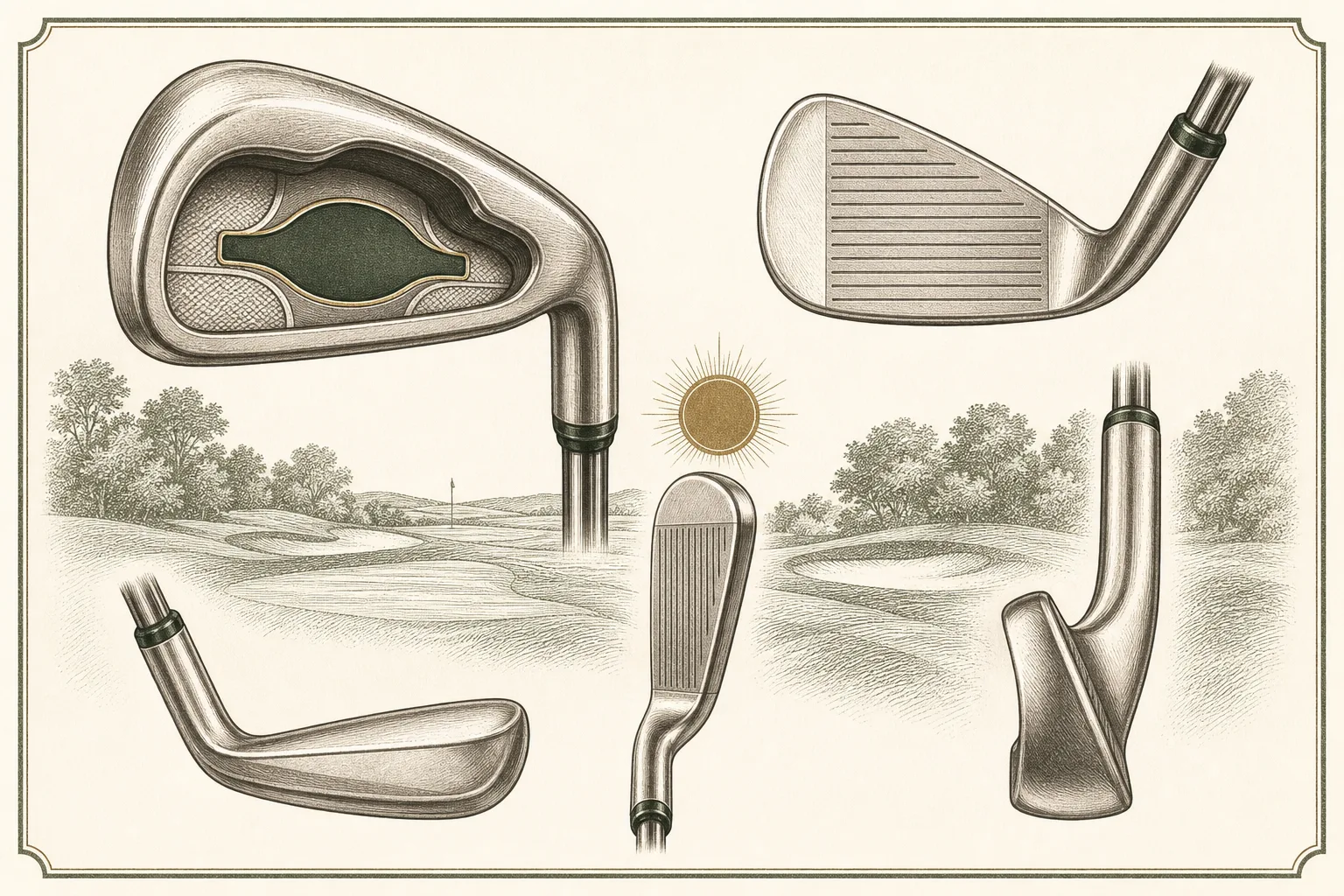
The X-14 Pro Series took Callaway's breakout Steelhead X-14 - reportedly the quickest-selling iron in golf history at the time - and reshaped it for better ball-strikers: a thinner topline, higher toe, shorter blade length and reduced offset than the standard X-14, aimed at players who wanted the X-14's Variable Face Thickness forgiveness in a less bulky, more workable package. VFT was Callaway's first use of adjusting face thickness by zone to raise or lower CG for trajectory control - higher launch in the long irons, more spin and control in the short irons - and it debuted with the standard X-14 before carrying into this Pro Series variant. Two decades on, enthusiast forums still discuss the X-14 platform with real affection, an unusually long half-life for a late-1990s cast cavity iron.
The X-14 platform has a quietly enduring following well past its era: a MyGolfSpy Forum thread titled 'Oldie but Still Relevant Goodie? Callaway X14 Steelhead Iron Review: 20 years later' revisits it approvingly, golfreview.com shows a 4.1/5 average across 184 user reviews, and a dedicated GolfWRX 'Previous Model Year' thread keeps the conversation alive. That's a real, sourced undercurrent of appreciation - short of full cult-classic reverence, but more than a forgotten commodity set.
Better ball-strikers and low-to-mid handicaps who liked the X-14's forgiveness and distance but wanted a cleaner look and more workability at address than the standard model offered. A high handicapper chasing maximum forgiveness should choose the standard X-14 instead, which carries more offset and a wider, more stable sole.
Released in 1999 as the higher-performance sibling to the standard X-14 in Callaway's iron lineup, competing with Titleist's DCI, Ping's ISI/i3, and TaylorMade's Burner irons of the same period. It was succeeded by the Steelhead X-16 and X-16 Pro Series in 2002, which trimmed offset and blade length further. Its VFT concept is a direct ancestor of the face-thickness tuning used throughout Callaway's modern iron lines.
Less forgiving than the standard X-14 by design - reduced offset, a thinner topline and shorter blade length trade away some of the base model's game-improvement bulk for workability - but it retains the same Variable Face Thickness cavity that made the whole X-14 family notably forgiving for its late-1990s cast-iron generation. It sits as a players-distance iron: more forgiving than a blade, less than a dedicated max-GI set.
Calibrated across the whole catalog — a tour blade scores low here on purpose; it means control, not ease.
Complete sets sell cheaply given their age - eBay listings for X-14 Pro Series sets in 2026 commonly run $100-$200 depending on shaft (Rifle/steel commanding a bit more) and condition, with individual clubs going for $15-$40. It's an affordable way into a genuinely well-regarded late-1990s players-distance iron rather than a scarce collectible.
Reading is one thing — hitting is another. Book a bay and see the numbers for yourself before you buy anywhere.
“Smaller-profile, thinner-topline version of the X-14 for better players wanting workability and a flatter flight. Same VFT tech in a less forgiving package; buy only if you strike it consistently, otherwise the standard X-14 is smarter.”
The X-14 Pro Series took Callaway's breakout Steelhead X-14 - reportedly the quickest-selling iron in golf history at the time - and reshaped it for better ball-strikers: a thinner topline, higher toe, shorter blade length and reduced offset than the standard X-14, aimed at players who wanted the X-14's Variable Face Thickness forgiveness in a less bulky, more workable package. VFT was Callaway's first use of adjusting face thickness by zone to raise or lower CG for trajectory control - higher launch in the long irons, more spin and control in the short irons - and it debuted with the standard X-14 before carrying into this Pro Series variant. Two decades on, enthusiast forums still discuss the X-14 platform with real affection, an unusually long half-life for a late-1990s cast cavity iron.
The X-14 platform has a quietly enduring following well past its era: a MyGolfSpy Forum thread titled 'Oldie but Still Relevant Goodie? Callaway X14 Steelhead Iron Review: 20 years later' revisits it approvingly, golfreview.com shows a 4.1/5 average across 184 user reviews, and a dedicated GolfWRX 'Previous Model Year' thread keeps the conversation alive. That's a real, sourced undercurrent of appreciation - short of full cult-classic reverence, but more than a forgotten commodity set.
Better ball-strikers and low-to-mid handicaps who liked the X-14's forgiveness and distance but wanted a cleaner look and more workability at address than the standard model offered. A high handicapper chasing maximum forgiveness should choose the standard X-14 instead, which carries more offset and a wider, more stable sole.
Released in 1999 as the higher-performance sibling to the standard X-14 in Callaway's iron lineup, competing with Titleist's DCI, Ping's ISI/i3, and TaylorMade's Burner irons of the same period. It was succeeded by the Steelhead X-16 and X-16 Pro Series in 2002, which trimmed offset and blade length further. Its VFT concept is a direct ancestor of the face-thickness tuning used throughout Callaway's modern iron lines.
Less forgiving than the standard X-14 by design - reduced offset, a thinner topline and shorter blade length trade away some of the base model's game-improvement bulk for workability - but it retains the same Variable Face Thickness cavity that made the whole X-14 family notably forgiving for its late-1990s cast-iron generation. It sits as a players-distance iron: more forgiving than a blade, less than a dedicated max-GI set.
Calibrated across the whole catalog — a tour blade scores low here on purpose; it means control, not ease.
Complete sets sell cheaply given their age - eBay listings for X-14 Pro Series sets in 2026 commonly run $100-$200 depending on shaft (Rifle/steel commanding a bit more) and condition, with individual clubs going for $15-$40. It's an affordable way into a genuinely well-regarded late-1990s players-distance iron rather than a scarce collectible.
Reading is one thing — hitting is another. Book a bay and see the numbers for yourself before you buy anywhere.