Hit 10 times in The Clubhouse
“High-toe, full-face grooves (scoring lines run edge-to-edge on the 56-64 deg lofts) for open-face flop shots; a players' full-face, not a super-GI one. Steel-dominant identity club for a member with short-game creativity.”
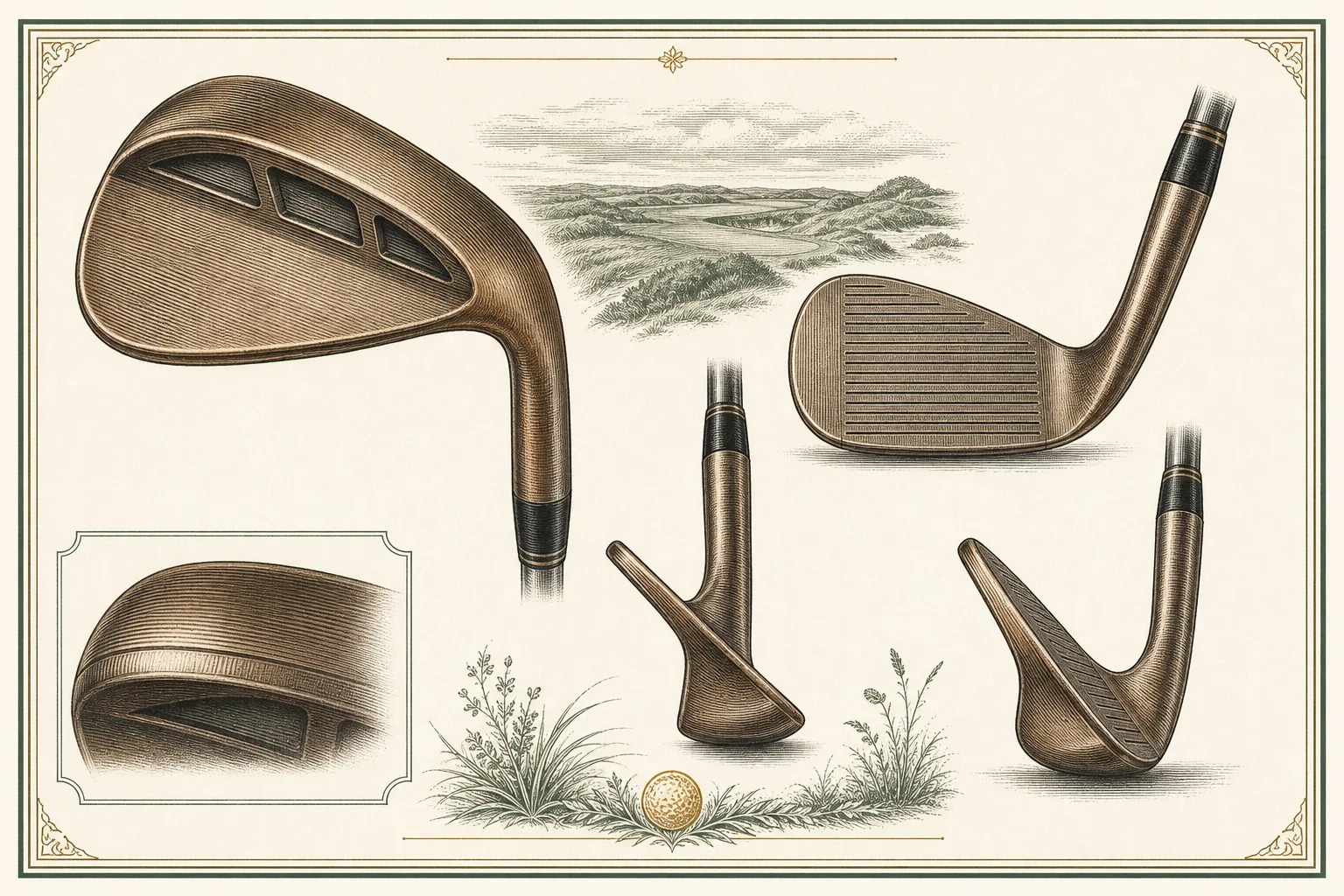
The 2018 Hi-Toe was TaylorMade's first full-face wedge: scoring lines run heel-to-toe on the 56-64 degree lofts (50-54s keep a conventional partial pattern) so an open-faced flop or bunker shot still gets spin instead of catching a blank patch of metal. It's milled from soft 8620 carbon steel with a copper/oil PVD finish reviewers compared to Vokey's well-liked 2009 oil-can finish, and the shaft sits roughly half an inch deeper in the hosel to help centralize the CG. Tour pickup was immediate: Dustin Johnson, Jon Rahm, Rory McIlroy and Justin Rose were all gaming it within months of release, unusually fast adoption for a wedge without a prior Vokey-level track record. It set up the Hi-Toe 2/3/4 generations that followed roughly every two years since.
Genuine, well-documented tour pickup — four top-15 players within its first season — is strong evidence of real merit rather than manufactured hype, but TaylorMade's own two-year wedge refresh cycle immediately began superseding it, so it never got the chance to become a hunted discontinued design the way a longer-lived model would. It's a well-regarded first-generation entry in an ongoing, still-current product line, not (yet) a cult classic.
Best for better players who open the face for flop and bunker shots and want spin even off-center on the full-face lofts. A high-handicapper who plays mostly square-faced full shots gains less from the heel-to-toe grooves and would likely be better served by a wider-sole game-improvement wedge such as a Cleveland CBX.
Launched into a wedge market where Titleist's Vokey SM7 was the default tour choice; the full-face groove concept was novel enough that Vokey, Cleveland (RTX ZipCore) and others introduced their own full-face/high-toe variants within a couple of years. TaylorMade replaced it with Hi-Toe 2 (RAW) in 2021, then Hi-Toe 3 (2022) and Hi-Toe 4 (2024) — a steady roughly-two-year cadence.
The full-face grooves genuinely add forgiveness and spin consistency versus a standard-groove wedge when the face is opened or the strike drifts toward the toe, which is meaningfully more forgiving than a traditional players' wedge. It remains a compact, tour-oriented head shape rather than a wide-sole game-improvement wedge, so the ceiling on forgiveness is capped by that shape.
Calibrated across the whole catalog — a tour blade scores low here on purpose; it means control, not ease.
Clean used copies run roughly $60-$100 in 2026 — cheap for a wedge with real tour pedigree, mainly because three later Hi-Toe generations have since taken over shelf space and buyer attention.
Reading is one thing — hitting is another. Book a bay and see the numbers for yourself before you buy anywhere.
Hit 10 times in The Clubhouse
“High-toe, full-face grooves (scoring lines run edge-to-edge on the 56-64 deg lofts) for open-face flop shots; a players' full-face, not a super-GI one. Steel-dominant identity club for a member with short-game creativity.”
The 2018 Hi-Toe was TaylorMade's first full-face wedge: scoring lines run heel-to-toe on the 56-64 degree lofts (50-54s keep a conventional partial pattern) so an open-faced flop or bunker shot still gets spin instead of catching a blank patch of metal. It's milled from soft 8620 carbon steel with a copper/oil PVD finish reviewers compared to Vokey's well-liked 2009 oil-can finish, and the shaft sits roughly half an inch deeper in the hosel to help centralize the CG. Tour pickup was immediate: Dustin Johnson, Jon Rahm, Rory McIlroy and Justin Rose were all gaming it within months of release, unusually fast adoption for a wedge without a prior Vokey-level track record. It set up the Hi-Toe 2/3/4 generations that followed roughly every two years since.
Genuine, well-documented tour pickup — four top-15 players within its first season — is strong evidence of real merit rather than manufactured hype, but TaylorMade's own two-year wedge refresh cycle immediately began superseding it, so it never got the chance to become a hunted discontinued design the way a longer-lived model would. It's a well-regarded first-generation entry in an ongoing, still-current product line, not (yet) a cult classic.
Best for better players who open the face for flop and bunker shots and want spin even off-center on the full-face lofts. A high-handicapper who plays mostly square-faced full shots gains less from the heel-to-toe grooves and would likely be better served by a wider-sole game-improvement wedge such as a Cleveland CBX.
Launched into a wedge market where Titleist's Vokey SM7 was the default tour choice; the full-face groove concept was novel enough that Vokey, Cleveland (RTX ZipCore) and others introduced their own full-face/high-toe variants within a couple of years. TaylorMade replaced it with Hi-Toe 2 (RAW) in 2021, then Hi-Toe 3 (2022) and Hi-Toe 4 (2024) — a steady roughly-two-year cadence.
The full-face grooves genuinely add forgiveness and spin consistency versus a standard-groove wedge when the face is opened or the strike drifts toward the toe, which is meaningfully more forgiving than a traditional players' wedge. It remains a compact, tour-oriented head shape rather than a wide-sole game-improvement wedge, so the ceiling on forgiveness is capped by that shape.
Calibrated across the whole catalog — a tour blade scores low here on purpose; it means control, not ease.
Clean used copies run roughly $60-$100 in 2026 — cheap for a wedge with real tour pedigree, mainly because three later Hi-Toe generations have since taken over shelf space and buyer attention.
Reading is one thing — hitting is another. Book a bay and see the numbers for yourself before you buy anywhere.