“A rung-2 benchmark - soft, controllable, and a common long-term home for skilled players. Exactly the set to reward a proven, repeatable strike.”
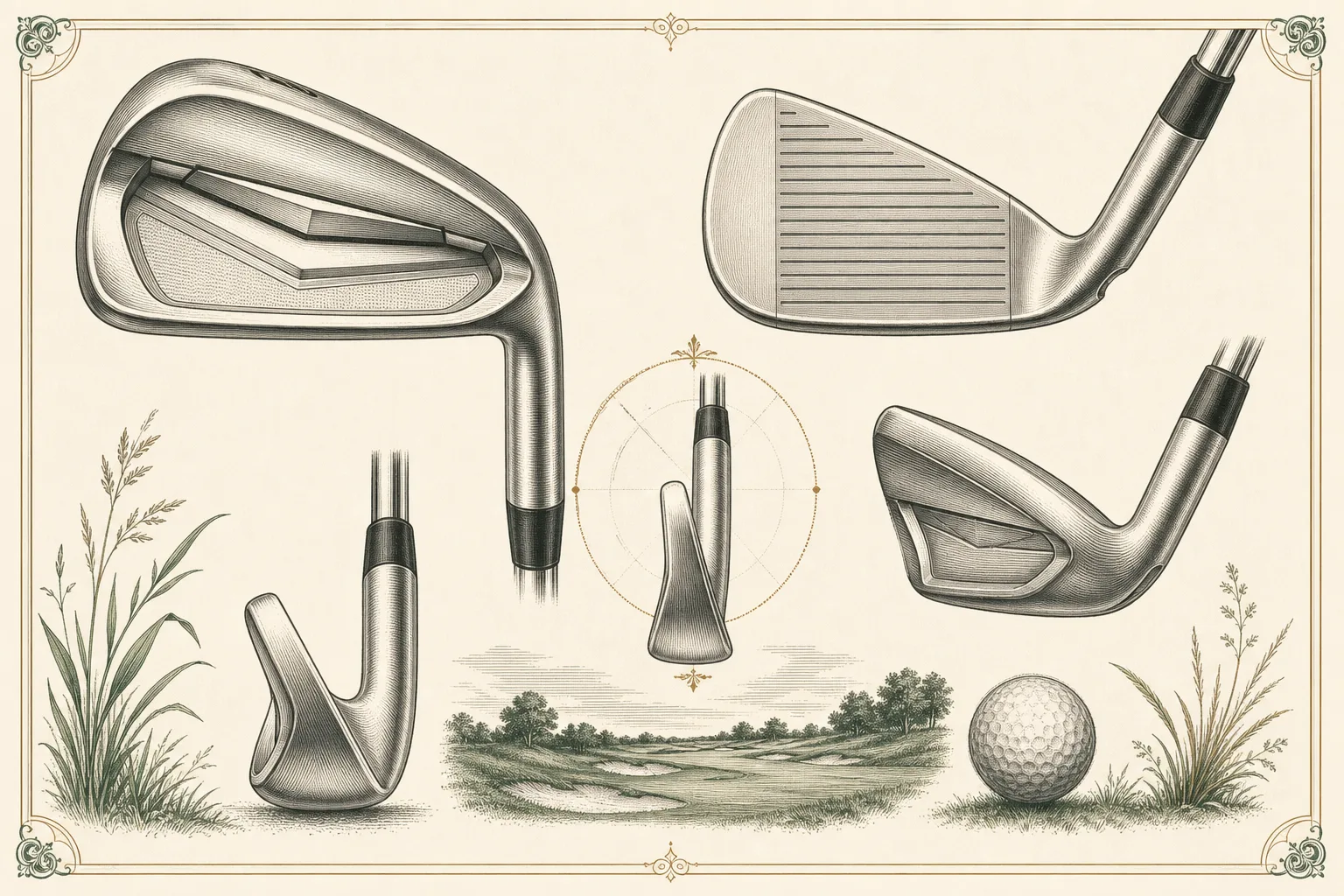
Released July 2018 as the successor to the i200, the i210 is Ping's players cavity-back built around a single idea taken further: a bigger, softer elastomer insert filling the sole cavity. The custom-tuning-port (CTP) elastomer was made 30% larger and roughly 50% softer than the i200's, with about 25% more contact area against the back of the face, so impact feels dense and muted rather than clicky, while the perimeter-cast 431 stainless body keeps mis-hits stable. It sits between the smaller iBlade and the hollow i500/i525 in Ping's line: a thicker topline and wider sole than Ping's pure better-player irons, geared for scratch through mid-handicap. Ping extended Glide 2.0 milled grooves to the scoring irons for up to 400 extra rpm of control from rough.
The i210's identity is its unusually long, high-profile tour life: Viktor Hovland kept the 2018 i210 in play for most of eight seasons, winning multiple PGA Tour events and a FedExCup with a mid-handicap-friendly players cavity while newer models came and went, a story covered by GolfWRX, Golf Monthly and Golf.com. It is repeatedly cited as one of the most feel-respected players cavities of its generation, but it sold in volume as a mainstream Ping flagship rather than being a scarce collector piece, so 'notable' rather than cult classic.
Best for low-to-mid handicaps (roughly 0-14) with repeatable contact who prioritize feel, control and turf interaction over maximum distance. The reward is soft impact, high spin and a straight, workable flight. High-handicaps chasing forgiveness or extra yards should look at the G425/G430; distance-seekers at the i525.
At launch it competed with the Titleist T-series/AP2, TaylorMade P790/P770 and Mizuno JPX/MP players irons of 2018-2019. It replaced the i200 and slots below the hollow i500, and its design brief carries forward into the i230 (2023). The i210 also donated its geometry to the G710, which is essentially a hollow-body max-distance version of the same head.
Forgiving for a players cavity-back, not in absolute terms. The perimeter-weighted 431 stainless body, wider-than-iBlade sole and low CG make it noticeably more stable and easier to launch than a blade or compact players iron, which is why Ping pitches it from scratch down to mid-handicap. But it is still a compact head with a thin-ish sole and modest offset; a genuine game-improvement iron like the G-series is materially more forgiving on toe and thin strikes. A 6 places it above the Blueprint/i59 players irons and well below the G410/G425.
Calibrated across the whole catalog — a tour blade scores low here on purpose; it means control, not ease.
A complete steel 4-PW or 5-PW set realistically trades around $400-700 private-party in 2026 (original set MSRP ~$1,200), holding value well thanks to durable demand from the Hovland halo and its reputation as a feel benchmark. Dealer/graded listings (SidelineSwap, 2nd Swing) run higher and reflect warrantied retail, not private-party value. Premium shafts (Project X, Dynamic Gold Tour Issue) and clean grooves push it up; worn Glide grooves and Power/Retro-spec bends narrow the buyer pool.
The Legends Rack
Famously soft for a cast iron and beloved by every fitter who's ever bent one. Who'll love it: the better-player crowd who want modern playability with feel.
Who it suitsBetter players
Reading is one thing — hitting is another. Book a bay and see the numbers for yourself before you buy anywhere.
“A rung-2 benchmark - soft, controllable, and a common long-term home for skilled players. Exactly the set to reward a proven, repeatable strike.”
Released July 2018 as the successor to the i200, the i210 is Ping's players cavity-back built around a single idea taken further: a bigger, softer elastomer insert filling the sole cavity. The custom-tuning-port (CTP) elastomer was made 30% larger and roughly 50% softer than the i200's, with about 25% more contact area against the back of the face, so impact feels dense and muted rather than clicky, while the perimeter-cast 431 stainless body keeps mis-hits stable. It sits between the smaller iBlade and the hollow i500/i525 in Ping's line: a thicker topline and wider sole than Ping's pure better-player irons, geared for scratch through mid-handicap. Ping extended Glide 2.0 milled grooves to the scoring irons for up to 400 extra rpm of control from rough.
The i210's identity is its unusually long, high-profile tour life: Viktor Hovland kept the 2018 i210 in play for most of eight seasons, winning multiple PGA Tour events and a FedExCup with a mid-handicap-friendly players cavity while newer models came and went, a story covered by GolfWRX, Golf Monthly and Golf.com. It is repeatedly cited as one of the most feel-respected players cavities of its generation, but it sold in volume as a mainstream Ping flagship rather than being a scarce collector piece, so 'notable' rather than cult classic.
Best for low-to-mid handicaps (roughly 0-14) with repeatable contact who prioritize feel, control and turf interaction over maximum distance. The reward is soft impact, high spin and a straight, workable flight. High-handicaps chasing forgiveness or extra yards should look at the G425/G430; distance-seekers at the i525.
At launch it competed with the Titleist T-series/AP2, TaylorMade P790/P770 and Mizuno JPX/MP players irons of 2018-2019. It replaced the i200 and slots below the hollow i500, and its design brief carries forward into the i230 (2023). The i210 also donated its geometry to the G710, which is essentially a hollow-body max-distance version of the same head.
Forgiving for a players cavity-back, not in absolute terms. The perimeter-weighted 431 stainless body, wider-than-iBlade sole and low CG make it noticeably more stable and easier to launch than a blade or compact players iron, which is why Ping pitches it from scratch down to mid-handicap. But it is still a compact head with a thin-ish sole and modest offset; a genuine game-improvement iron like the G-series is materially more forgiving on toe and thin strikes. A 6 places it above the Blueprint/i59 players irons and well below the G410/G425.
Calibrated across the whole catalog — a tour blade scores low here on purpose; it means control, not ease.
A complete steel 4-PW or 5-PW set realistically trades around $400-700 private-party in 2026 (original set MSRP ~$1,200), holding value well thanks to durable demand from the Hovland halo and its reputation as a feel benchmark. Dealer/graded listings (SidelineSwap, 2nd Swing) run higher and reflect warrantied retail, not private-party value. Premium shafts (Project X, Dynamic Gold Tour Issue) and clean grooves push it up; worn Glide grooves and Power/Retro-spec bends narrow the buyer pool.
The Legends Rack
Famously soft for a cast iron and beloved by every fitter who's ever bent one. Who'll love it: the better-player crowd who want modern playability with feel.
Who it suitsBetter players
Reading is one thing — hitting is another. Book a bay and see the numbers for yourself before you buy anywhere.