“Callaway's first ultra-premium 'Epic' cavity iron: a fast Exo-Cage face and a moderate 30-degree 7-iron for players who want distance without the strongest lofts. A solid, pricey mid-handicap fit.”
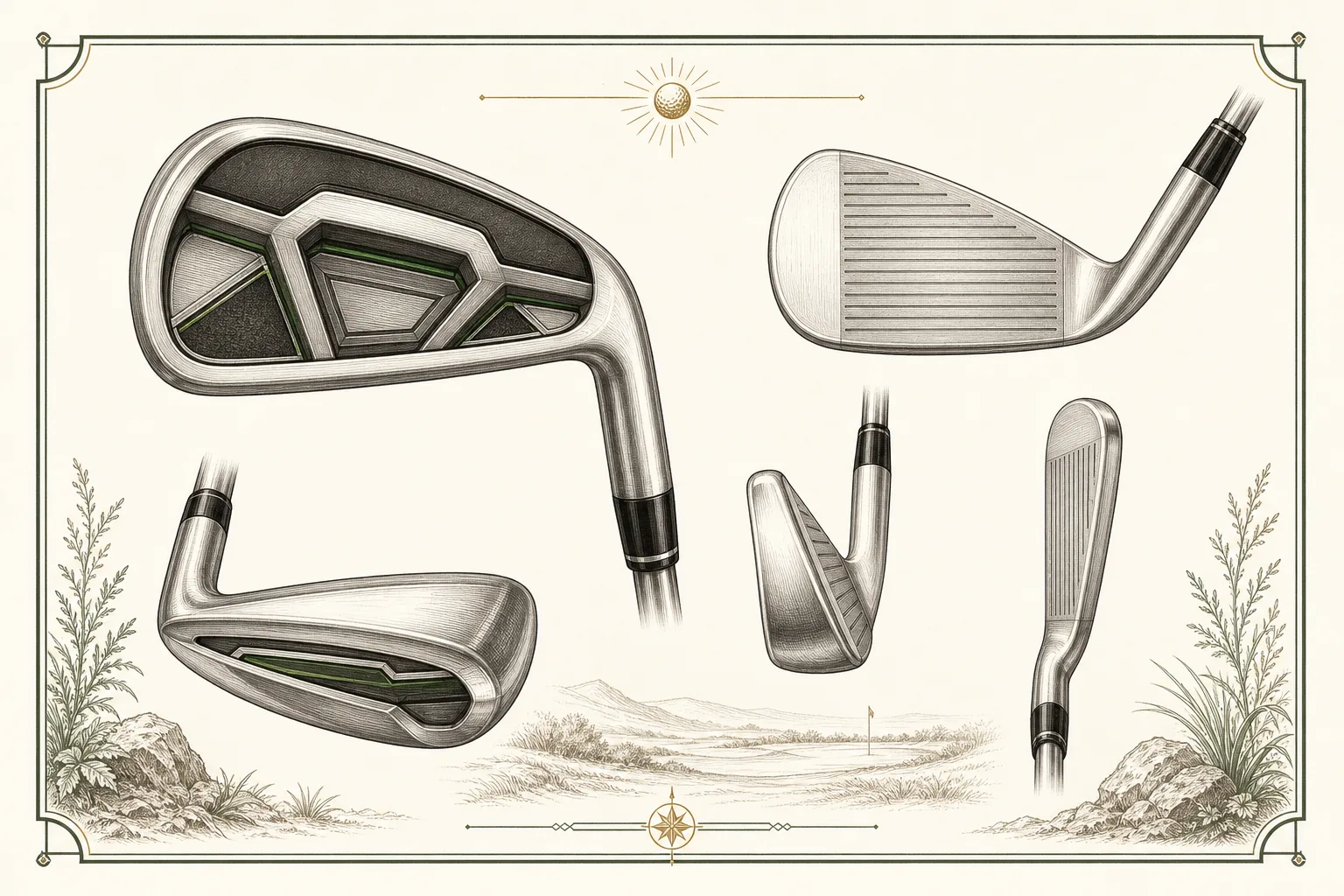
The 2017 Epic iron was Callaway's first serious push into the ultra-premium iron market, priced well above its mainstream cavity-backs and built around 'Exo-Cage' construction: internal stiffening pieces connecting the topline directly to the sole, freeing the face itself to flex more at impact ('energy lensing') for extra ball speed, backed by 360 Face Cup tech and Metal Injection Molded tungsten weighting for CG control. Sold alongside a cleaner-shaped Epic Pro sibling with less offset and a thinner topline, the standard Epic carried a moderate 30-degree 7-iron — strong by classic standards but notably more conservative than the 26-27 degree 7-irons common in rival 'max distance' sets of the same year, positioning it as fast without chasing headline loft-jacking numbers.
Reviewed at the time as a genuine step forward for Callaway in the premium iron category — testers found it consistent even on mis-hits, 'roughly a club longer' than comparable irons, and hard to hit more than 10 yards short of normal distance — but it did not spawn lasting forum reverence or a collector market; it was one strong generation in Callaway's now-annual premium iron cadence, since followed by Rogue, Apex, and Paradym lines.
Mid handicappers wanting genuine distance without committing to a maximally strong-lofted, oversized head — a 30-degree 7-iron is a real middle ground between classic and 'jacked' modern lofts. Better players wanting more workability and a thinner topline were steered toward the Epic Pro sibling instead; very high handicappers chasing maximum forgiveness and easiest possible launch are better served by a dedicated GI iron.
Launched in a premium-iron arms race that included TaylorMade's M1/M2 irons and Titleist's AP1/AP3 of the same period, all leaning on speed-face technology borrowed from driver R&D. Callaway sold it at a genuine premium price point ($1,399 for the set per Callaway's own listings), reflecting its position as Callaway's flagship iron rather than a mainstream offering, and it was directly followed by the Rogue iron line in 2018.
Genuinely forgiving for a premium players-distance iron: the Exo-Cage/tungsten weighting system and flexing face held distance impressively well on off-center strikes in testing. It is not a true super-game-improvement score because the head still carries a more compact, premium-market shape and offset than a dedicated max-forgiveness iron aimed at high handicappers.
Calibrated across the whole catalog — a tour blade scores low here on purpose; it means control, not ease.
A premium set from a two-generation-old iron platform: realistic 2026 private-party pricing for a clean steel 4-PW set runs roughly $450-$700 depending on shaft (Project X LZ 95 commands more than generic steel) and condition, with graphite-shafted (UST Mamiya Recoil) sets often at the lower end of that range for slower-swing buyers.
Reading is one thing — hitting is another. Book a bay and see the numbers for yourself before you buy anywhere.
“Callaway's first ultra-premium 'Epic' cavity iron: a fast Exo-Cage face and a moderate 30-degree 7-iron for players who want distance without the strongest lofts. A solid, pricey mid-handicap fit.”
The 2017 Epic iron was Callaway's first serious push into the ultra-premium iron market, priced well above its mainstream cavity-backs and built around 'Exo-Cage' construction: internal stiffening pieces connecting the topline directly to the sole, freeing the face itself to flex more at impact ('energy lensing') for extra ball speed, backed by 360 Face Cup tech and Metal Injection Molded tungsten weighting for CG control. Sold alongside a cleaner-shaped Epic Pro sibling with less offset and a thinner topline, the standard Epic carried a moderate 30-degree 7-iron — strong by classic standards but notably more conservative than the 26-27 degree 7-irons common in rival 'max distance' sets of the same year, positioning it as fast without chasing headline loft-jacking numbers.
Reviewed at the time as a genuine step forward for Callaway in the premium iron category — testers found it consistent even on mis-hits, 'roughly a club longer' than comparable irons, and hard to hit more than 10 yards short of normal distance — but it did not spawn lasting forum reverence or a collector market; it was one strong generation in Callaway's now-annual premium iron cadence, since followed by Rogue, Apex, and Paradym lines.
Mid handicappers wanting genuine distance without committing to a maximally strong-lofted, oversized head — a 30-degree 7-iron is a real middle ground between classic and 'jacked' modern lofts. Better players wanting more workability and a thinner topline were steered toward the Epic Pro sibling instead; very high handicappers chasing maximum forgiveness and easiest possible launch are better served by a dedicated GI iron.
Launched in a premium-iron arms race that included TaylorMade's M1/M2 irons and Titleist's AP1/AP3 of the same period, all leaning on speed-face technology borrowed from driver R&D. Callaway sold it at a genuine premium price point ($1,399 for the set per Callaway's own listings), reflecting its position as Callaway's flagship iron rather than a mainstream offering, and it was directly followed by the Rogue iron line in 2018.
Genuinely forgiving for a premium players-distance iron: the Exo-Cage/tungsten weighting system and flexing face held distance impressively well on off-center strikes in testing. It is not a true super-game-improvement score because the head still carries a more compact, premium-market shape and offset than a dedicated max-forgiveness iron aimed at high handicappers.
Calibrated across the whole catalog — a tour blade scores low here on purpose; it means control, not ease.
A premium set from a two-generation-old iron platform: realistic 2026 private-party pricing for a clean steel 4-PW set runs roughly $450-$700 depending on shaft (Project X LZ 95 commands more than generic steel) and condition, with graphite-shafted (UST Mamiya Recoil) sets often at the lower end of that range for slower-swing buyers.
Reading is one thing — hitting is another. Book a bay and see the numbers for yourself before you buy anywhere.