“A legendary low-profile fairway with a V-shaped sole that glides through turf; still name-dropped by long-time players. Old but a genuinely easy-to-hit rung-1 wood, especially the 7- and 9-woods.”
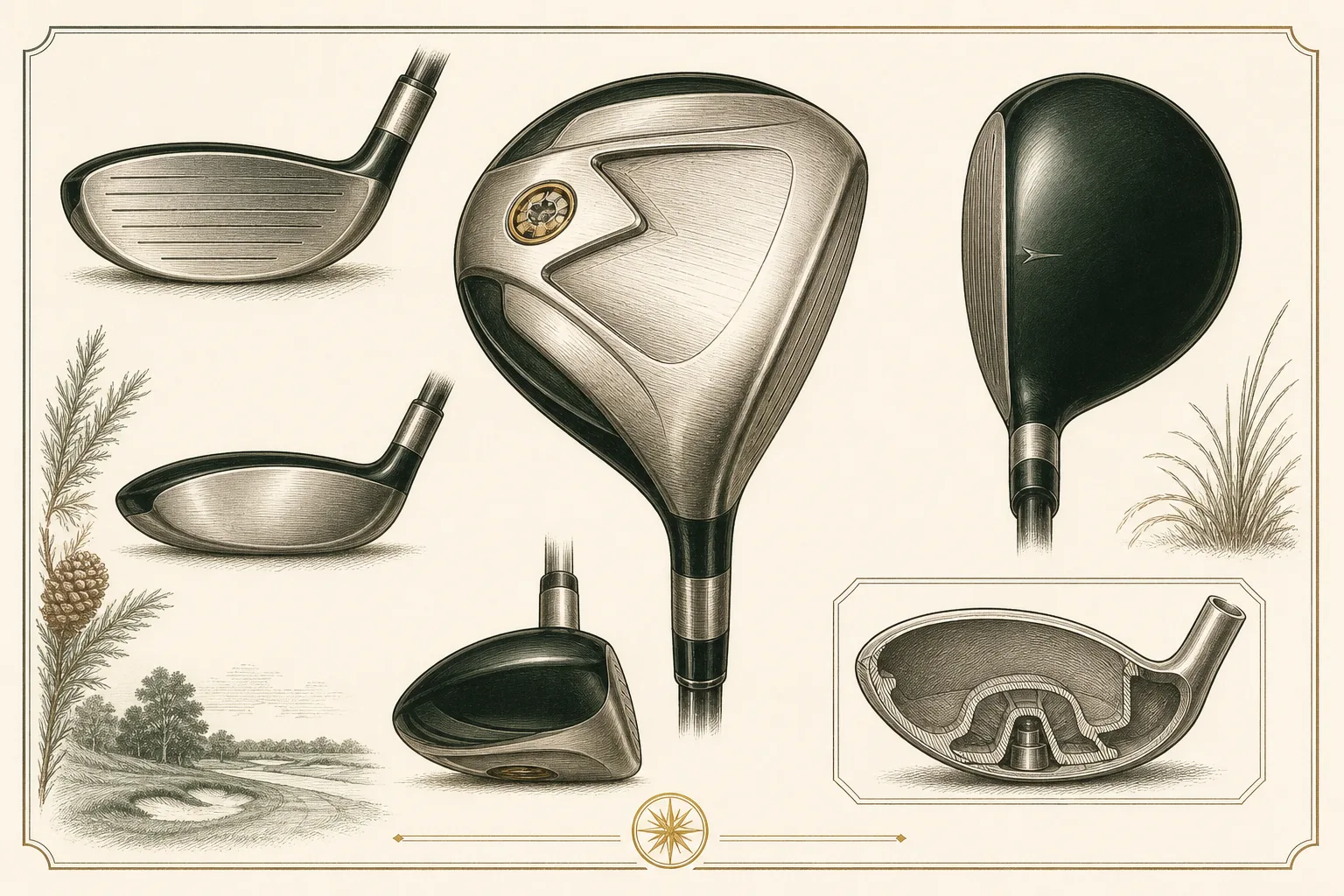
TaylorMade's 2003 fairway wood built around a V-shaped sole with raised heel and toe rails, a shape designed to cut the club's ground contact area so it could skim through thick rough and tight lies without snagging the way a flatter, fuller sole would. The V-sole reduced turf drag while a shallower face profile promoted a higher launch and more spin for carry and stopping power. It shipped in a range of lofts from 15 to 24 degrees, in both a stock TaylorMade M.A.S.2 graphite shaft and steel options, and quickly picked up adopters beyond TaylorMade's own tour staff for its rough-clearing turf interaction.
TaylorMade itself revived the V Steel name and sole concept decades later for its SIM-era fairway woods, and its own retrospective content ('The Rebirth of V Steel') frames the original as having built a genuine following that TaylorMade wanted to recapture. Independently, GolfWRX included it on a published list of the 'Top 10 modern classic fairway woods of all time,' and it holds a strong 4.3-out-of-5 rating across 121 user reviews on golfreview.com years after being discontinued — a real, sourced, multi-outlet reputation rather than nostalgia from one source.
Golfers who struggle with fat contact or frequently play from rough and tight lies, thanks to the V-sole's turf-glide design — a strong fit for mid-to-high handicaps wanting a workable, forgiving-from-bad-lies fairway wood at a low price point today. A player chasing modern ball speed and forgiveness numbers should expect a real distance and consistency gap versus a current fairway wood.
Launched in 2003 against fairway-wood rivals like Callaway's Big Bertha Fairway and Titleist's 906F-era metals, in the last generation before adjustable hosels and sole weights became standard. TaylorMade revived the V Steel name and sole geometry for its SIM (2020) and subsequent fairway wood lines, an unusually direct acknowledgment that the original design had lasting value; a modern equivalent is the current TaylorMade Qi-series fairway wood, which still uses V-Steel-inspired sole rails.
Forgiving for a 2003 fairway wood of its size: perimeter-friendly weighting and the shallow face help get the ball airborne, and the V-sole's reduced contact area is specifically engineered to prevent digging on fat strikes from the turf or rough. It is not a modern max-forgiveness fairway wood — the head is compact by today's standards and offers less MOI than a current game-improvement metal — but it earns real credit for turf forgiveness relative to its era.
Calibrated across the whole catalog — a tour blade scores low here on purpose; it means control, not ease.
Original retail was about $199.99. In 2026 it is inexpensive and plentiful: individual clubs on the used market (2nd Swing and similar retailers) commonly sell for roughly $40-60, with rougher-condition private-party listings likely lower still, around $25-40. It is cheap because it is old and superseded, not because demand has dried up — its steady user ratings and TaylorMade's own revival of the concept argue for real, lasting design merit despite the low price.
The Legends Rack
The connoisseur's fairway wood. That scooped V-shaped sole glides off any turf, and tour players kept them in play a decade past their sell-by date. Who'll love it: better players; watch them refuse to give it back.
Who it suitsAll
Reading is one thing — hitting is another. Book a bay and see the numbers for yourself before you buy anywhere.
“A legendary low-profile fairway with a V-shaped sole that glides through turf; still name-dropped by long-time players. Old but a genuinely easy-to-hit rung-1 wood, especially the 7- and 9-woods.”
TaylorMade's 2003 fairway wood built around a V-shaped sole with raised heel and toe rails, a shape designed to cut the club's ground contact area so it could skim through thick rough and tight lies without snagging the way a flatter, fuller sole would. The V-sole reduced turf drag while a shallower face profile promoted a higher launch and more spin for carry and stopping power. It shipped in a range of lofts from 15 to 24 degrees, in both a stock TaylorMade M.A.S.2 graphite shaft and steel options, and quickly picked up adopters beyond TaylorMade's own tour staff for its rough-clearing turf interaction.
TaylorMade itself revived the V Steel name and sole concept decades later for its SIM-era fairway woods, and its own retrospective content ('The Rebirth of V Steel') frames the original as having built a genuine following that TaylorMade wanted to recapture. Independently, GolfWRX included it on a published list of the 'Top 10 modern classic fairway woods of all time,' and it holds a strong 4.3-out-of-5 rating across 121 user reviews on golfreview.com years after being discontinued — a real, sourced, multi-outlet reputation rather than nostalgia from one source.
Golfers who struggle with fat contact or frequently play from rough and tight lies, thanks to the V-sole's turf-glide design — a strong fit for mid-to-high handicaps wanting a workable, forgiving-from-bad-lies fairway wood at a low price point today. A player chasing modern ball speed and forgiveness numbers should expect a real distance and consistency gap versus a current fairway wood.
Launched in 2003 against fairway-wood rivals like Callaway's Big Bertha Fairway and Titleist's 906F-era metals, in the last generation before adjustable hosels and sole weights became standard. TaylorMade revived the V Steel name and sole geometry for its SIM (2020) and subsequent fairway wood lines, an unusually direct acknowledgment that the original design had lasting value; a modern equivalent is the current TaylorMade Qi-series fairway wood, which still uses V-Steel-inspired sole rails.
Forgiving for a 2003 fairway wood of its size: perimeter-friendly weighting and the shallow face help get the ball airborne, and the V-sole's reduced contact area is specifically engineered to prevent digging on fat strikes from the turf or rough. It is not a modern max-forgiveness fairway wood — the head is compact by today's standards and offers less MOI than a current game-improvement metal — but it earns real credit for turf forgiveness relative to its era.
Calibrated across the whole catalog — a tour blade scores low here on purpose; it means control, not ease.
Original retail was about $199.99. In 2026 it is inexpensive and plentiful: individual clubs on the used market (2nd Swing and similar retailers) commonly sell for roughly $40-60, with rougher-condition private-party listings likely lower still, around $25-40. It is cheap because it is old and superseded, not because demand has dried up — its steady user ratings and TaylorMade's own revival of the concept argue for real, lasting design merit despite the low price.
The Legends Rack
The connoisseur's fairway wood. That scooped V-shaped sole glides off any turf, and tour players kept them in play a decade past their sell-by date. Who'll love it: better players; watch them refuse to give it back.
Who it suitsAll
Reading is one thing — hitting is another. Book a bay and see the numbers for yourself before you buy anywhere.