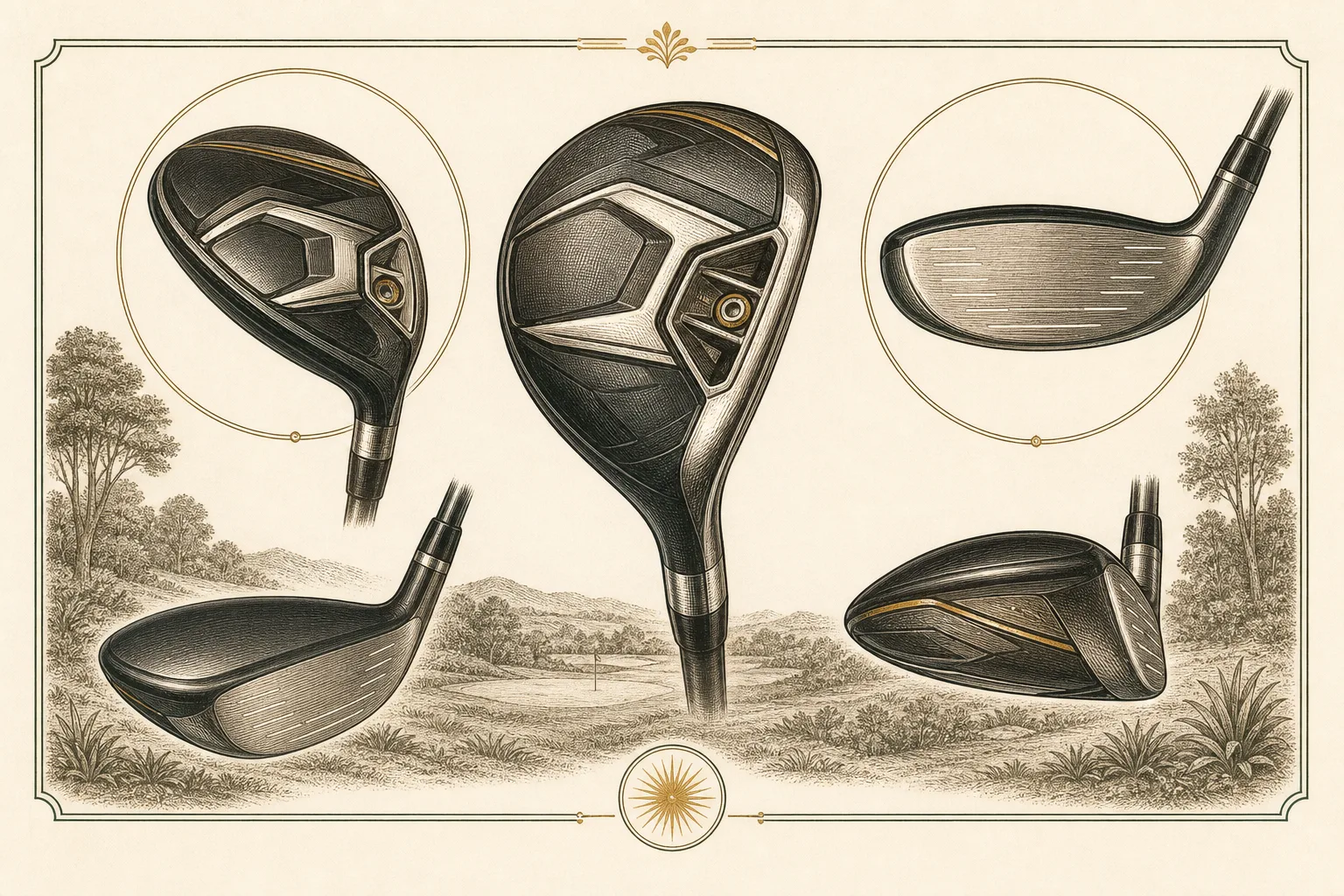
“A rung-1 easy-launching hybrid with the same milled-face tech as the JGR fairways for speed and forgiveness. A simple long-iron replacement. Commodity used pricing makes it an affordable top-of-bag fix.”
The JGR Hybrid rounded out Bridgestone's 2018 Tour B JGR family as a straightforward long-iron replacement: a Power Milled face borrowed from the JGR fairway woods for speed and consistency, a 'Boost Wave' crown to help launch, and a 'Power Slit' cut into the sole to keep the face flexing and forgiving across a wider area. Golf.com's ClubTest and independent reviewers found it long and easy to hit with a mild draw bias, calling it a good fit for players who struggle to turn the ball over. It shipped in 19/22/25-degree lofts on a UST Mamiya Recoil graphite shaft at a modest $219 — a value-priced, no-drama gap-filler rather than a showpiece.
There is nothing distinctive enough in its reception to call it more than a solidly reviewed, forgettable commodity hybrid: no scarcity, no tour story, no forum reverence. It did its job as a cheap, easy-launching long-iron replacement in a crowded field of similar 2017-2018 hybrids and was superseded without comment when Bridgestone refreshed the JGR line.
Mid-to-high handicappers who need help launching long-iron-length shots and want some draw assistance if they fight a slice. A good, cheap top-of-bag fix today for a recreational player; not a fit for anyone wanting to shape shots or a low-handicapper who prefers a driving iron.
Released in 2018 as part of the JGR line refresh, competing against similarly priced game-improvement hybrids from Callaway (Rogue), TaylorMade (M4), and Ping (G400) — all chasing the same easy-launch, draw-biased long-iron-replacement brief. At $219 it undercut several established rivals on price while offering comparable forgiveness.
Genuinely forgiving in the way game-improvement hybrids of its generation were built to be: a wide, flexible face via Power Milling plus a sole slit designed to keep the face active across mis-hits, and a moderate draw bias that helps players who slice their long irons. It won't out-forgive today's best max-launch hybrids, but for its era it delivers on the 'easy to hit, gets airborne' brief.
Calibrated across the whole catalog — a tour blade scores low here on purpose; it means control, not ease.
Realistic 2026 private-party pricing is low, typically $40-$90 for a single used hybrid depending on loft and shaft condition — consistent with its original $219 MSRP and a crowded, fast-depreciating game-improvement hybrid market from this era.
Reading is one thing — hitting is another. Book a bay and see the numbers for yourself before you buy anywhere.
“A rung-1 easy-launching hybrid with the same milled-face tech as the JGR fairways for speed and forgiveness. A simple long-iron replacement. Commodity used pricing makes it an affordable top-of-bag fix.”
The JGR Hybrid rounded out Bridgestone's 2018 Tour B JGR family as a straightforward long-iron replacement: a Power Milled face borrowed from the JGR fairway woods for speed and consistency, a 'Boost Wave' crown to help launch, and a 'Power Slit' cut into the sole to keep the face flexing and forgiving across a wider area. Golf.com's ClubTest and independent reviewers found it long and easy to hit with a mild draw bias, calling it a good fit for players who struggle to turn the ball over. It shipped in 19/22/25-degree lofts on a UST Mamiya Recoil graphite shaft at a modest $219 — a value-priced, no-drama gap-filler rather than a showpiece.
There is nothing distinctive enough in its reception to call it more than a solidly reviewed, forgettable commodity hybrid: no scarcity, no tour story, no forum reverence. It did its job as a cheap, easy-launching long-iron replacement in a crowded field of similar 2017-2018 hybrids and was superseded without comment when Bridgestone refreshed the JGR line.
Mid-to-high handicappers who need help launching long-iron-length shots and want some draw assistance if they fight a slice. A good, cheap top-of-bag fix today for a recreational player; not a fit for anyone wanting to shape shots or a low-handicapper who prefers a driving iron.
Released in 2018 as part of the JGR line refresh, competing against similarly priced game-improvement hybrids from Callaway (Rogue), TaylorMade (M4), and Ping (G400) — all chasing the same easy-launch, draw-biased long-iron-replacement brief. At $219 it undercut several established rivals on price while offering comparable forgiveness.
Genuinely forgiving in the way game-improvement hybrids of its generation were built to be: a wide, flexible face via Power Milling plus a sole slit designed to keep the face active across mis-hits, and a moderate draw bias that helps players who slice their long irons. It won't out-forgive today's best max-launch hybrids, but for its era it delivers on the 'easy to hit, gets airborne' brief.
Calibrated across the whole catalog — a tour blade scores low here on purpose; it means control, not ease.
Realistic 2026 private-party pricing is low, typically $40-$90 for a single used hybrid depending on loft and shaft condition — consistent with its original $219 MSRP and a crowded, fast-depreciating game-improvement hybrid market from this era.
Reading is one thing — hitting is another. Book a bay and see the numbers for yourself before you buy anywhere.