“Faster face than the F-series hybrids it replaced, so it plays a touch shorter in loft than the number suggests.”
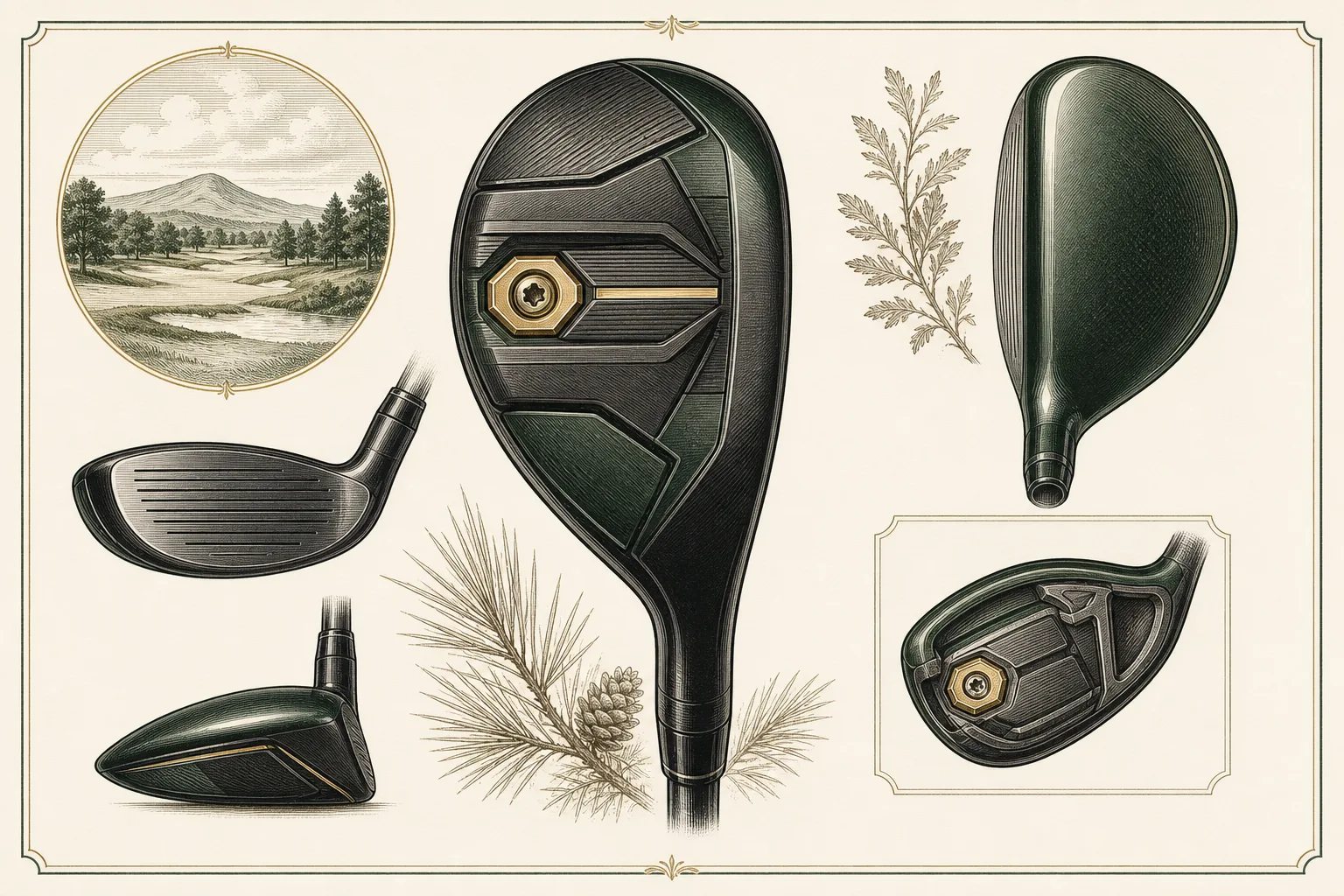
SpeedZone was Cobra's 2020 distance-platform hybrid, sized slightly larger than a traditional hybrid head to raise MOI, and built around a new 'Hollow Split Rail' sole that flexes more than a solid rail for a claimed 70% larger hot-spot from heel to toe. A forged, thinner 455 stainless steel face targeted ball speed across the whole hitting area, with a fixed low-back weight promoting a higher, stopping ball flight. Every head shipped with an embedded Arccos sensor for shot tracking via the Arccos Caddie app, tying it into Cobra's Connect ecosystem. It launched at $229 in variable-length and one-length builds.
A well-liked, competent annual release — Golf Monthly gave it an Editor's Choice nod in 2020 — but it built no lasting following; Cobra replaced it with the RadSpeed hybrid the very next year, and today it is simply solid, inexpensive used inventory.
Golfers who want their hybrid to play more like a mini fairway wood — easy height, forgiving on thin/fat contact, and built-in shot tracking via Arccos. Better players wanting more compact shaping control, or anyone chasing current-generation ball speeds, should step up to the RadSpeed or LTDx generation instead.
Competed against TaylorMade SIM, Callaway Mavrik, and Titleist TS2/TS3 hybrids in 2020. Cobra replaced it with the RadSpeed hybrid in January 2021, continuing the rail/weighting concept into leaner, lower-spin heads. A modern equivalent is the Cobra Darkspeed hybrid.
The larger-than-typical head and split hollow rails widen the effective hot zone heel-to-toe, and the low-back CG helps launch mis-hits high with reasonable ball speed retention; testers praised its 'easy launch' and consistency including on off-center strikes, at some cost to workability versus a smaller-headed players' hybrid.
Calibrated across the whole catalog — a tour blade scores low here on purpose; it means control, not ease.
2nd Swing lists used King SpeedZone hybrids at roughly $64-$126 (down from $229.99 new); realistic private-party/eBay pricing runs somewhat below the reconditioned-retail figure, likely $60-$110 for a clean example in 2026 depending on loft and shaft.
Reading is one thing — hitting is another. Book a bay and see the numbers for yourself before you buy anywhere.
“Faster face than the F-series hybrids it replaced, so it plays a touch shorter in loft than the number suggests.”
SpeedZone was Cobra's 2020 distance-platform hybrid, sized slightly larger than a traditional hybrid head to raise MOI, and built around a new 'Hollow Split Rail' sole that flexes more than a solid rail for a claimed 70% larger hot-spot from heel to toe. A forged, thinner 455 stainless steel face targeted ball speed across the whole hitting area, with a fixed low-back weight promoting a higher, stopping ball flight. Every head shipped with an embedded Arccos sensor for shot tracking via the Arccos Caddie app, tying it into Cobra's Connect ecosystem. It launched at $229 in variable-length and one-length builds.
A well-liked, competent annual release — Golf Monthly gave it an Editor's Choice nod in 2020 — but it built no lasting following; Cobra replaced it with the RadSpeed hybrid the very next year, and today it is simply solid, inexpensive used inventory.
Golfers who want their hybrid to play more like a mini fairway wood — easy height, forgiving on thin/fat contact, and built-in shot tracking via Arccos. Better players wanting more compact shaping control, or anyone chasing current-generation ball speeds, should step up to the RadSpeed or LTDx generation instead.
Competed against TaylorMade SIM, Callaway Mavrik, and Titleist TS2/TS3 hybrids in 2020. Cobra replaced it with the RadSpeed hybrid in January 2021, continuing the rail/weighting concept into leaner, lower-spin heads. A modern equivalent is the Cobra Darkspeed hybrid.
The larger-than-typical head and split hollow rails widen the effective hot zone heel-to-toe, and the low-back CG helps launch mis-hits high with reasonable ball speed retention; testers praised its 'easy launch' and consistency including on off-center strikes, at some cost to workability versus a smaller-headed players' hybrid.
Calibrated across the whole catalog — a tour blade scores low here on purpose; it means control, not ease.
2nd Swing lists used King SpeedZone hybrids at roughly $64-$126 (down from $229.99 new); realistic private-party/eBay pricing runs somewhat below the reconditioned-retail figure, likely $60-$110 for a clean example in 2026 depending on loft and shaft.
Reading is one thing — hitting is another. Book a bay and see the numbers for yourself before you buy anywhere.