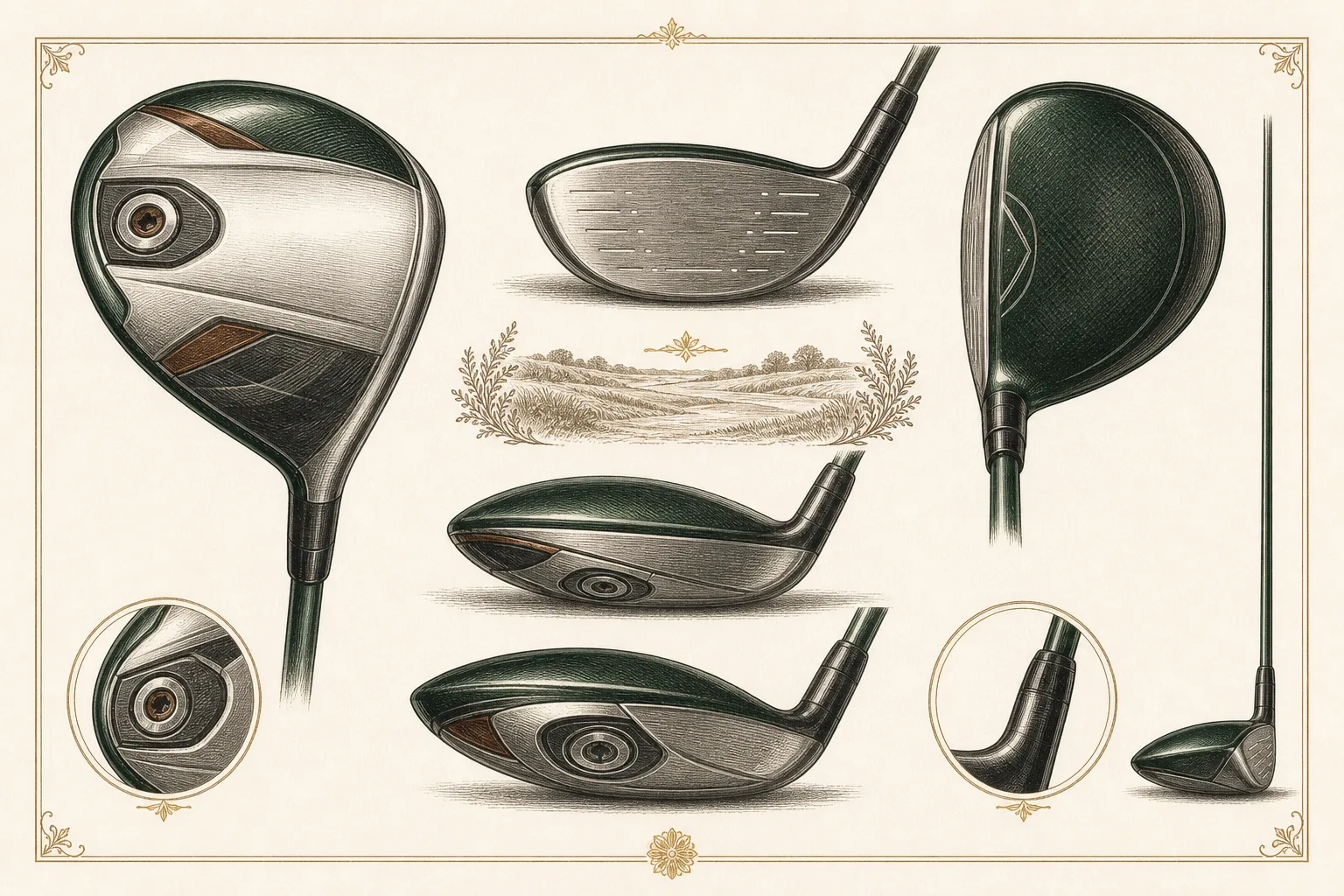
“Callaway resurrected the Big Bertha name here for a modern max-forgiveness fairway aimed squarely at rung-1 players — genuinely different design lineage from the 1990s clubs sharing its name.”
Callaway paired its 2014 driver relaunch with a Big Bertha fairway wood built on the same brief: a max-forgiveness, draw-biased head for the mainstream rung of the bag rather than a low-spin tour tool. It used a Hyper Speed Face Cup — a thinner, more flexible 455 carpenter-steel face than the previous generation — for more consistent ball speed across mis-hits, plus loft adjustability (+2/-1 degree) and a Draw/Neutral hosel setting, though it skipped the driver's sliding Gravity Core weight tube entirely, that staying exclusive to the driver that year. Reviewers found a shallower face than expected, sitting comfortably behind low tee heights and tight lies and launching a flatter, more penetrating flight than its high-launch design brief suggested at address.
A solid, honestly unremarkable mainstream fairway wood: no lawsuits, no tour legend attached specifically to this head, and no forum hunting for old ones — it did its job for a couple of seasons before Callaway's fairway line moved on to the Big Bertha Alpha 816 and then the Great Big Bertha. If remembered at all, it's as 'the reasonable, cheap Big Bertha fairway,' not for any standout characteristic.
High-handicap and beginning golfers who want a forgiving, easy-launching fairway wood with basic loft/bias adjustability at a moderate price. Better players wanting shot-shaping control or a lower, more penetrating stock flight from a compact head should look to the same era's Big Bertha Alpha fairway instead.
Released for 2014 as the accessible counterpart to the pricier Big Bertha Alpha fairway wood, competing with TaylorMade's SLDR/Jetspeed and Titleist's 915F fairways. It gave way within a couple of seasons to Callaway's Big Bertha Alpha 816 and then the Great Big Bertha, part of the brand's routine multi-year fairway wood churn.
Built explicitly as a rung-1, max-forgiveness fairway: high MOI, a draw-bias hosel setting, and a Hyper Speed Face Cup designed to keep ball speed up on strikes away from center. It sacrifices workability and a compact look for ease of launch and tolerance of mis-hits, squarely aimed at higher handicaps who need help getting the ball airborne rather than shaping shots.
Calibrated across the whole catalog — a tour blade scores low here on purpose; it means control, not ease.
Cheap and plentiful as a 12-year-old mainstream fairway wood: expect roughly $40-70 for a clean head with stock graphite shaft in 2026, less for well-worn examples. A reasonable beater-bag fairway wood but well behind modern fairway faces on ball speed.
Reading is one thing — hitting is another. Book a bay and see the numbers for yourself before you buy anywhere.