“The 670's successor and a well-loved tour blade of its day. A rung-4 club by definition -- gorgeous feel for a member who has genuinely earned the strike consistency to play it.”
The 681 Forged sold in the same 2001 window as the more storied 680, sharing the 600-series' minimal-offset, low-bounce-versus-cavity blade philosophy but cast from a slightly softer 1030 mild carbon steel (versus the 680's 1025) and marketed as Titleist's successor to the 670 muscleback. It offered the traditional forged-blade package of the era — consistent minimal offset through the set, increased bounce relative to Titleist's contemporaneous DCI cavity-backs, and the buttery, low-feedback-noise feel forged blades are prized for. It sold well to serious ball-strikers and drew strong reviews, but never generated the standalone tour legend that its 680 stablemate did.
No documented tour legend of its own — unlike the 680 sold beside it, there is no sourced account of a specific pro carrying a worn-out 681 Forged set for decades. It earns 'notable' rather than plain commodity on the strength of genuinely strong owner satisfaction (4.5/5 across 25 reviews on golfreview.com) and its place in Titleist's well-regarded 2001 blade generation, but it does not clear the 2+-source cult-evidence bar the 680 does.
Better ball-strikers who prioritize feel and shot control over forgiveness or extra distance. High-handicap or inconsistent strikers will be better served by a cavity-back or game-improvement set from the same era.
Launched in Titleist's 2001 blade generation alongside the 680, and positioned as the successor to the 670 muscleback. Important disambiguation: this retail 681 Forged (2001) is a completely different club from the tour-only '681.AS' prototype Titleist built roughly two decades later as an exact CNC replica of Adam Scott's personal 680 set — the shared '681' numbering is coincidental to Titleist's internal SKU scheme, not a lineage connection.
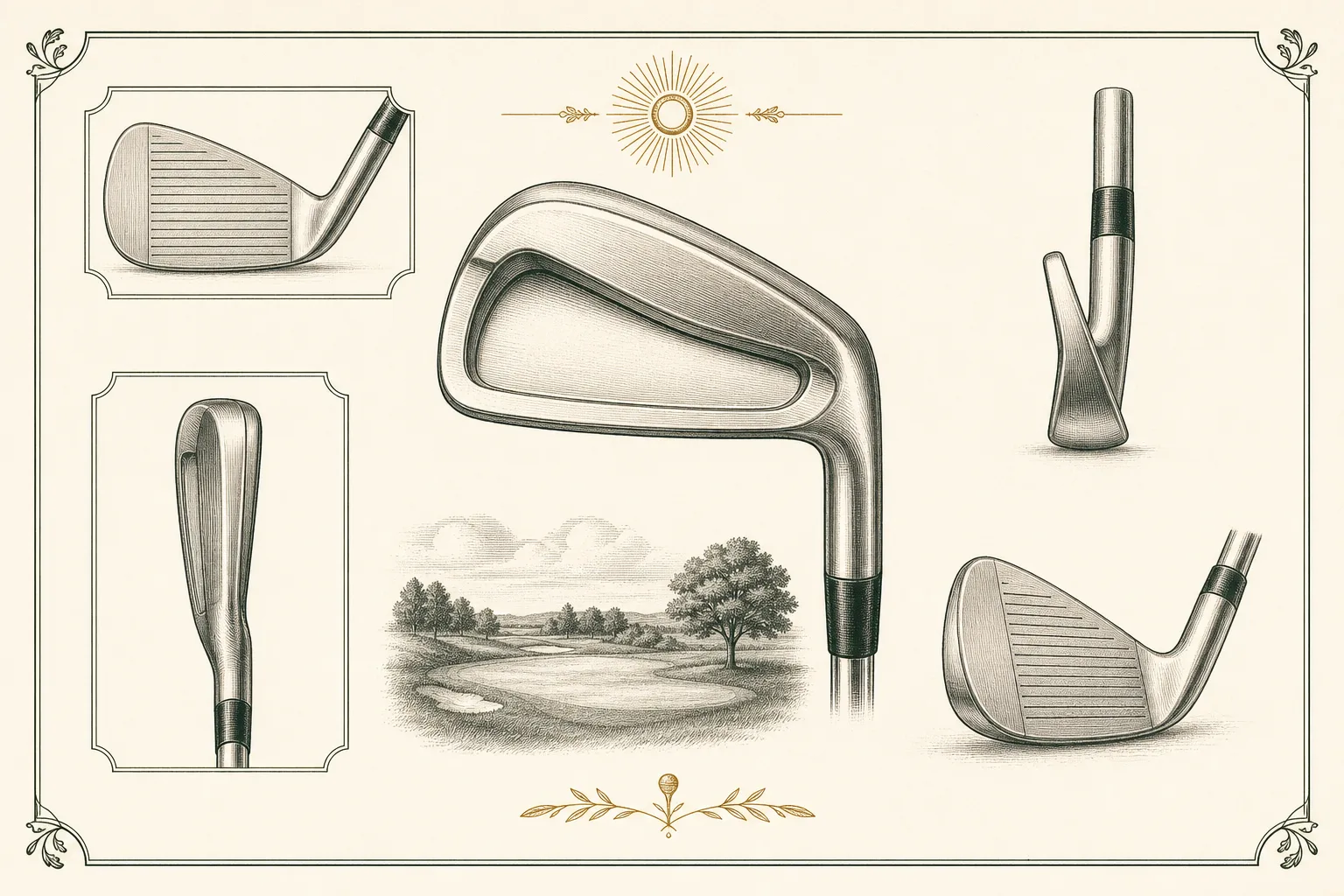
A traditional one-piece forged muscleback with consistent, minimal offset throughout the set — built for feel and workability, not forgiveness. Off-center strikes are punished in both distance and dispersion; this is a low-handicap tool.
Calibrated across the whole catalog — a tour blade scores low here on purpose; it means control, not ease.
No longer stocked by major used retailers like 2nd Swing (listed out of stock); eBay is the primary market, with complete playable sets typically in the $150-$300 range and rarer custom-grind or premium-shaft (Dynamic Gold, Tri-Spec) examples occasionally reaching $500-$900 depending on condition and buyer enthusiasm. It is priced as an ordinary well-regarded 20-plus-year-old blade, not as a collector's item.
The Legends Rack
Tour blades with Tiger-adjacent lineage (the 681 design family is what he played before Nike). Small, sharp, spectacular. Who'll love it: single-digits who want to feel what tour irons demanded.
Who it suitsBetter players
Reading is one thing — hitting is another. Book a bay and see the numbers for yourself before you buy anywhere.
“The 670's successor and a well-loved tour blade of its day. A rung-4 club by definition -- gorgeous feel for a member who has genuinely earned the strike consistency to play it.”
The 681 Forged sold in the same 2001 window as the more storied 680, sharing the 600-series' minimal-offset, low-bounce-versus-cavity blade philosophy but cast from a slightly softer 1030 mild carbon steel (versus the 680's 1025) and marketed as Titleist's successor to the 670 muscleback. It offered the traditional forged-blade package of the era — consistent minimal offset through the set, increased bounce relative to Titleist's contemporaneous DCI cavity-backs, and the buttery, low-feedback-noise feel forged blades are prized for. It sold well to serious ball-strikers and drew strong reviews, but never generated the standalone tour legend that its 680 stablemate did.
No documented tour legend of its own — unlike the 680 sold beside it, there is no sourced account of a specific pro carrying a worn-out 681 Forged set for decades. It earns 'notable' rather than plain commodity on the strength of genuinely strong owner satisfaction (4.5/5 across 25 reviews on golfreview.com) and its place in Titleist's well-regarded 2001 blade generation, but it does not clear the 2+-source cult-evidence bar the 680 does.
Better ball-strikers who prioritize feel and shot control over forgiveness or extra distance. High-handicap or inconsistent strikers will be better served by a cavity-back or game-improvement set from the same era.
Launched in Titleist's 2001 blade generation alongside the 680, and positioned as the successor to the 670 muscleback. Important disambiguation: this retail 681 Forged (2001) is a completely different club from the tour-only '681.AS' prototype Titleist built roughly two decades later as an exact CNC replica of Adam Scott's personal 680 set — the shared '681' numbering is coincidental to Titleist's internal SKU scheme, not a lineage connection.
A traditional one-piece forged muscleback with consistent, minimal offset throughout the set — built for feel and workability, not forgiveness. Off-center strikes are punished in both distance and dispersion; this is a low-handicap tool.
Calibrated across the whole catalog — a tour blade scores low here on purpose; it means control, not ease.
No longer stocked by major used retailers like 2nd Swing (listed out of stock); eBay is the primary market, with complete playable sets typically in the $150-$300 range and rarer custom-grind or premium-shaft (Dynamic Gold, Tri-Spec) examples occasionally reaching $500-$900 depending on condition and buyer enthusiasm. It is priced as an ordinary well-regarded 20-plus-year-old blade, not as a collector's item.
The Legends Rack
Tour blades with Tiger-adjacent lineage (the 681 design family is what he played before Nike). Small, sharp, spectacular. Who'll love it: single-digits who want to feel what tour irons demanded.
Who it suitsBetter players
Reading is one thing — hitting is another. Book a bay and see the numbers for yourself before you buy anywhere.