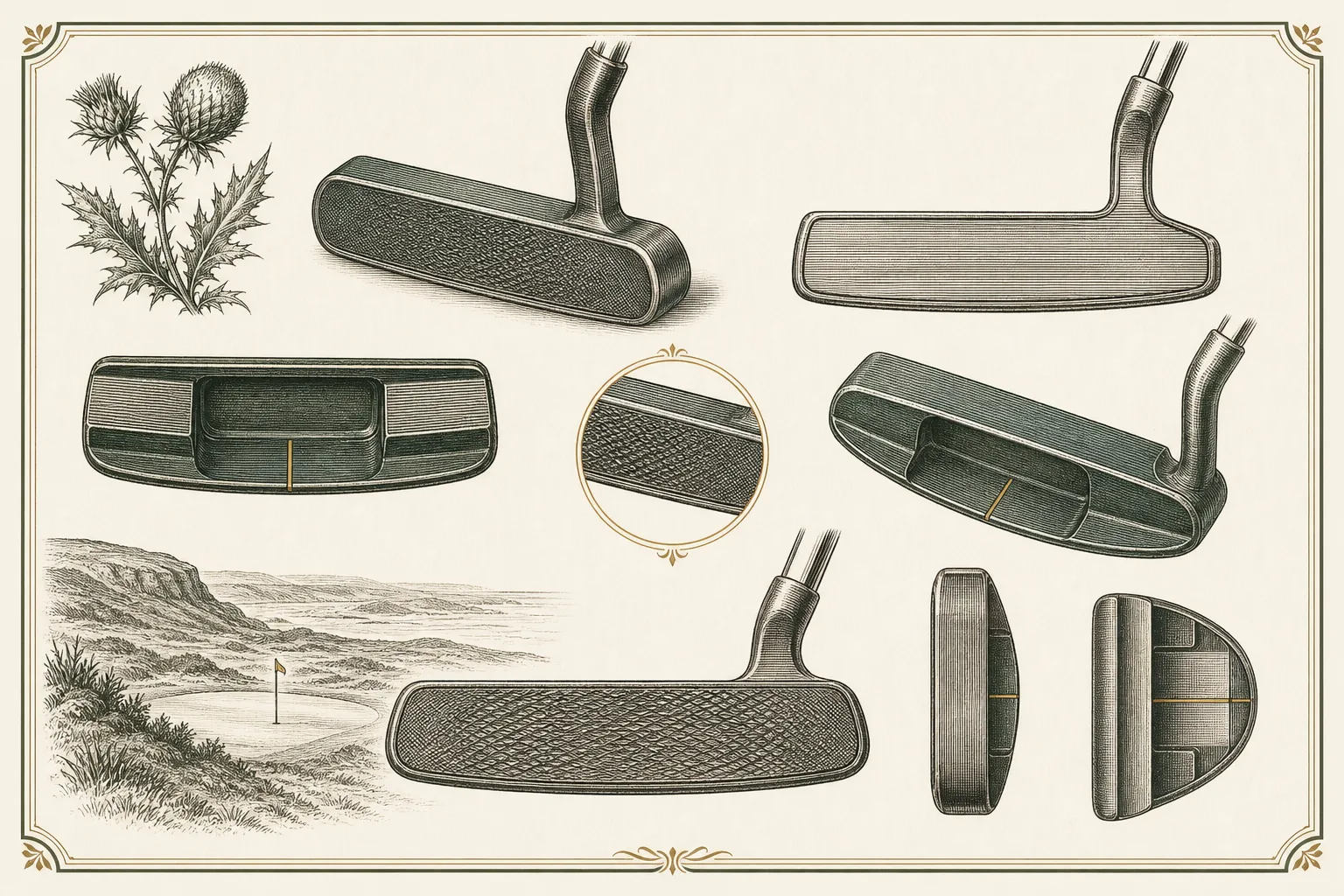
“Never Compromise (Sub series, Z/i, gray-carbon milled shapes); models range toe-hang blades to face-balanced mallets. A budget 2000s-era used name; match head to stroke.”
Never Compromise was founded in 1997 by Vikash Sanyal, a former Odyssey Golf marketing executive, and made its name on a distinctive black-gray-black (marketed both ways in period listings) top color scheme meant to frame the ball at address, plus a multi-piece construction. After early tour use and success the brand hit financial trouble in the early-2000s golf downturn and was acquired by Cleveland Golf in 2003, which relaunched the line. The Milled Series was the relaunched flagship: heads CNC-milled from soft Japanese carbon steel for feel, spanning Anser-style blades plus mallet and heel-shafted half-mallet shapes, and the range earned a spot on the 2006 Golf Digest Hot List for build quality. This model is the 2003-era mallet variant of this line.
Honest verdict: no cult. Never Compromise had a moment of tour relevance in the late 1990s, but by the Cleveland-era Milled Series it was a well-built second-tier putter brand with no scarcity, no signature tour-win legend, and no collector following today. It made a Hot List on quality, then faded as Cleveland de-emphasized the brand. It trades now as an inexpensive, plentiful used putter -- value is functional, not collectible.
Suits a golfer who wants a milled-steel feel and a strong alignment frame in a stable mallet shape, on a budget. Milled carbon steel gives firm, honest feedback that better putters like; the mallet head and alignment scheme help players who need help starting the ball on line. A player chasing modern super-high-MOI face-balanced technology or a soft insert feel should look at a current mallet instead.
The Milled Series existed in the mid-2000s milled-putter wave alongside Scotty Cameron's Studio/Newport milled line, Odyssey's milled offerings and Bettinardi -- premium-feel milled steel was the era's fashion. Never Compromise's differentiator was the black-gray-black alignment framing carried from the founding brand. Under Cleveland ownership it was positioned as a value-premium milled alternative before the brand wound down (later Milled Series blade variants ran into roughly 2009, and the platform lingered in catalogs toward 2015).
Putter 'forgiveness' means MOI/stability and alignment aid, not face-miss rescue. This entry is a MALLET, so it sits toward the more-stable end of the Milled Series -- a mallet head resists twisting on off-center putts better than the Anser-style blades in the same line, and the black-gray-black scheme is a genuine alignment aid. It is milled carbon steel (firmer, more feedback) rather than a soft-insert high-MOI modern mallet, so it is stable-for-its-shape but not a super-game-improvement putter. Blade versions of the Milled Series would score lower for stability.
Calibrated across the whole catalog — a tour blade scores low here on purpose; it means control, not ease.
Cheap and plentiful in 2026: realistic private-party pricing is roughly $40-90 depending on model, headcover and condition, with clean examples and desirable shapes at the top of that band. PGA/iGolf value-guide and reconditioned-retail figures run somewhat higher but reflect graded store pricing, not private sales. It does not appreciate; a headcover and clean face are the main value keepers.
Reading is one thing — hitting is another. Book a bay and see the numbers for yourself before you buy anywhere.