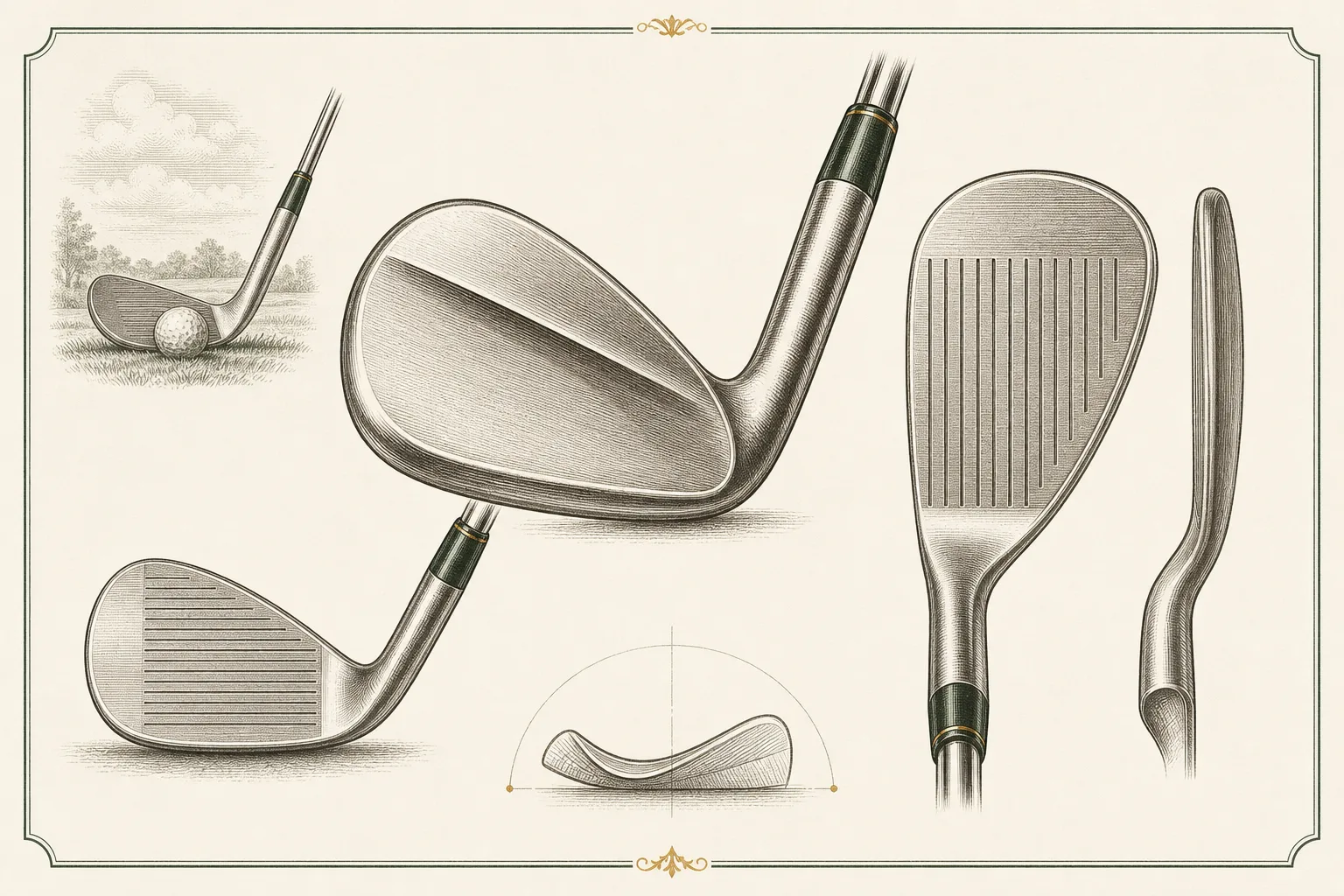
“The wedge that matches the FH game-improvement irons: a cavity, wider sole and higher launch for players who want forgiveness over shot-shaping. A game-improvement cavity-back for the mid-to-high handicap who wants their wedges to be as easy as their irons.”
Clubhouse's catalog files the FH V1 as a cast/forged cavity game-improvement wedge, but period sources consistently describe a different club: branded 'FH Forged V1,' it is Fourteen's flagship muscle-back wedge, launched in 2019 to replace the RM-22 atop the RM/FH tour lineup. It keeps Fourteen's signature reverse-muscle-taper construction (weight pushed toward the top of the blade to raise the CG and add MOI over a pure blade), a Mirrored Milled face for spin, and a proprietary Nippon N.S. Pro TS114W shaft built in separate finesse and full-swing versions. Loft-specific soles — Bumper for 41-50 degrees, Regular for 52-56, T-grind for 58-60 — tune turf interaction by shot type. Commentary places its build quality near Miura, Epon and Vega rather than mainstream mass-market wedges.
Genuinely well-regarded within a narrow audience — described as closer in construction quality to boutique Japanese forgers (Miura, Epon, Vega) than to Ping or Cleveland — but one commentator noted it is 'unlikely to garner much attention beyond the small percentage of golfers who already own Fourteen wedges or delve deep into internet forums.' That combination of real quality and thin recognition is the definition of a sleeper, not a cult classic.
Thin secondary market as a niche flagship import wedge: realistic private-party price is roughly $60-100 in 2026, with JDM specialty sellers (2nd Swing, Rock Bottom Golf import listings) pricing clean examples higher, around $110-150, reflecting import/grading costs rather than collector demand.
Better players and wedge enthusiasts who want tour-caliber shot-shaping, high spin off a milled face, and a classic blade profile. Golfers who need genuine forgiveness on mis-hits — the audience the catalog's current classification implies — are better served by Fourteen's own DJ series, which is the brand's actual cavity-back wedge line.
Replaced the RM-22 as Fourteen's flagship wedge in 2019, competing in spirit against Vokey SM7/SM8 and Miura's wedge line for the tour-feel buyer, not against mass-market GI wedges. Its reverse-muscle-taper DNA traces back through the whole RM/FH lineage and continues in later Fourteen flagship wedges.
A muscle-back reverse-taper blade, not the wide-sole cavity the Clubhouse catalog suggests. The reverse-taper does raise CG and add a modest amount of MOI over a true blade, and loft-specific sole grinds help turf interaction, but it remains a compact, classic-shaped wedge head aimed at consistent strikers. Score reflects 'more forgiving than a pure blade wedge,' not GI-level forgiveness.
Calibrated across the whole catalog — a tour blade scores low here on purpose; it means control, not ease.
Reading is one thing — hitting is another. Book a bay and see the numbers for yourself before you buy anywhere.