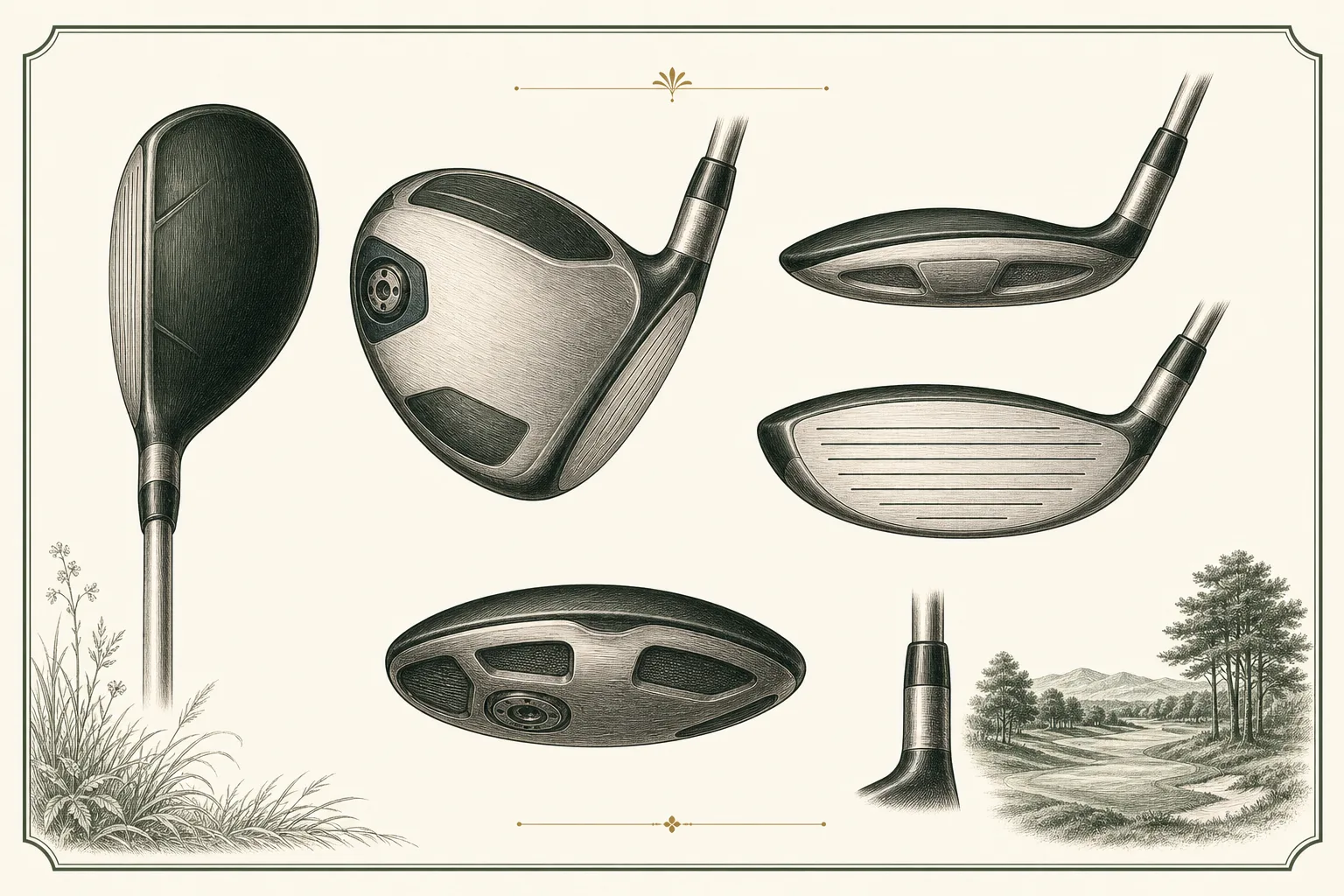
“A standard, versatile fairway wood - rung-2 neutral flight for a repeating swing and a solid gap-filler between driver and irons. Old but honest; buy on price, not hype.”
Launched alongside the Anser driver in 2012, the Anser fairway wood was Ping's first adjustable fairway wood, using the same 'Trajectory Tuning' hosel to fine-tune loft by half a degree either direction. The forged stainless head carried more face surface area low on the clubface for distance and accuracy, a rear sole weight to promote a lower, more penetrating flight with reduced spin, and a tapered back sole designed for clean contact from tight or uneven lies and light rough. Ping marketed it as splitting the difference between the feel of its i-series fairways and the forgiveness of the G-series -- period reviewers found the actual flight ran a touch higher than expected even with loft dialed down, slightly undercutting that low-spin positioning.
Notable as Ping's first adjustable fairway wood -- a genuine engineering first for the brand -- but it had a short shelf life (essentially a single model generation, 2012-2013, before Ping's next fairway wood) and drew no lasting forum or collector following; period reviews treat it as a solid, unremarkable entry rather than a standout.
Good players with a consistent swing who want workable ball flight and the ability to fine-tune loft slightly rather than maximum forgiveness or distance from mis-hits. High handicappers or anyone needing more forgiveness on off-center strikes would have been better served in 2012 by Ping's more game-improvement-oriented fairway offerings.
Part of the same August 2012 Anser launch as the driver, aimed at the same adjustable-hosel wave sweeping the industry (TaylorMade, Callaway, Titleist all shipped adjustable fairways/drivers around this time). It was short-lived (year_end 2013 on record), quickly cycled out as Ping moved to its next fairway wood generation, typical of the 1-2 year refresh pace across the whole category.
A 'standard' rung fairway wood per its own classification -- more forgiving than a true low-spin tour fairway thanks to perimeter weighting and the tapered sole's help from poor lies, but built for a repeating swing rather than maximum forgiveness the way a contemporary Ping Rapture or G-series fairway was. A 6 reflects genuine mid-pack forgiveness consistent with its 'standard/players' positioning.
Calibrated across the whole catalog — a tour blade scores low here on purpose; it means control, not ease.
New MSRP was around $249; used examples in 2026 sell for roughly $50-90 on eBay/2nd Swing, consistent with a 13-plus-year-old fairway wood several Ping generations removed from current technology, with no collector premium.
Reading is one thing — hitting is another. Book a bay and see the numbers for yourself before you buy anywhere.