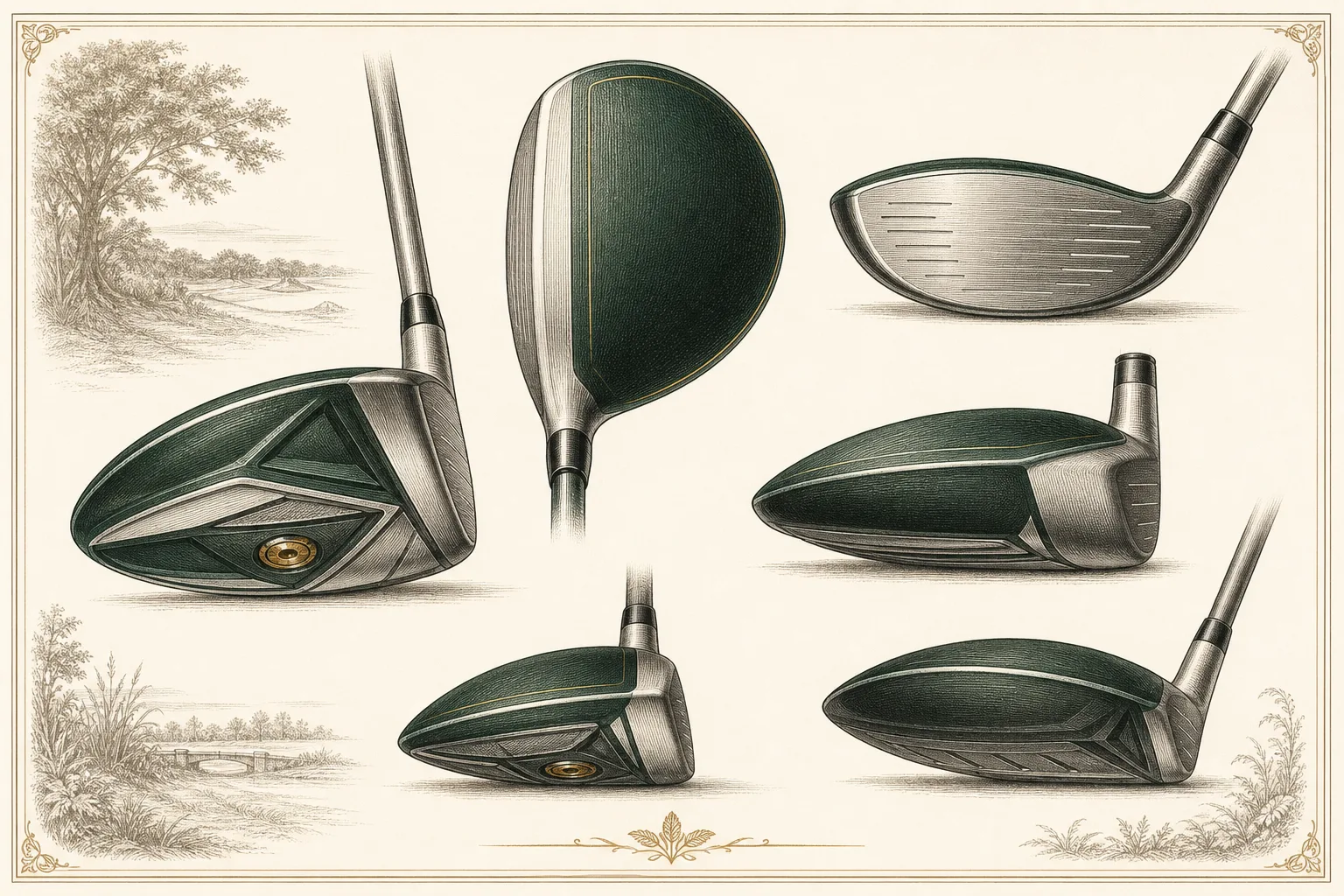
“The fairway wood half of the F-Max Superlite family, sharing the driver's ultralight shaft philosophy and an offset, heel-weighted head. It's an easy club to get airborne for a member whose swing speed has slowed and who wants help turning the ball over. Since the line has been out of production for a while, it's a friendly, budget-priced used find.”
The F-Max Superlite fairway wood, launched in 2018 at $199, was Cobra's purpose-built answer for slower-swing-speed and senior golfers: 16 grams lighter than its F-Max predecessor, making it (at the time) the lightest fairway wood Cobra had made. A shallow profile, offset hosel, and heel-biased weighting were tuned specifically to add draw bias and help golfers who struggle to get the ball airborne, paired with an oversized grip aimed at that demographic. It was explicitly a category-of-one product -- not a better-player's club in any configuration.
A purely functional, mass-market senior/slow-swing-speed offering with strong but unremarkable trade reviews (PluggedInGolf, Today's Golfer, Driving Range Heroes graded it well for its intended purpose); no cult following exists because its entire design brief is utilitarian distance-for-slow-swings, not desirability.
Built specifically for seniors and slower-swing-speed players who need maximum help getting the ball up and reducing a slice; not a fit for faster-swing or better players, who will find the draw bias and soft, lightweight feel counterproductive.
Part of Cobra's 2018 F-Max Superlite family (also spanning driver, hybrid, irons) aimed at the same senior/slow-swing niche as Callaway's Big Bertha and TaylorMade's M4/M6 lightweight lines of that era; succeeded by later Cobra Air-X and current senior-oriented models.
Reviewers documented real gains for slow-swing testers -- one reported 20 yards more carry and 30 yards more total versus his prior 3-wood -- driven by the shallow face, offset hosel and heel weighting that combine to add height and correct a slice; mis-hits are notably forgiven at the cost of workability.
Calibrated across the whole catalog — a tour blade scores low here on purpose; it means control, not ease.
Realistic 2026 private-party pricing for this senior-oriented, now 7-8-year-old fairway wood runs roughly $30-$60 per club, reflecting both age and a narrow resale audience (mainly other slow-swing-speed buyers).
Reading is one thing — hitting is another. Book a bay and see the numbers for yourself before you buy anywhere.