“Low-spin Epic for the fast player who needs to knock spin down. Long and stout, but only if you have the speed to load it.”
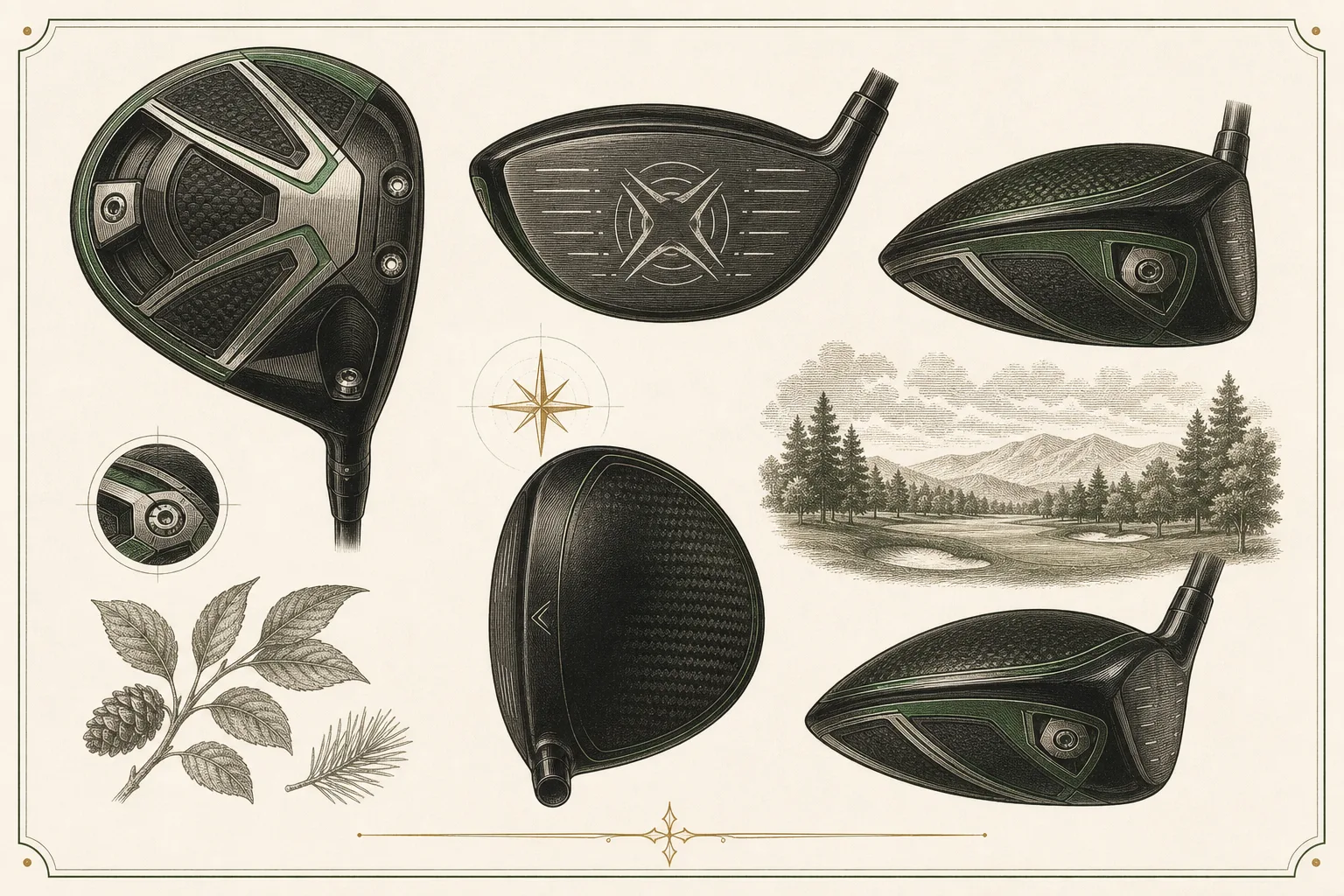
The Epic Sub Zero introduced Jailbreak — the two parallel titanium bars connecting sole and crown behind the face that stiffen the body so the face itself can flex more at impact — into the low-spin, better-player side of Callaway's 2017 Epic launch. Built on an Exo-Cage frame with a triaxial carbon crown and sole, it used interchangeable 12g/2g weights to shift the CG in line with the neutral axis and keep spin down, and it shipped in 9 and 10.5 degrees at a 45.5-inch stock length. Rory McIlroy put it in play as his first Callaway driver and Phil Mickelson switched into the Epic driver family that same year, giving the low-spin Sub Zero real early tour visibility for a brand-new technology platform.
Not a hunted collector's club today, but historically significant: Jailbreak was a genuine engineering step-change that Callaway carried forward through Epic Flash, Rogue, Mavrik, Epic Speed, Rogue ST and Paradym drivers for years afterward, and the Sub Zero's tour adoption by McIlroy and Mickelson in its debut year is independently documented rather than marketing spin.
Best for low-handicap and faster-swing-speed players who spin the standard Epic too high and want a flatter, more penetrating flight with easy CG-adjustment via the interchangeable sole weights. A slower-swing or high-handicap golfer will launch it too low and lose distance versus the standard Epic or Epic Star, which are built to add spin and launch rather than remove it.
Released alongside the standard GBB Epic in early 2017, going head-to-head with TaylorMade's M1/M2 and Titleist's 917D2/D3; it was succeeded by the Epic Flash Sub Zero (2019) once Callaway added Flash Face technology on top of Jailbreak. A modern equivalent for the same low-spin brief is the Callaway Paradym Triple Diamond or Ai Smoke Triple Diamond.
The Jailbreak bars measurably improved off-center ball-speed retention versus pre-2017 Callaway drivers (Callaway cited an MOI figure around 8000 g/cm² for the Epic platform), but the Sub Zero specifically trades some of that forgiveness for lower spin and a more neutral-to-forward CG aimed at faster, more skilled swingers — it sits below the standard Epic and well below a max-forgiveness head like the Epic Star on the forgiveness scale.
Calibrated across the whole catalog — a tour blade scores low here on purpose; it means control, not ease.
Common and cheap in 2026: complete used drivers with a stock or aftermarket shaft typically sell for $100-$180 on eBay/2nd Swing, occasionally lower for head-only listings — standard depreciation for a driver eight-plus generations removed from Callaway's current line, despite its historical importance.
Reading is one thing — hitting is another. Book a bay and see the numbers for yourself before you buy anywhere.
“Low-spin Epic for the fast player who needs to knock spin down. Long and stout, but only if you have the speed to load it.”
The Epic Sub Zero introduced Jailbreak — the two parallel titanium bars connecting sole and crown behind the face that stiffen the body so the face itself can flex more at impact — into the low-spin, better-player side of Callaway's 2017 Epic launch. Built on an Exo-Cage frame with a triaxial carbon crown and sole, it used interchangeable 12g/2g weights to shift the CG in line with the neutral axis and keep spin down, and it shipped in 9 and 10.5 degrees at a 45.5-inch stock length. Rory McIlroy put it in play as his first Callaway driver and Phil Mickelson switched into the Epic driver family that same year, giving the low-spin Sub Zero real early tour visibility for a brand-new technology platform.
Not a hunted collector's club today, but historically significant: Jailbreak was a genuine engineering step-change that Callaway carried forward through Epic Flash, Rogue, Mavrik, Epic Speed, Rogue ST and Paradym drivers for years afterward, and the Sub Zero's tour adoption by McIlroy and Mickelson in its debut year is independently documented rather than marketing spin.
Best for low-handicap and faster-swing-speed players who spin the standard Epic too high and want a flatter, more penetrating flight with easy CG-adjustment via the interchangeable sole weights. A slower-swing or high-handicap golfer will launch it too low and lose distance versus the standard Epic or Epic Star, which are built to add spin and launch rather than remove it.
Released alongside the standard GBB Epic in early 2017, going head-to-head with TaylorMade's M1/M2 and Titleist's 917D2/D3; it was succeeded by the Epic Flash Sub Zero (2019) once Callaway added Flash Face technology on top of Jailbreak. A modern equivalent for the same low-spin brief is the Callaway Paradym Triple Diamond or Ai Smoke Triple Diamond.
The Jailbreak bars measurably improved off-center ball-speed retention versus pre-2017 Callaway drivers (Callaway cited an MOI figure around 8000 g/cm² for the Epic platform), but the Sub Zero specifically trades some of that forgiveness for lower spin and a more neutral-to-forward CG aimed at faster, more skilled swingers — it sits below the standard Epic and well below a max-forgiveness head like the Epic Star on the forgiveness scale.
Calibrated across the whole catalog — a tour blade scores low here on purpose; it means control, not ease.
Common and cheap in 2026: complete used drivers with a stock or aftermarket shaft typically sell for $100-$180 on eBay/2nd Swing, occasionally lower for head-only listings — standard depreciation for a driver eight-plus generations removed from Callaway's current line, despite its historical importance.
Reading is one thing — hitting is another. Book a bay and see the numbers for yourself before you buy anywhere.