“Seven lofts from a strong 3 to an 11-wood on one steel Flash Face platform — one of the deepest standard-rung loft spreads Callaway has ever shipped in a single fairway family.”
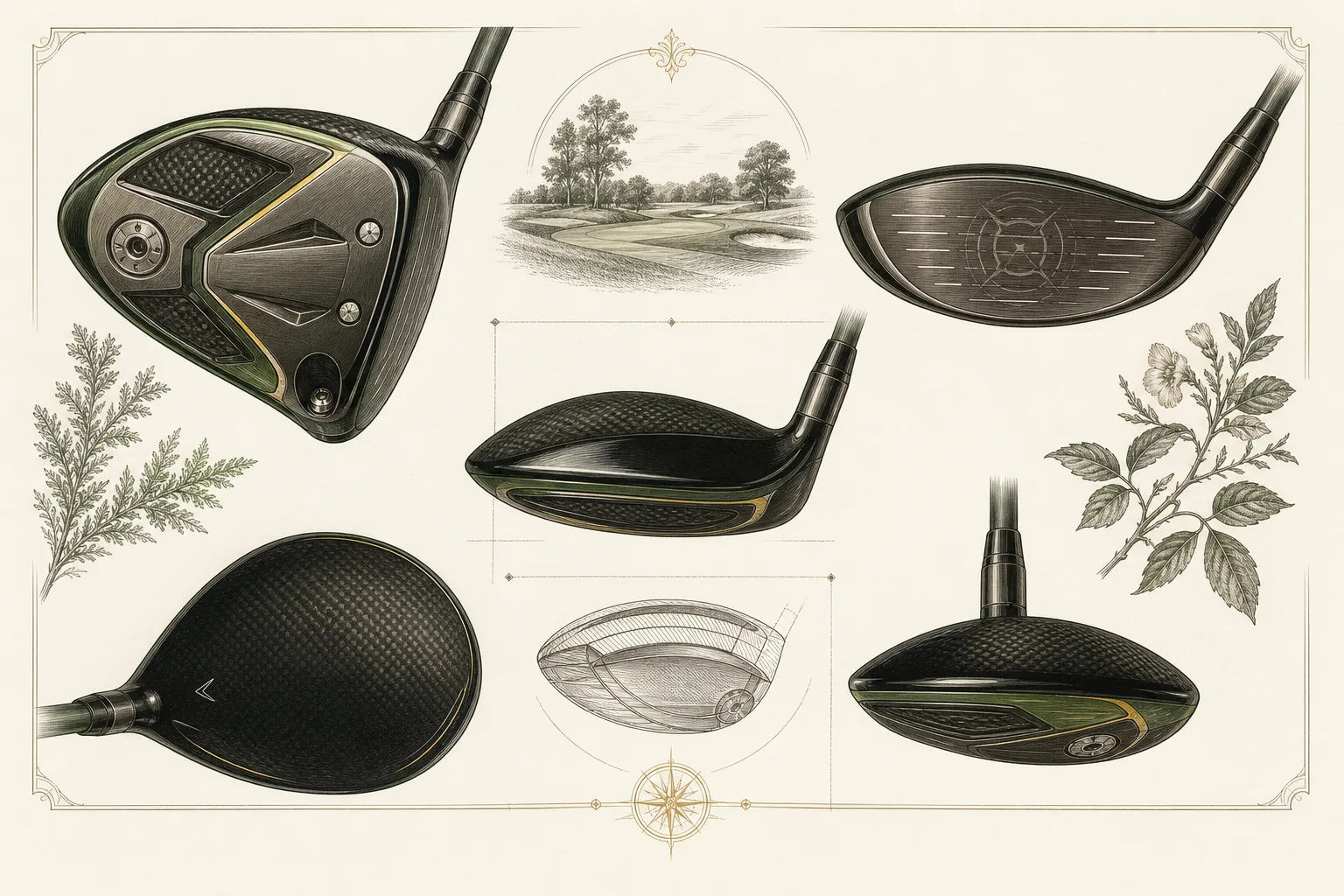
Epic Flash's fairway wood carried the same headline technology as its driver sibling: Flash Face, a variable-thickness face pattern Callaway generated by running a supercomputer through thousands of machine-learning iterations rather than hand-designing the thickness map — an industry first in how a clubface was engineered, not just what it was made of. Unlike the 2017 Epic fairway, this generation did add Jailbreak bars internally to stiffen the body and push more of the impact load onto the face. A new, shorter and lighter hosel system freed up mass that Callaway repositioned lower and deeper in the head for easier launch and a higher, longer-carrying flight, across a genuinely deep seven-loft spread from a strong 13.5-degree 3-wood to a 25-degree 11-wood.
Notable specifically for the AI-face-design story, which was widely and independently covered as a real engineering milestone rather than marketing flourish — reviewers consistently cited it as a meaningful ball-speed step over Epic/Rogue. It did not become a cult item because Callaway's own one-year product cycle (Epic Flash Sub Zero variant, then Mavrik the following year) moved attention along quickly, as it does for nearly every mainstream fairway wood.
A broad mid-handicap audience wanting genuine distance gains and easy, high launch, particularly from the strong 3-wood down through the Heavenwood-range lofts. Better players chasing lower spin and more workability were served by the companion Sub Zero head using the same Flash Face; total beginners on a budget are better served by a cheaper contemporary fairway.
Part of the February 2019 Epic Flash family launch alongside the Epic Flash driver and Epic Flash Sub Zero variants, going head-to-head with TaylorMade's M5/M6 fairways and Titleist's TS2/TS3 of the same season. Its AI-face methodology became a template Callaway reused and refined in subsequent Mavrik, Rogue ST, and Paradym generations.
Launch-monitor testing found it very forgiving relative to comparison fairways, adding ball speed without sacrificing spin consistency across strikes, aided by the repositioned CG from the new lighter hosel. It sits a notch below a dedicated max-forgiveness fairway because Callaway also sold a lower-spin 'Sub Zero' variant of the same platform aimed at better players, meaning the standard Epic Flash still skews toward an all-around rather than maximum-bailout profile.
Calibrated across the whole catalog — a tour blade scores low here on purpose; it means control, not ease.
A six-to-seven-year-old premium fairway with steady but unremarkable used demand: realistic 2026 private-party pricing runs roughly $90-$150 depending on loft and shaft, down substantially from the $299 MSRP; reconditioned-retail listings run somewhat higher for graded, warrantied stock.
The Legends Rack
The AI face in fairway form — legitimately fast off the deck. Who'll love it: distance-hungry mid-handicaps.
Who it suitsAll
Reading is one thing — hitting is another. Book a bay and see the numbers for yourself before you buy anywhere.
“Seven lofts from a strong 3 to an 11-wood on one steel Flash Face platform — one of the deepest standard-rung loft spreads Callaway has ever shipped in a single fairway family.”
Epic Flash's fairway wood carried the same headline technology as its driver sibling: Flash Face, a variable-thickness face pattern Callaway generated by running a supercomputer through thousands of machine-learning iterations rather than hand-designing the thickness map — an industry first in how a clubface was engineered, not just what it was made of. Unlike the 2017 Epic fairway, this generation did add Jailbreak bars internally to stiffen the body and push more of the impact load onto the face. A new, shorter and lighter hosel system freed up mass that Callaway repositioned lower and deeper in the head for easier launch and a higher, longer-carrying flight, across a genuinely deep seven-loft spread from a strong 13.5-degree 3-wood to a 25-degree 11-wood.
Notable specifically for the AI-face-design story, which was widely and independently covered as a real engineering milestone rather than marketing flourish — reviewers consistently cited it as a meaningful ball-speed step over Epic/Rogue. It did not become a cult item because Callaway's own one-year product cycle (Epic Flash Sub Zero variant, then Mavrik the following year) moved attention along quickly, as it does for nearly every mainstream fairway wood.
A broad mid-handicap audience wanting genuine distance gains and easy, high launch, particularly from the strong 3-wood down through the Heavenwood-range lofts. Better players chasing lower spin and more workability were served by the companion Sub Zero head using the same Flash Face; total beginners on a budget are better served by a cheaper contemporary fairway.
Part of the February 2019 Epic Flash family launch alongside the Epic Flash driver and Epic Flash Sub Zero variants, going head-to-head with TaylorMade's M5/M6 fairways and Titleist's TS2/TS3 of the same season. Its AI-face methodology became a template Callaway reused and refined in subsequent Mavrik, Rogue ST, and Paradym generations.
Launch-monitor testing found it very forgiving relative to comparison fairways, adding ball speed without sacrificing spin consistency across strikes, aided by the repositioned CG from the new lighter hosel. It sits a notch below a dedicated max-forgiveness fairway because Callaway also sold a lower-spin 'Sub Zero' variant of the same platform aimed at better players, meaning the standard Epic Flash still skews toward an all-around rather than maximum-bailout profile.
Calibrated across the whole catalog — a tour blade scores low here on purpose; it means control, not ease.
A six-to-seven-year-old premium fairway with steady but unremarkable used demand: realistic 2026 private-party pricing runs roughly $90-$150 depending on loft and shaft, down substantially from the $299 MSRP; reconditioned-retail listings run somewhat higher for graded, warrantied stock.
The Legends Rack
The AI face in fairway form — legitimately fast off the deck. Who'll love it: distance-hungry mid-handicaps.
Who it suitsAll
Reading is one thing — hitting is another. Book a bay and see the numbers for yourself before you buy anywhere.