“Rail sole glides through turf and rough; some players build the whole long end of the bag from these. Very forgiving rung-1 rescue.”
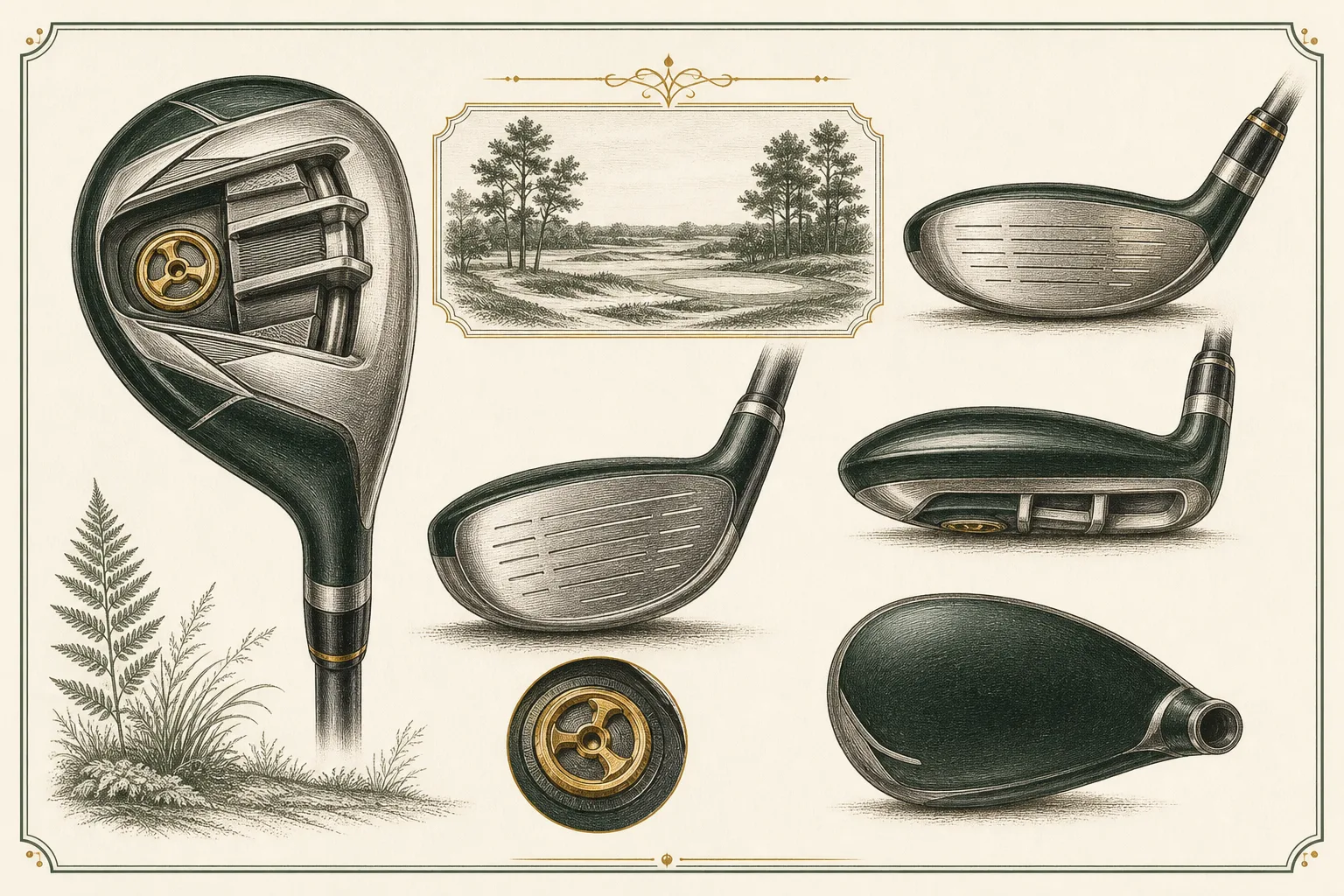
The 2015 Baffler T-Rail is the refresh of Cobra's super-game-improvement rail-soled hybrid, carrying the same core recipe into a set built around even weaker lofts (roughly 22/25/28/31 degrees) so it slides deeper into the bag as a mid-iron replacement rather than just a long-iron one. It keeps the T-shaped, tungsten-weighted rail sole that reduces turf contact and lowers CG, the shallow face for easy launch, and the slightly oversize, offset head that keeps mis-hits online. Like its 2012 predecessor it was aimed at players who find conventional irons hard to hit, sold both as individual hybrids and as replacement sets. It is an iterative, honest tool for a specific buyer, not a reinvention.
Commodity, and that is the fair call: the 2015 T-Rail is an iterative refresh of a mainstream forgiveness club with no tour pedigree, no scarcity and no collector following. It sold to recreational and senior golfers, was superseded, and today is simply an inexpensive, plentiful easy-launch hybrid. Its value is functional. (The underlying rail-sole concept carries the Baffler heritage, but this specific model rides on it rather than adding to it.)
High-handicappers, beginners and seniors who want to replace mid and long irons with clubs that launch easily and forgive off any lie. The offset assists slicers. Not for players who work the ball, want a penetrating flight, or want a compact address look.
By 2015 the replacement-set niche was being squeezed by lighter, faster game-improvement irons (Cobra's own Fly-Z line, TaylorMade AeroBurner, Callaway XR) and by taller-faced hybrids, so the T-Rail served the most forgiveness-hungry end of the market. It was among the last of the Baffler-branded rail-sole clubs before Cobra retired the sub-brand; the turf-interaction philosophy nonetheless echoes in later Cobra rescue designs.
Very high, by design and if anything slightly friendlier than the 2012 version because the weaker lofts launch higher. The tungsten-weighted T-rail sole minimizes turf drag and lowers CG; the shallow face, oversize head and offset keep off-center strikes high and straight. It stays a 9 rather than 10 for the same reason as the 2012: it is an iron-length replacement head rather than a wood-sized one, and the offset/higher-spin profile is wrong for better players.
Calibrated across the whole catalog — a tour blade scores low here on purpose; it means control, not ease.
Cheap and common. Realistic 2026 private-party value is roughly $20-40 per hybrid depending on loft, shaft and wear. No appreciation; watch for reconditioned-retail pricing that exceeds real private-party demand for a decade-old forgiveness hybrid.
Reading is one thing — hitting is another. Book a bay and see the numbers for yourself before you buy anywhere.
“Rail sole glides through turf and rough; some players build the whole long end of the bag from these. Very forgiving rung-1 rescue.”
The 2015 Baffler T-Rail is the refresh of Cobra's super-game-improvement rail-soled hybrid, carrying the same core recipe into a set built around even weaker lofts (roughly 22/25/28/31 degrees) so it slides deeper into the bag as a mid-iron replacement rather than just a long-iron one. It keeps the T-shaped, tungsten-weighted rail sole that reduces turf contact and lowers CG, the shallow face for easy launch, and the slightly oversize, offset head that keeps mis-hits online. Like its 2012 predecessor it was aimed at players who find conventional irons hard to hit, sold both as individual hybrids and as replacement sets. It is an iterative, honest tool for a specific buyer, not a reinvention.
Commodity, and that is the fair call: the 2015 T-Rail is an iterative refresh of a mainstream forgiveness club with no tour pedigree, no scarcity and no collector following. It sold to recreational and senior golfers, was superseded, and today is simply an inexpensive, plentiful easy-launch hybrid. Its value is functional. (The underlying rail-sole concept carries the Baffler heritage, but this specific model rides on it rather than adding to it.)
High-handicappers, beginners and seniors who want to replace mid and long irons with clubs that launch easily and forgive off any lie. The offset assists slicers. Not for players who work the ball, want a penetrating flight, or want a compact address look.
By 2015 the replacement-set niche was being squeezed by lighter, faster game-improvement irons (Cobra's own Fly-Z line, TaylorMade AeroBurner, Callaway XR) and by taller-faced hybrids, so the T-Rail served the most forgiveness-hungry end of the market. It was among the last of the Baffler-branded rail-sole clubs before Cobra retired the sub-brand; the turf-interaction philosophy nonetheless echoes in later Cobra rescue designs.
Very high, by design and if anything slightly friendlier than the 2012 version because the weaker lofts launch higher. The tungsten-weighted T-rail sole minimizes turf drag and lowers CG; the shallow face, oversize head and offset keep off-center strikes high and straight. It stays a 9 rather than 10 for the same reason as the 2012: it is an iron-length replacement head rather than a wood-sized one, and the offset/higher-spin profile is wrong for better players.
Calibrated across the whole catalog — a tour blade scores low here on purpose; it means control, not ease.
Cheap and common. Realistic 2026 private-party value is roughly $20-40 per hybrid depending on loft, shaft and wear. No appreciation; watch for reconditioned-retail pricing that exceeds real private-party demand for a decade-old forgiveness hybrid.
Reading is one thing — hitting is another. Book a bay and see the numbers for yourself before you buy anywhere.